- Sunday, 3 May 2026

Can Junk Food Tax Improve Health?
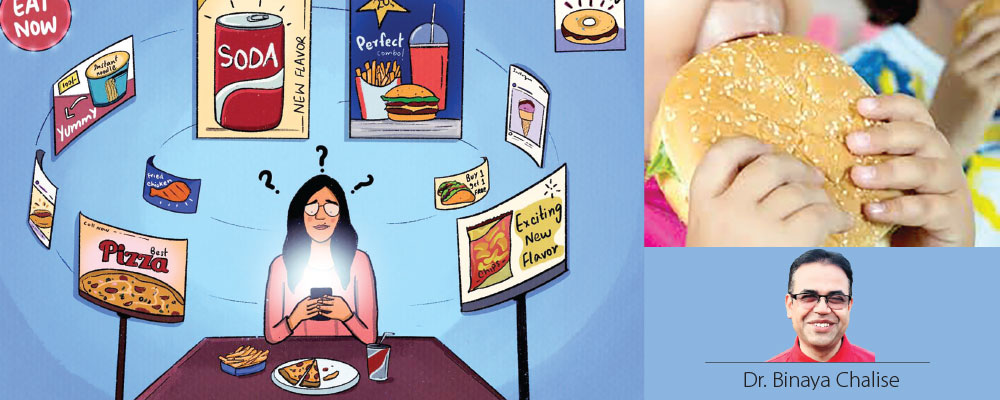

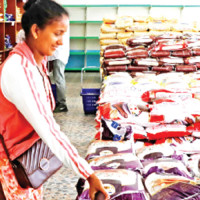
A familiar scene unfolds at dawn in almost all bus parks in Nepal. As the shopkeepers first open their shutters, they start quickly display the packets of instant noodles and sugary drinks across the counters. For commuters, students, and drivers, these are not indulgences — they are breakfast, lunch, or a way to stave off hunger until evening. Cheap and accessible, ultra-processed foods have quietly “noodle-ised” the Nepali diet, replacing traditional snacks and meals.
This everyday reality is the backdrop to Nepal’s growing debate on taxing junk food. The proposal is gaining momentum as policymakers search for tools to curb rising diet-related diseases. At first glance, the logic is compelling: Raise prices to discourage consumption and use the revenue to improve public health. Yet without understanding why these foods dominate Nepali diets in the first place, a tax risks addressing symptoms rather than causes.
Diet, national health crisis
The push for a junk food tax emerges against a worsening non-communicable disease (NCD) crisis. NCDs are now the leading cause of death in Nepal, accounting for roughly 70 per cent of total mortality. High blood pressure alone contributes to about 13 per cent of deaths, while diabetes accounts for another 8 per cent. These are no longer distant, lifestyle-related conditions associated with affluent societies; they now cut across income groups and regions within the country.
Dietary change is a central driver of this crisis. Local surveys conducted in Kathmandu and surrounding districts offer a troubling snapshot: more than 90 per cent of adolescents report consuming junk food regularly, with nearly half replacing traditional meals with processed snacks several times a week. While these figures are indicative rather than nationally representative, they closely mirror what is visible in markets, homes, and transport hubs.
The health consequences are compounded by a harsh fiscal reality. Treatment of chronic illness relies heavily on out-of-pocket spending, often pushing families into poverty. Against this backdrop, taxing junk food appears not only as a health intervention but also as a response to a growing social and economic burden. The question is no longer whether action is needed, but whether the proposed tax is designed to work within Nepal’s specific economic and institutional constraints.
At the heart of any consumption tax lies a simple assumption: when prices rise, people change what they buy. In practice, this relationship is far from automatic — especially in a country like Nepal, where food choices are shaped by tight household budgets and limited alternatives.
Food and beverages already account for roughly 40 per cent of total household expenditure. Within this category, low-cost processed foods such as instant noodles and biscuits form a recurring expense. For many urban families, spending around Rs. 150 to Rs. 300 per day on school snacks for children has become an unspoken benchmark. These purchases are driven less by preference than by affordability, convenience, and predictability.
The price range of commonly consumed snacks helps explain this pattern. A packet of spicy chips may cost Rs. 50 to Rs. 100, biscuits range from Rs. 40 to Rs.100, while branded snacks cost Rs. 250. For households managing daily expenses, even small price differences matter —but not always in the way policymakers expect. If prices rise modestly, families may not reduce consumption; instead, they may switch to cheaper, equally unhealthy substitutes or cut back on more nutritious options. This is why price sensitivity cannot be assumed. If junk food remains among the cheapest ways to fill a stomach, taxing it without expanding affordable, healthier alternatives risks generating revenue without improving diets. In such cases, the tax becomes fiscally efficient but nutritionally ineffective.
Rebranding as natural
Even if the price logic were sound, a junk food tax faces technical hurdles that are easy to underestimate. The first is definition. Internationally, the focus has shifted toward identifying ultra-processed foods — products high in industrial additives — rather than relying on brand categories or marketing claims. Translating these frameworks into Nepal’s regulatory system is far from straightforward. Ambiguous definitions invite loopholes and lobbying, allowing unhealthy products to rebrand themselves as “fortified” or “natural” to escape taxation.
Market structure presents a second challenge. Much of Nepal’s food distribution operates through small, informal retailers where monitoring is weak and enforcement uneven. If a tax is applied at the factory gate or import stage but not reflected consistently at the corner shop, price signals quickly erode. This problem is amplified by Nepal’s porous southern border. If a sugary drink is taxed in Birgunj, but remains cheaper just across the border in India, informal inflows will rise, diluting the intended effect of the tax.
These hurdles don’t make the tax impossible, but they prove that systems matter. Without clear definitions and coordinated monitoring between Customs and the Department of Food Technology, the tax risks become an inconsistent burden rather than a credible public health tool. Supporters of a junk food tax often point to earmarking as its moral anchor: collect the tax and direct the revenue toward health programmes. Nepal is not new to this idea. For decades, tobacco taxes have been earmarked for the Health Tax Fund, and in the 1990s, Nepal was the regional leader in linking “sin taxes” to cancer care.
That experience, however, also reveals the fragility of earmarking. Public support for health-related taxes remains high — especially when revenues are visibly linked to treatment and prevention — but confidence in how those funds are ultimately delivered has been uneven. Transparent and accessible reporting on how much revenue is collected and how much reaches frontline programmes has often been limited. There is also a deeper fiscal reality: money is fungible. Even when revenues are formally allocated to a health fund, total health spending may not increase if allocations elsewhere are quietly adjusted downward. In such cases, earmarking creates the appearance of commitment without guaranteeing additional investment.
Health benefits
The lesson is not that earmarking fails, but that it is fragile. A junk food tax that promises health benefits without verifiable accountability risks falling into the same trap. In public finance, trust is not a by-product; it is a policy variable. If Nepal is serious about taxing junk food, the policy must be treated as a system—not a symbolic gesture. This begins with evidence. Before setting tax rates or product categories, Nepal needs local research on how consumers respond to price changes. Which products are most sensitive to price? What substitutions do households make? Without finding answers to these questions, tax design remains largely a matter of guesswork.
The next step is to carefully define and pilot. Clear criteria for identifying ultra-processed foods must be developed in consultation with nutritionists, regulators, and market actors. Rather than a hasty nationwide rollout, limited pilots in selected urban centers can test enforcement capacity, price pass-through, and unintended effects. Pilots allow policymakers to learn cheaply and adjust early.
Only then should scale be considered. At that stage, the tax must be paired with complementary measures — clearer labeling, nutrition education, and improved access to affordable alternatives—so that higher prices nudge behaviour rather than simply increasing the cost of living. Revenue use must also be institutionalised through transparent reporting that links collections to visible health investments.
Let us return, finally, to the corner shop near the bus park. Tomorrow morning, its shelves will still be stocked with instant noodles and packaged snacks, because they meet a demand shaped by price and convenience. A tax alone will not change that reality. Only a well-designed system — one that understands behaviour, enforces rules fairly, and earns public trust — can. A tax is a tool, but it requires a craftsman, not just a collector.
(Dr. Chalise is an academic researcher working on public policy and development economics.binayachalise@gmail.com)