- Saturday, 23 May 2026

KU study reveals half of Nepal's biogas systems remain abandoned

By A Staff Reporter,Kathmandu, Dec. 8: A study by Kathmandu University (KU) has revealed that more than half of the country’s household biogas systems remain abandoned, indicating a nationwide decline in a technology long promoted as a clean-energy solution.
A new study at the Renewable and Sustainable Energy Laboratory (RSEL), KU, has uncovered a deepening crisis in the country’s household biogas sector, finding that more than half of such systems may have been abandoned since the time of their installation.
According to field surveys conducted across 10 districts, the researchers found common technical failures, neglected maintenance, and shifting rural livelihoods had left thousands of subsidised biogas plants abandoned, undermining the country’s net-zero ambitions and turning a once-celebrated programme into a major pool of stranded public investment.
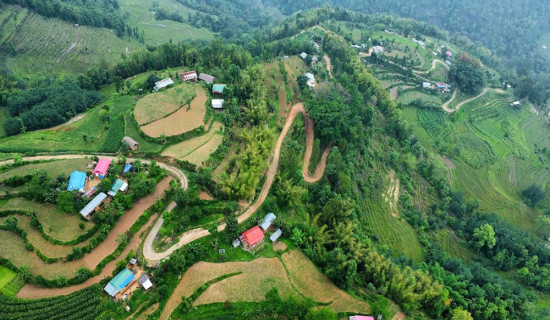
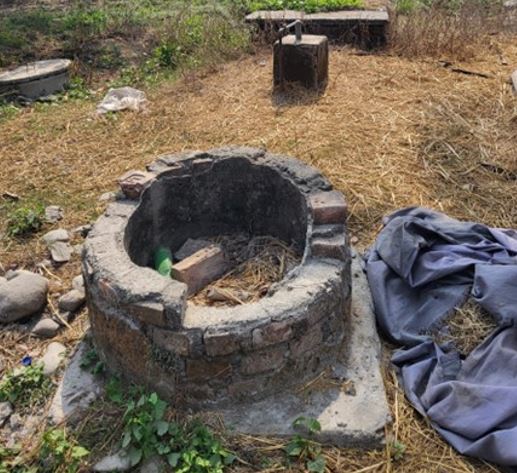
In Tanahu district, one of many areas where Nepal promoted household biogas for decades, the technology now shows clear signs of decline. As researchers moved through the mid-hill settlements, they found many units in disrepair where digesters split by cracks, mixers jammed in place, and pipelines corroded after years without maintenance.
At least 59 per cent of the biogas plants inspected in the district were no longer functioning, the highest failure rate among the areas visited. The district’s experience reflects a wider pattern across the country: even in places where biogas once took root early, many systems are now struggling to survive.
.
This issue is compromising country’s ability to meet its 2045 net-zero target and a broader set of Sustainable Development Goals (SDGs). Based on field observations from across 10 districts and interviews with 2,559 households, the study reveals a sector plagued by easily preventable technical problems calling for urgent policy and institutional intervention.
The national scale numbers are sobering. Across the 10 districts included in the assessment, 54 per cent of all biogas plants surveyed were non-functional, amounting to roughly 1,380 abandoned systems.
With each plant costing around Rs. 80,000, this represents more than Rs. 110 million in wasted infrastructure in the sample alone. Since Nepal has installed nearly 450,000 household biogas systems, almost all of them subsidised, similar failure rates elsewhere would signal a loss of national wealth running into tens of billions of rupees.
What was intended to be a durable, subsidy-supported clean-energy asset is instead becoming one of Nepal’s largest pools of stranded public investment.
Prof. Sunil Prasad Lohani, the lead author, stressed the urgency of the findings, "This study reveals major challenges in Nepal’s biogas sector and underscores the need for transparent subsidies, expert involvement, and strong local service networks. Without urgent interventions and systemic reforms, Nepal’s biogas sector will collapse, and its role as a sustainable cooking solution is likely to diminish."
“Households that once relied on biogas as a sustainable solution now express deep dissatisfaction,” said Poushan Shrestha, co-author of the study. Persistent low gas production and the lack of repair services have eroded people’s trust and confidence in this technology.
Technical failures were the primary driver of widespread abandonment. Many of the defunct systems could be revived with simple repairs. Yet, the absence of local technicians and spare parts has forced families to revert to firewood and liquefied petroleum gas (LPG).
Prof. Marc Jeuland, co-author of the study from Duke University, noted, “Nepal’s experience with biogas is alarming, but is unfortunately not unique across the world, where the technology has struggled to prove sustainable. Well-built systems are very high in cost, and the quest for affordability has sometimes led to compromises on quality, and the problems that ensue ultimately prove difficult to overcome.
Nepal’s shifting rural demographics are straining household biogas systems. Youth migration and fewer livestock have disrupted the traditional model – 14 per cent of households lack sufficient manure, leading to plant abandonment. With smaller, aging families and declining household size, maintaining biogas systems is increasingly difficult, while larger households sustain them more effectively.
Heavy reliance on upfront installation subsidies, without adequate post-installation support, has also prioritised quantity over quality. Despite generating several million dollars from carbon credits under the Clean Development Mechanism (CDM), reinvestment in maintenance and monitoring has been negligible.
The resulting collapse of biogas systems has led households to spend an estimated $5.2 million annually on LPG and to emit 0.66 million tonnes of CO2 from renewed firewood use.