- Tuesday, 9 June 2026

Crusher waste poorly managed
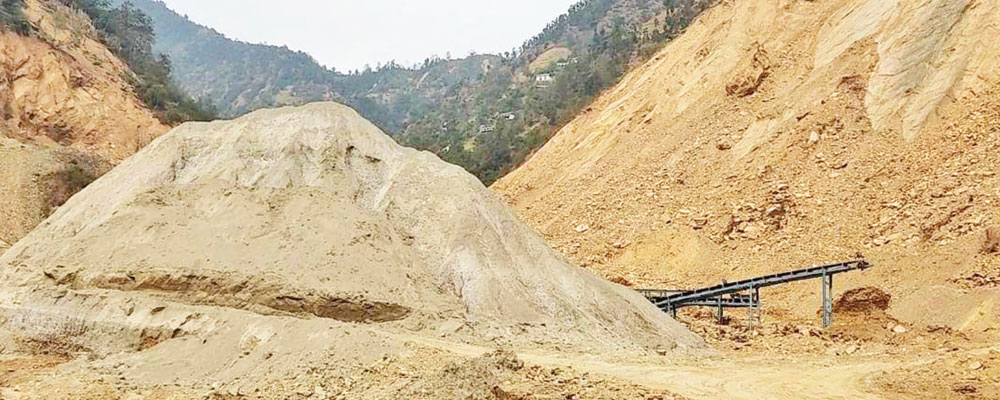
Photo: Kedar Timalsina/TRN

By Kedar Timalsina,Banepa (Kavrepalanchowk), Dec. 8: It has been found that most of the waste materials produced by crushers operating across various local levels in Kavrepalanchowk district are not properly managed.
The district's riverine and mining industries monitoring task force has warned that crusher industries, which have been storing materials on private lands near riverbanks and streams, may soon cause these dust materials to enter the rivers.
This could obstruct natural water flow, impact surrounding lands and settlements, and potentially trigger floods and landslides.
The task force recently made its report public, noting that most industries do not fence off the area where machines are operated, which allows outsiders to easily enter, which creates insecurity for employees and workers.
The report emphasised that effective measures, such as establishing compounds and posting guards at entry gates, have not been adequately implemented.
It also found that excavation processes in most mines are disorganised, and continuous digging of the lower parts of mines may cause sudden dry landslides from the upper sections, necessitating strict adherence to all safety measures.
The task force further noted that the devastating flood in Ashoj last year destroyed company sites, and essential documents—including company registration, operation licenses, permits, renewals, and tax records—were missing, hindering monitoring activities.
In addition, most industries have not managed dust generated during machinery operations, adversely affecting the health of workers and nearby communities. The report recommends installing technologies to control and neutralise dust and smoke within industrial sites to protect public health.
The task force found that in Bethanchowk Rural Municipality–5, some mining operations had previously obtained excavation permits from the Department of Mines and Geology, but these permits have since expired. Currently, these operations are being conducted without any authorization from the local government. The task force concluded that local authorities should take the matter seriously, enforce regulations, and take legal action against such activities.
Additionally, some crusher industries located near riverbanks pose a risk of unauthorized excavation from the riverbed during evening and early morning operations. The task force recommended that local authorities maintain regular monitoring to ensure strict supervision.
The task force suggested that the floods and landslides in Ashoj 2081 altered river flows, put settlements at risk, and caused damage to surrounding lands, while dust and mining debris have raised river levels. In this situation, comprehensive studies covering settlements, mines, rivers, forests, and geological aspects are necessary, and a technical team should be assigned to conduct these studies.
It also stressed that local governments should establish systems for regular monitoring and accounting of extraction activities, mark and fence approved extraction sites, and halt any industrial activities beyond their permitted objectives.
The task force further recommended that all local governments prepare and regularly update profiles of river-based and mining industries in their areas, ensure compliance with extraction and environmental standards, and submit monitoring reports to the district oversight committee.
The report urged central authorities to intervene on standards and enforcement issues, particularly regarding extraction distances from rivers, forests, highways, and public institutions, as well as dust and material management practices.
The monitoring covered a total of 26 mines and crushers: 10 in Panauti Municipality, five in Bethanchowk Rural Municipality, two in Namobuddha Municipality, three in Rosi Rural Municipality, three in Mandandeupur Municipality, and three in Bhumlu Rural Municipality.