- Saturday, 6 June 2026

Upper Arun Hydro to use local funds
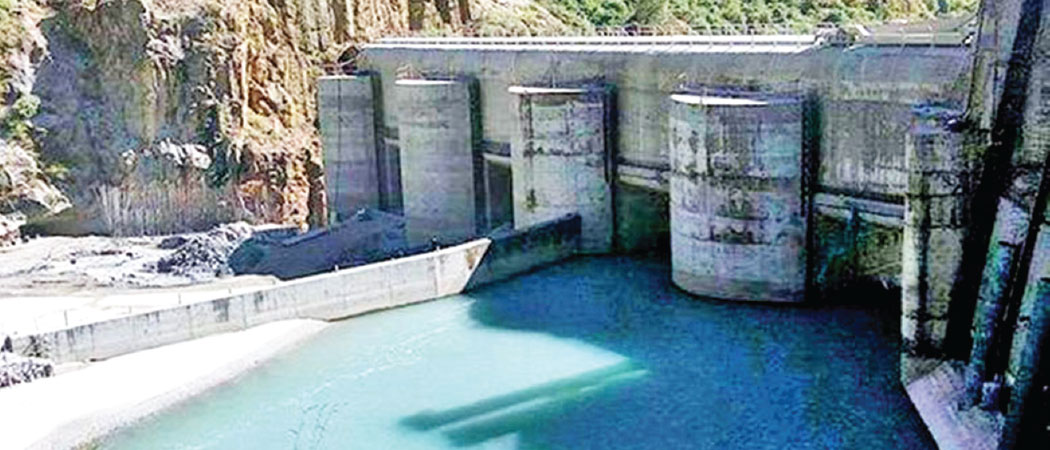
FILE Photo: TRN Dam site of a hydropower project.

Kathmandu, Dec.1: A proposal has been made to issue shares worth almost Rs. 12.95 billion to Non-Resident Nepalis (NRNs) and Nepalis working abroad for the 1,063 MW Upper Arun Semi-Reservoir Hydropower Project, to be constructed in Bhotkhola Rural Municipality of Sankhuwasabha under the leadership of the Nepal Electricity Authority (NEA).
The project’s financial analysis and financial framework have been prepared with the project cost estimated at US$ 1.51 billion, excluding interest during the construction period.
At the current exchange rate of Rs. 141 per US dollar, the total cost excluding interest of the project is Rs. 213.29 billion.
The project’s cost including interest during the construction period is Rs. 239.79 billion.
Of this, equity will account for 30 per cent (Rs. 71.94 billion), while 70 per cent (Rs. 167.85 billion) will be covered through debt. The construction period is estimated at seven years, with the annual interest rate projected at 7 per cent for that period.
The financial management proposal was approved by the project promoter, Upper Arun Hydro-Electric Limited, and submitted to the Nepal Electricity Authority. A meeting of the NEA Board of Directors held on Thursday, chaired by Minister for Energy, Water Resources and Irrigation Kul Man Ghising, approved the company’s proposal and decided to forward it to the government for necessary decisions.
Minister Ghising said that the financial management of Upper Arun is being carried out with domestic investment, enabling NRNs, Nepalis employed abroad, project-affected people, and the general public across the country to invest in the project.
No government investment
He said efforts are underway to complete the financial management as soon as possible and initiate project construction.
It has been proposed to raise funds by issuing 51 per cent of the project equity as promoter shares and 49 per cent as ordinary shares. About Rs. 36.69 billion will be invested through promoter shares and Rs. 35.25 billion through ordinary shares. Of the 49 per cent ordinary shares, 18 per cent (Rs. 12.95 billion) has been allocated to NRNs and Nepalis employed abroad.
Similarly, Rs. 7.19 billion (10 per cent) has been allocated to the project-affected areas and residents of Sankhuwasabha district, Rs. 12.95 billion (18 per cent) to the general public across the country, Rs. 1.44 billion (2 per cent) to backward areas, and Rs. 719.4 million to employees of the implementing agencies.
The NEA will hold a 41 per cent promoter share (Rs. 29.49 billion) in the project’s promoter company. Rs. 1.44 billion each (2 per cent) will be invested by NEA subsidiaries, the Employees' Provident Fund, and insurance and reinsurance companies; Rs. 719.3 million each (1 per cent) by the Citizens Investment Trust, HIDCL, provincial and local governments; and Rs. 359.7 million each (0.5 per cent) by Nepal Telecom and the Social Security Fund.
Upper Arun Hydro-Electric Limited, the NEA’s project construction subsidiary, has been established.
The NEA is managing all investment for the pre-construction phase. The project is listed under the People's Hydropower Programme, under which 51 per cent equity is allocated to promoters and 49 per cent to general shareholders.
A loan of Rs. 167.85 billion is required to complete the project. The financial management plan ensures funding from internal sources, with no government loan investment.
According to Manoj Silwal, Managing Director of NEA, the project’s investment modality adopts a mixed financing system designed to facilitate resource mobilization, reduce costs, minimize investment risks, and maximize the use of internal capital from various sectors.
A total of 45 per cent of the project loan has been proposed through subsidised co-financing from institutions such as the Employees Provident Fund, Citizens Investment Trust, Social Security Fund, HIDCL, Nepal Telecom, and insurance and reinsurance companies, amounting to Rs. 75.53 billion.
It has also been proposed to raise Rs. 50.36 billion—30 per cent of the required loan—through energy bonds, calculated on the mandatory liquidity ratio of banks and financial institutions.
Additionally, Rs. 41.96 billion will be raised through co-financing from banks and financial institutions.
To generate 4.53 billion unit annually
The project is expected to generate Rs. 27.90 billion in revenue in its first year of commercial operation. With an annual tariff escalation of 3 per cent for eight years, the average annual revenue throughout the project period will reach Rs. 34.59 billion.
The average PPA rate in the first year of commercial electricity production is estimated at Rs. 6.3 per unit. With the annual 3 per cent increment for eight years, the rate is projected to average Rs. 7.8 per unit over the project period.
The project will generate 4.53 billion units of electricity annually.
Pre-construction work is currently underway. Despite the project’s remote and challenging geography, construction is progressing on a 21-kilometre access road from the powerhouse to the dam site. An access road is being built from the proposed powerhouse in Chhongrang, near Golabazar of Bhotkhola Rural Municipality–4, to the dam site near Chepuwa Village, Ward No. 2.
The Koshi Highway has already reached Chhongrang. A 70-metre-long steel arch bridge is under construction over the Arun River to connect the highway to the project site.
Silwal said that local materials—including stone and wood—are being used as much as possible.