- Thursday, 4 June 2026

Flood, riverbank erosion threaten Koshi Tappu's fragile biodiversity
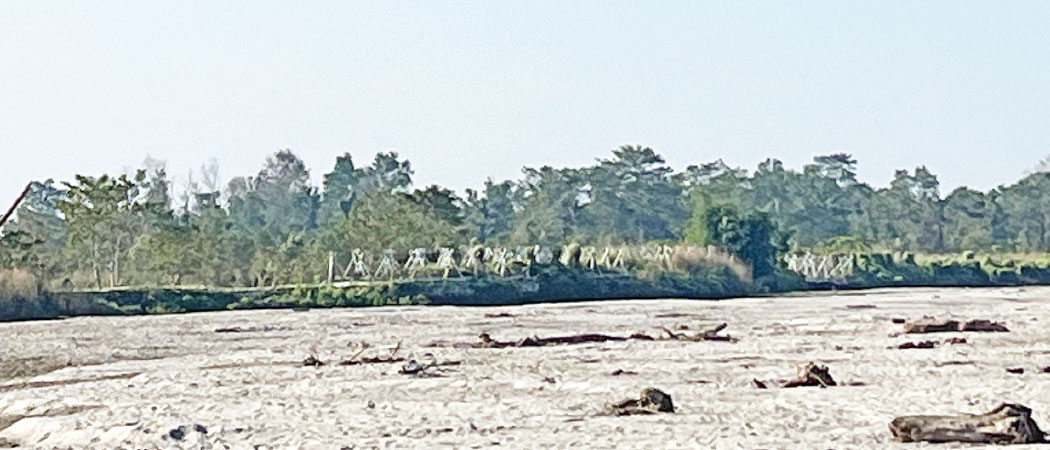
Forest area along the Saptakoshi River affected by flooding and erosion. Photo: Baburam Karki

By Baburam Karki,Barahachhetra, Nov. 24: Koshi Tappu Wildlife Reserve (KTWR) is increasingly threatened by annual floods, inundation and riverbank erosion, as much of its landscape lies within the Saptakoshi River floodplain and two-thirds of the reserve is made up of riverine forest.
According to officials, as the reserve stretches across Sunsari, Saptari and Udayapur districts, nearly two-thirds of its area falls within riverine forest, leaving it exposed each year to flooding, inundation and erosion from the Saptakoshi River.
Senior Conservation Officer Bhupendra Prasad Yadav said that monsoon floods have been damaging habitats of protected animals, affecting their ecological balance.
He also said that natural problems are difficult to manage, and each year the reserve suffers losses -- from wildlife to wetlands and vegetation.
Spread across 175 sq. km of the Saptakoshi floodplain, KTWR is regarded as an important destination for birdwatching and wildlife observation. Both domestic and international tourists visit the reserve to observe its terrestrial, aquatic and aerial biodiversity.
Yadav added that despite being the country’s first Ramsar site, rich in biological diversity, repeated flooding has been affecting the habitats of birds and wildlife. Along with natural threats, human activities and policy-related issues are also putting pressure on the reserve’s ecological system.
Since the reserve office does not maintain detailed records of damage, the exact extent of loss is unknown. Although floods and erosion regularly affect forest areas, the office says conservation efforts have been limited due to a lack of budget.
Ornithologist Anish Timilsina said aquatic species found along the reserve’s boundary areas are increasingly at risk as floodwaters submerge their habitats.
“Wetland-dependent species such as turtles, reptiles, amphibians, snails, fish and various birds are losing their habitats. Many once common species are now disappearing,” he said.
Wildlife inside the reserve also faces challenges from unmanaged grazing. Flooding, erosion, disrupted wildlife movement and habitat degradation have made it difficult to protect species that depend on diverse ecosystems.
Conservationists also highlighted concerns such as invasive plant species spreading in the forests, rising human-wildlife conflict, the problem of private land falling within the reserve, legal fishing rights in the river, and the open border with India -- all of which have added pressure to biodiversity conservation.
They said that effective conservation requires addressing natural, policy-related and administrative challenges while preventing environmental impacts. “To resolve long-standing natural and policy-level problems, the government must revise and enforce relevant laws”, according to Timilsina.
KTWR is known for the endangered wild buffalo (Arna), as well as migratory birds arriving from the country’s hills, the Himalayas and countries such as Siberia, Russia, Tajikistan, Tanzania, China and Tibet. The reserve is also a key habitat for rare species of finches.
The islands and wetlands within the reserve provide shelter to indigenous endangered fish, the highly threatened Gangetic dolphin, and the fishing cat -- found in only a few countries worldwide.
-square-thumb.jpg)