- Monday, 4 May 2026

Change For The Better
 Rukamanee Maharjan
Rukamanee Maharjan
Rukamanee Maharjan
In September, Nepal witnessed unprecedented protests and demonstrations by members of the Gen Z movement that claimed at least 76 lives and caused many more casualties. The damage has been estimated at a staggering 3 trillion Nepali Rupees ($ 21 billion), about half of the country’s GDP. Public infrastructure has been severely damaged, as have privately owned buildings. The tourism industry has been particularly affected, and the negative effects on the labour market are noticeable.
The protests have also reshaped Nepal’s political landscape. The Federal Parliament has been dissolved, and an interim government led by Sushila Karki, former chief justice of the Supreme Court, has taken office. Elections for a new parliament are scheduled for 5 March 2026. Many hope that the Gen Z movement will end the cycle of political instability that has persisted since 2015. The expectation is that the events could bring about a democracy that serves the people better and a generational shift in political leadership.
While the protests seem to have put an end to the corrupt political culture, there are lingering concerns that change has come about too suddenly. Nepal had been scheduled to graduate from the UN’s Least Developed Country (LDC) category in November 2026. Given the current upheaval, this now seems unlikely. It is too early to assess the effects on labour migration and foreign employment, which are vital to Nepal’s economy.
For now, Nepal’s Gen Z movement is definitely a double-edged sword: it has brought both destruction and opportunities for development. Driven by digital activism and a desire for social change, it was triggered in early September by a government decision to ban social media platforms. This coincided with widespread online outrage over the extravagant lifestyles of politically connected elites and their children.
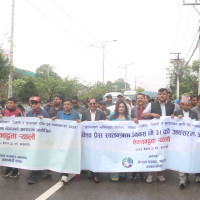
On 8 September 2025, young people – mostly students – organised anti-corruption protests in Nepal’s capital, Kathmandu, and in other major cities via platforms like Reddit and Discord. The protests were decentralised and did not have clear leadership. The demonstrations started peacefully but escalated quickly. The riot police used tear gas, water cannons and rubber bullets to disperse protesters but could not control the protests. Within a few hours, 17 young people died and more than 300 people were injured. Across the country, at least 19 protesters were killed that day.
The next day, thousands of people took to the streets despite a government-imposed curfew. They condemned police brutality and government indifference. The situation escalated dramatically. Throughout the country, the protesters vandalised and set fire to government and public buildings such as the Federal Parliament building and the Supreme Court. Private residences of top politicians and shopping malls were also targeted. The Prime Minister resigned, and the army was deployed to restore order.
As the country slowly returns to normal, many people are struggling to comprehend what happened during those intense 48 hours in early September. It was more than political unrest, vandalism and violence, and more than a collapse of government: it was also the collapse of collective history and a shared sense of identity as Nepali citizens. Rebuilding the country will thus take more than repairing infrastructure and buildings. It requires restoring collective trust, memory and a shared sense of identity of being a proud and peaceful Nepali. The situation on the ground is very fragile, but for now, there is hope that positive change is possible for Nepal. To achieve this, however, the government and the Nepali people must ensure that the social divide does not widen any further.
-Development And Cooperation