- Tuesday, 5 May 2026

84% of coral reefs hit by worst bleaching
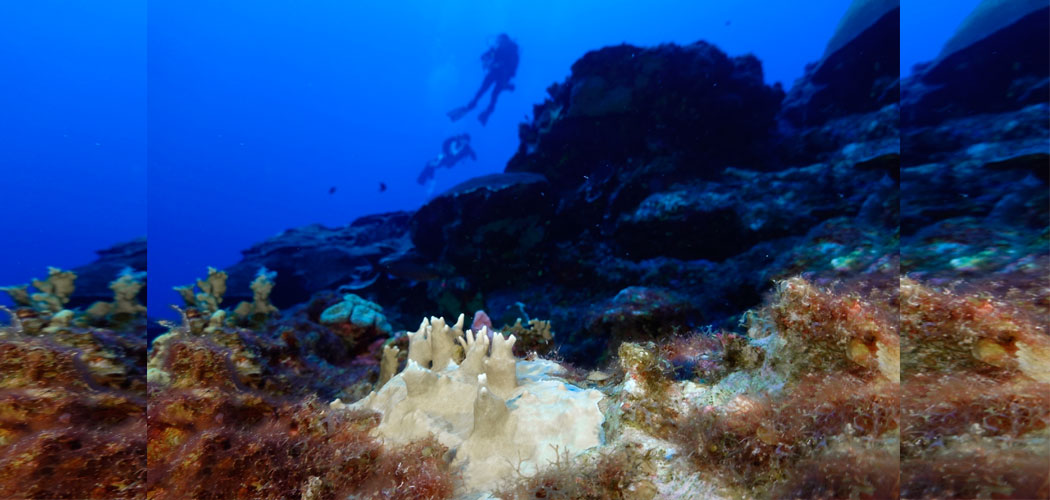
File Photo: AP Bleached coral visible at the Flower Garden Banks Texas, in the Gulf of Mexico.

New York, Apr. 24: Harmful bleaching of the world's coral has grown to include 84% of the ocean's reefs in the most intense event of its kind in recorded history, the International Coral Reef Initiative announced Wednesday.
It's the fourth global bleaching event since 1998, and has now surpassed bleaching from 2014-17 that hit some two-thirds of reefs, said the ICRI, a mix of more than 100 governments, non-governmental organizations and others.
And it's not clear when the current crisis, which began in 2023 and is blamed on warming oceans, will end.
"We may never see the heat stress that causes bleaching dropping below the threshold that triggers a global event," said Mark Eakin, executive secretary for the International Coral Reef Society and retired coral monitoring chief for the U.S. National Oceanic and Atmospheric Administration.
"We're looking at something that's completely changing the face of our planet and the ability of our oceans to sustain lives and livelihoods," Eakin said.
Last year was Earth's hottest year on record, and much of that is going into oceans. The average annual sea surface temperature of oceans away from the poles was a record 20.87 degrees Celsius (69.57 degrees Fahrenheit).
That's deadly to corals, which are key to seafood production, tourism and protecting coastlines from erosion and storms. Coral reefs are sometimes dubbed "rainforests of the sea" because they support high levels of biodiversity — approximately 25% of all marine species can be found in, on and around coral reefs.
Coral get their bright colors from the colorful algae that live inside them and are a food source for the corals. Prolonged warmth causes the algae to release toxic compounds, and the coral eject them. A stark white skeleton is left behind, and the weakened coral is at heightened risk of dying.
The bleaching event has been so severe that NOAA's Coral Reef Watch program has had to add levels to its bleaching alert scale to account for the growing risk of coral death.
Efforts are underway to conserve and restore coral. One Dutch lab has worked with coral fragments, including some taken from off the coast of the Seychelles, to propagate them in a zoo so that they might be used someday to repopulate wild coral reefs if needed.
Other projects, including one off Florida, have worked to rescue corals endangered by high heat and nurse them back to health before returning them to the ocean.(AP)