- Wednesday, 6 May 2026

Heed Woes Of People Living On Borders

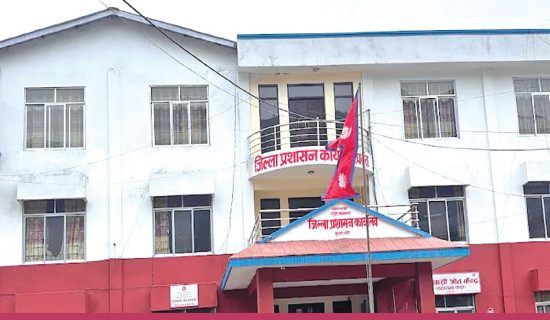
The people of Rajpur Village Municipality in Dang have been demanding that the land ownership certificates be provided to them with priority. The municipality lies in the southern part of country bordering India. Laxman KC, a resident of Ward-1 of Baruwa said, "We are landless squatters living at the border area for decades, protecting the boundary of the country. Therefore, the government should distribute citizenship papers that will boost our moral and give us an identity."
The logic of KC and his friends is valid. Residing along the border means to face unexpected challenges. It is natural that no one want to lose an inch of land. But the news reports that Nepali border has been encroached upon in many places and the people at the border sites are ones who defend the national territories. Our ancestors had shed sweats and bloods to build the nation and create boundary.
The border people in Dang are only representatives. Nepal is one of the forty-four land-locked countries in the world with the unique features. Our border is open with the southern neighbour and twenty-nine districts lie along the southern belt but the border with the northern neighbour is not open. Altogether seventeen districts touch the northern neighbour. On the other hand, Taplejung and Darchual districts share borders with both giant neighbours. The people in those districts have been facing similar difficulties for many years.
Geographical border has always been in disputes since the start of human civilisation. From Sumerian civilisations and onward, the rulers had nurtured big ambitions and the people had to suffer hardships to meet their ambitions. Ramses II, the pharaoh of Egypt, constructed the mighty pyramids without giving credit to skilful workers and designers. King Darius, one of the greatest rulers of Achaemenid dynasty, ruled over many parts of the world without mentioning the name of other warriors. Similarly, Ashurbanipal, the king of the Neo-Assyrian Empire, collected thousands of cuneiforms to his own credit.
With the advent of democracy, the elected rulers began hearing the woes of the people. The French Revolution recognised the power of the people for the first time. The contribution of French revolutionaries, especially, Jean-Jacques Rousseau, is immense in this regard. Rousseau, brought the notion of ‘the social contract,’ stating that sovereign power is vested in the general people. The elected representatives are only authorised to exercise the sovereign power for certain term. Therefore, it is the duty of the elected leaders to meet the necessary needs of all the citizens.
The leaders in the governments and the state's agencies should first give priority to the people living along the border areas because they are considered army without arms. They risk their life while fighting to shoo away the encroachers and anti-social elements.
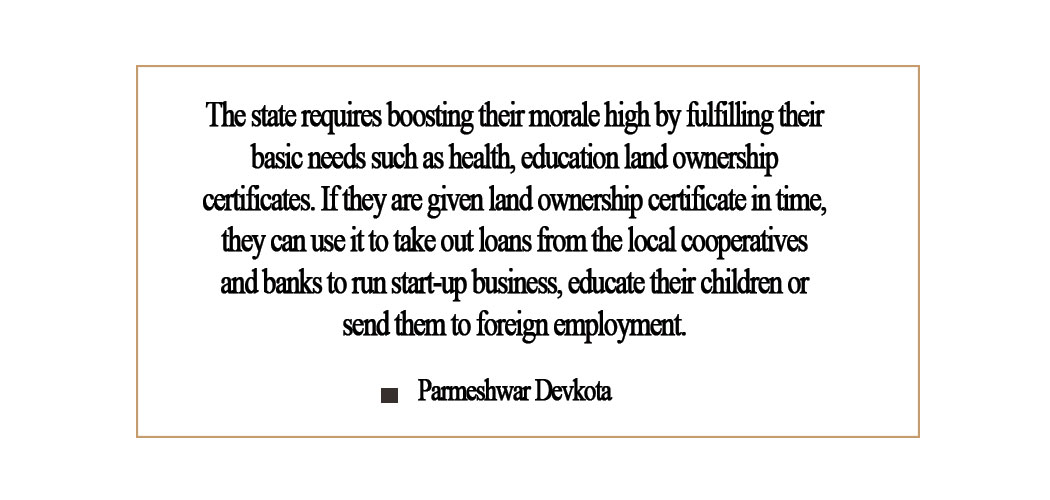
The state requires boosting their morale high by fulfilling their basic needs such as health, education land ownership certificates. If they are given land ownership certificate in time, they can use it to take out loans from the local cooperatives and banks to run start-up business, educate their children or send them to foreign employment. Though they are landless squatters, they are sovereign Nepalis committed to defending the nation's territory.