- Friday, 8 May 2026

Agriculture: Sustaining Global Economies
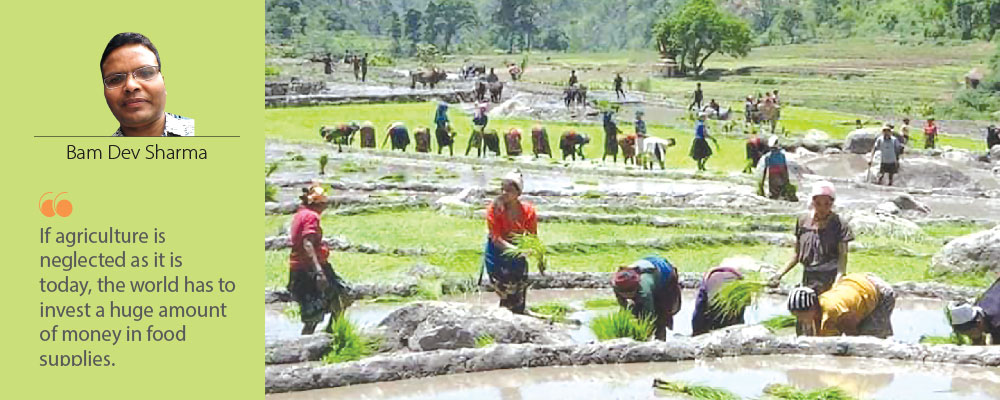

Agriculture has been a durable economic resource since the dawn of human civilization as an economic enterprise. Monetary values, however, keep changing. In the past, serfs and labourers were mainstream economic resources because they were traded and attributed to economic activities. Since the industrial revolution, technology and industrial development have been regarded as prominent economic activities.
And in the 21st century, digital and technological innovation created a space for digital money. In all these transformations, however, one thing has never been absent in human civilization: agricultural productivity to address human hunger and food supply. The mode of agriculture may have changed from subsistence farming to industrial farming to satisfy a large number of bellies. Nevertheless, the world needs a perennial supply of food. The basis As the world is growing in terms of economic transformation, many countries have increased their gross domestic product by surpassingly more than in the past.
The growth of the agricultural economy has an impact on several other facets of life. Many people don’t see the fact that agriculture is not just an output in terms of economic facts and figures. Rather, it does have social, cultural, and humanistic values to which we are still indifferent.
We see that the development index of the world is expanding on several fronts. Many countries, like Brazil, India, Japan, South Korea, Taiwan, and South Africa, are emerging economic powers.
In hindsight, there is a grave concern that many emerging economies have preferred industrial and technical innovation to improve their GDP, thereby limiting their agricultural productivity. Understandably, the agricultural economy, which was a pivotal factor in economic progress, is in slanting mode. Economic analysts think that rapid economic growth, at the cost of agricultural productivity, might not last longer. Several reports hint at the fact that people are not able to sustain adhering to agricultural work as it cannot keep up with the pace of the economy.
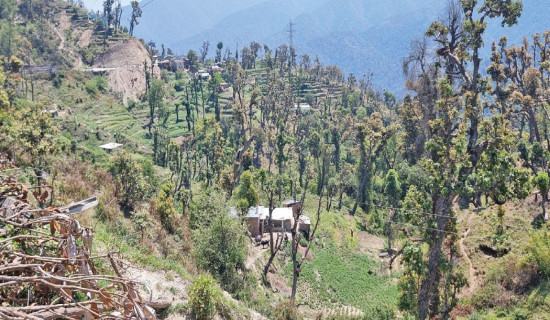
There could be many reasons, but one prominent reason is that agricultural farming does not yield any profit to the farmers. Reality As a result, several farmlands are being transformed into industrial complexes and big factories.
At the same time, farmers and aboriginal tribes have been largely impacted by such moves, and they are deprived of their indigenous farming activities. In Brazil, reports indicate that the Guarani tribe people are committing suicide because of shrinking agricultural land. They cannot get any food harvest from the land because of growing industrialization, as agricultural lands have been cleared for industrial zones. This has led to the situation that people’s subsistence farming is on the verge of extinction. In India alone, many farmers (about five hundred thousand) in Rajasthan are reported to have committed suicide until 2021.
Surprisingly, such an economically capable country cannot find a viable solution to the farmer’s plight. The loan they take from the government is much higher than the yields they get. At the same time, the shopping malls in different parts of India have shrunken farmers' agricultural market bases.
Recently, in America, too, the aboriginal Native people in Alaska are committing suicide. Reports point out that many young people are committing suicide just because the industrial pace has imposed on their lives and they are starving for food. Even in a smaller, agricultural-based economy like Nepal, agricultural activities are going to decline because many young people leave the country for the sake of foreign employment. Much of the cultivable land remains uncultivated, and the country has to import food grains from India in a quantity never before in history.
Eye-opening context Reports are rife in China that it is hard for the country to sustain its agricultural economy. People have left the traditional agricultural pattern due to the excessive growth of the farming culture. People in the local community have given up agricultural activities. As a result, young people are leaving the villages because they cannot depend on agriculture any longer as their forefathers did.
Similar stories are heard in African and Sub-Saharan regions. According to a report by the World Food Organisation, it is estimated that twenty million people in the African and Sub-Saharan regions will be facing an acute shortage of food supply by 2030. This being the case, it will not only create problems in terms of the global economy, but it will also destabilise global security and regional and continental harmony. The estimation is not just an imaginative figuration. It embodies crude facts because Africa is already such a continent that is facing problems of desertification and lack of water. This situation will further worsen in the upcoming years because global warming, weather, and climatic change are undoubtedly expected to exacerbate this situation even further.
We already know that agricultural patterns and ecological balance are interdependent. Some countries have faced an unprecedented imbalance in environmental and ecological conditions when traditional agricultural patterns have been replaced. We are ourselves the witnesses of Mayan civilization. At our doorstep, we are facing the destruction of a large amount of forest life and cultivable land in tropical regions.
Conclusion All these stories state that the world has neglected the agricultural sector. What is the reason? Simply put, the world is heading towards a corporate culture of the economy—gaining an easy economy. If agriculture is neglected as it is today, the world has to invest a huge amount of money in food supplies. This, too, would imbalance the global economy, and it would bring other problems like desertification, a lack of water supply, and a fall in productivity from the soil. Can this booming economy sustain itself without an agricultural base?
(The author is an assistant professor at RR College.)