- Friday, 8 May 2026

Nepal should take climate agenda to global level


By A Staff Reporter,Kathmandu, May. 17: Minister of Communication and Information Technology, Rekha Sharma, stressed that the media could play a vital role in elevating Nepal's climate-induced challenges to a global agenda.
Speaking at a programme organised by Sancharika Samuha to mark the World Press Freedom Day, Minister Sharma said that climate change was being perceived as a significant challenge in countries like Nepal.
She said that it has had a greater impact on the Himalayan region than elsewhere, making Nepal one of the most vulnerable nations to climate change.
Minister Sharma said, “We are witnessing a rise in the occurrence of shrinking glacial lakes and the potential for flash floods due to glacier melting. Natural calamities stemming from heavy rainfall and droughts are escalating due to climate change, exacerbating harm to livelihoods.”
She further said that in this critical situation, all stakeholders must be serious and sensitive. The crisis brought about by climate change in Nepal's Himalayan region is not solely Nepal's issue, it poses an additional challenge for millions of people dependent on water sources originating from the lower Tarai region.
She asserted that while Nepal may bear the brunt of the crisis, it is a shared problem of the entire South Asian region. Highlighting these facts, she urged national and international media outlets to play a role in establishing the fight against climate change as a global agenda, involving Nepal and the rest of the world.
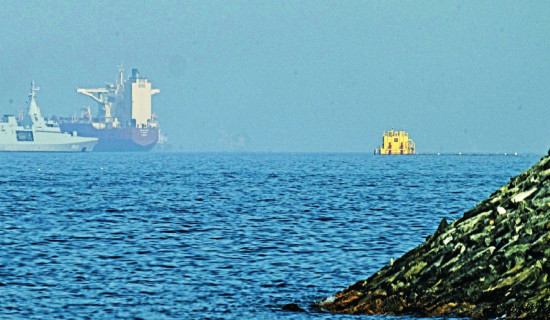
For this purpose, Nepal government has continuously drawn attention of the global community, and in December last year, Prime Minister Pushpa Kamal Dahal ‘Prachanda’ participated in the COP 28 held in Dubai, UAE. During that event, he not only presented Nepal's concerns and anxieties regarding climate change but also reminded the international community of its responsibility to address them.
For climate crisis, Nepal does not contribute to carbon emissions, but due to the carbon emitted by the developed countries, Nepal is increasingly affected by the problems of climate change, said Minister Sharma. “We have raised our voice strongly in the international arena, stating that we suffer from the consequences of problems created by other industrialised nations, and it is imperative to reach a situation where we do not suffer any further harm without any compensation.”
Mentioning that less developed countries, including Nepal, should benefit from various funds established to mitigate and address the adverse effects of climate change, she added, “This is not a plea from us, rather, the government has explicitly stated that it is a matter of justice.”
Now we have to establish climate diplomacy as an important part of economic diplomacy and the media will also play an important role in creating the necessary environment for that.
Media can play a significant role not only in providing information and education but also in addressing the crises and facing the challenges created by climate change. From disseminating pre-disaster information to conducting risk assessments, media outlets are increasingly vital in various aspects of disaster management, Minister Sharma said.
She said that the media should play an important role in making the general public aware by focusing on risk knowledge and risk monitoring and data analysis, risk information flow, capacity building and countermeasures.
She also stressed on the crucial role of the media in raising awareness among the general public by focusing on risk knowledge, risk assessment, and data analysis, as well as the flow of risk information, capacity building, and response efforts.
Bipul Pokharel, President of the Federation of Nepalese Journalists, stressed the importance of prioritising the issue of environmental impact.
He remarked, “Our lifestyle choices contribute to natural disasters. Environmental concerns will not be adequately addressed until the media highlights them.”
Rabina Shrestha, National Director of International Alert, underscored the significant role of the media in mitigating environmental impact. She emphasised the need to enhance public awareness and collective efforts to minimize risks in Nepal.
At the programme, Bimala Tumkhewa, chairperson of Sancharika Samuha, said that women are disproportionately affected by climate change.