- Wednesday, 27 May 2026

Climate Finance Claim


Ahead of an annual global conference on climate change starting from November 30 in Dubai, UAE, Nepal is set to put forth its claim on the climate financing as grant for adaptation and resilience. Nepal has preferred grants to loans to reduce the negative impact of climate change that has badly affected the nation. Nepal has adopted this position as the portion of loans under the international cooperation that seeks to fight the devastation of climate change has grown disproportionately. Prime Minister Pushpa Kamal Dahal Prachanda and Minister for Finance Dr. Prakash Sharan Mahat echoed this line of thought at the national climate conference held in the capital Tuesday. Prime Minister Prachanda noted that Nepal would push for the climate action and speedy implementation of the agreement to provide the climate financing as grant for climate adaptation and resilience.
Nepal as a least developed country finds itself in a vulnerable situation when it comes to dealing with the climate crisis. It has little or no role in generating the greenhouse emissions responsible for the rising global temperatures. Instead it is contributing to the conservation of forests and biodiversity. Nepal's forest cover stands at 44.74 per cent. Forests help absorb carbon dioxide from the atmosphere and store it, thereby slowing down the rate of warming and climate change. However, it is enduring the climate change-induced disasters, and scarcity of food and potable water. The monsoon has become erratic and unpredictable to the extent that it has wreaked havoc to the life and property of the people by triggering flash floods and landslides. The people living in the mountainous region are in the perpetual fear of melting and bursting of the glacial lakes and those living in the areas have to suffer massive scale of devastation.
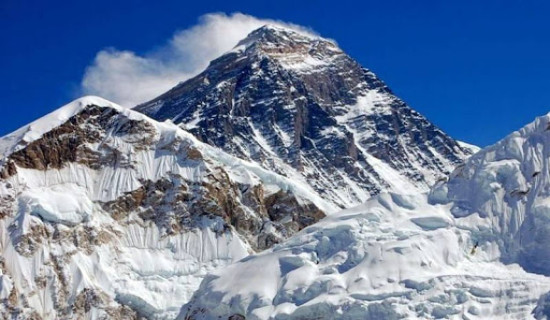
Nepal's snow-capped mountains form the vital component of the Hindu Kush Himalayas, but the two-thirds of the glaciers of the mountains in the region are feared to melt away by 2100 if the current rate of global warming is not checked. The pristine Himalayas feed thousands of rivers that pass through the hills and plains. As the mountains dry so do the rivers, choking the supply of water to the community. This will bring livelihood crisis to the people residing in all three regions of the country. Climate change has negative repercussions for the agriculture, hydropower development, health and tourism, among others spheres of life. Poor families, small farmers, marginalised communities, women and children are likely to be hit the hardest. Pointing at the magnitude of damage that the climate change is causing to Nepal, Prime Minister Prachanda rightly called upon the international community to prioritise the grants instead of loans in fighting climate change for which the rich industrialised nations are mostly responsible.
Nepal should vociferously put up its concerns at 28th Conference of the Parties (COP-28) to the United Nations Framework Convention on Climate Change (UNFCCC) that will run around two weeks. It should press the rich and developed countries for meeting their pledge to limit the increase in global temperatures. Nepal is expected to raise the issues of climate finance, adaptation projects, transfer of green technology and capacity building, loss and damage reparation, and boosting climate resilience. Nepal's participation in the COP-28 offers ample opportunities to prove diplomatic mettle and convince the global community about the consequences of the climate change for the country. The dignitaries attending the event need to be well informed about Nepal's contribution to the forest conservations as well as legal, institutional and financial provisions implemented to attain climate resilience in line with UNFCCC guidelines.






-original-thumb.jpg)