- Monday, 11 May 2026

Does an AI tool help boost patterns of adoptions?
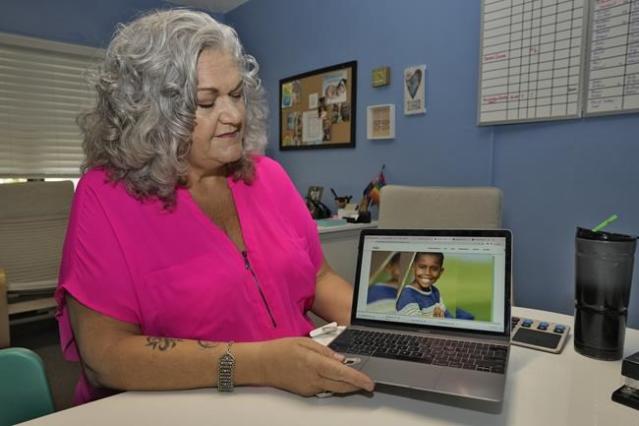

New York, Nov. 7: Former social worker Thea Ramirez has developed an artificial intelligence -powered tool that she says helps social service agencies find the best adoptive parents for some of the nation's most vulnerable kids.
But an Associated Press investigation has found that the Family-Match algorithm has produced limited results in the states where it has been used, raising questions about the ability of artificial intelligence to solve such enduring human problems.
Two states dropped the tool with only a few adoptions at the end of their initial pilots. Social workers in Florida, Georgia and Virginia told AP that Family-Match wasn't useful and often led them to unwilling families. Florida agencies, on the other hand, reported a more positive experience with the algorithm, saying that it assisted them in tapping into a broader pool of prospective parents.
Ramirez declined interview requests but said in an email that "Family-Match is a valuable tool and helpful to users actively using it to support their recruitment + matching efforts."
Here are some takeaways from the investigation:
Ramirez, of Brunswick, Georgia, where her nonprofit is also based, got her start building a website meant to bring prospective adoptive parents together with mothers giving up their babies for adoption.
Ramirez marketed her website to anti-abortion counseling centres, which seek to persuade women to bring their pregnancies to term.
"Could we make Roe v. Wade obsolete by raising adoption awareness? I think so," Ramirez wrote in a 2012 blog post about her website. Ramirez said in an email that Family-Match is not associated with the program for mothers with unwanted pregnancies.
Ramirez recruited research scientist Gian Gonzaga, asking if he would team up with her to create an adoption matchmaking tool based on compatibility, to help child welfare agencies find adoptive parents for foster children. Gonzaga had previously managed algorithms that powered the online dating site eharmony.
"I was more excited about the project than anything I've heard for all of my career," Gonzaga said in a promotional Family-Match video posted to YouTube.
Gonzaga ultimately joined the board of directors of Ramirez's non-profit, Adoption-Share.
Gonzaga, who worked with his wife Heather Setrakian at eharmony and then on the Family-Match algorithm, referred questions to Ramirez. Setrakian said she was very proud of her years of work developing the Family-Match model.
An eharmony spokesperson said the company had no involvement with Family-Match and called the pair "simply former employees."
From former first lady Melania Trump to governors' offices in Georgia and Virginia, Ramirez has worked connections to land contracts.
Virginia and Georgia officials dropped Family-Match after their trial runs only produced one or two adoptions a year. Tennessee said they killed a pilot before rolling it out because of technical issues.
Months after Georgia quit Family-Match, Ramirez met with a staffer at Governor Brian Kemp's office and appeared at a statehouse hearing to request $250,000 to fund a statewide expansion.
The state reversed course and in July signed a new agreement to resume using the technology. Adoption-Share is allowing Georgia to use Family-Match for free, a state official said. Ramirez also has won support from public figures.
In New York, she rang the opening bell of the New York Stock Exchange with the then-Miss Utah USA beauty queen. In Florida, Ramirez initially distributed her tool for free thanks to a grant from the Jupiter, Florida-based Selfless Love Foundation, founded by Ed Brown, the former CEO of the company that makes Patrón tequila, and his wife, Ashley Brown, an ex-model and advocate for foster children.
The Browns fundraise for the foundation's causes at an annual Palm Beach-area gala that has spotlighted Adoption-Share's work. (AP)