- Wednesday, 3 June 2026

Panchthar local levels keen to revive yak husbandry
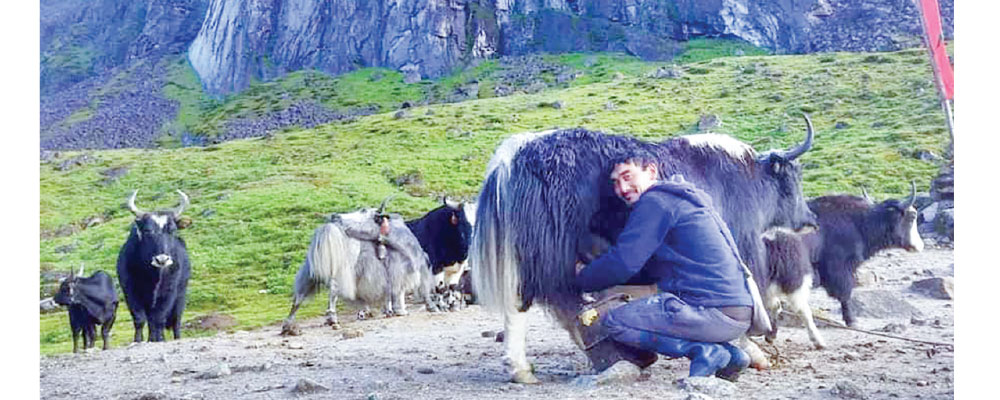

By Radha Luitel,Phidim, Sept. 4: Sandeep Rai, from Panchthar Falelung-4, returned to Nepal after working in Malaysia as a migrant worker for six years. Now he has embarked on a new venture – yak farming in Falaut.
Santa Kumar Rai, hailing from the same area, has returned home after a seven-year period in Saudi Arabia and Qatar as part of his foreign employment journey.
Over the past two years, he has developed a keen interest in the same occupation of yak farming.
Santa Kumar shared, "In the past, the life of a herder was quite challenging. We had to transport the ghee we produced to various markets in both Ilam and India for sale. This is precisely why I decided to return to yak farming, now the challenges have been addressed and provide a more sustainable way to manage my business."
"Previously, accessing the yak shed, located far from human settlements, was a scary thing due to the lack of transportation and communication infrastructure. This made it extremely difficult to seek medical treatment in case of illness. However, with the recent developments in road connectivity and improved communication networks, along with the availability of veterinarians in the yak shed pocket area, we found it feasible to return to our traditional business," he explained.
The yak shed pocket areas, including Sandakpur, Aahal, Charrate, Nepaltar, Falaut, Bikhe, Tinsimana, and Tarifule Chaunri, are situated along the border of Panchthar, adjoining India and Sikkim.
To address challenges like wildlife attacks, export issues, market bottlenecks, and disease threats in these areas, the Phalelung Rural Municipality, in collaboration with the provincial and federal government, farmers, and stakeholders, has initiated programmes to support yak breeding and a yak festival. After the initiation, farmers are attracted to farming.
Chandra Lal Nepal, a prominent farmer, stated that five young individuals, including Sandeep and Santa Kumar, who were engaged in various other businesses, have made a return to yak farming in recent times.
To revive and promote the declining yak farming business, the Phalelung Rural Municipality, in collaboration with yak herders and associations dedicated to yak farming, initiated the Yak Tourism Festival in the area
back in 2017.
Since the inception of the festival, significant developments have taken place. The road has been extended to Kharak, the location of the yak shed.
Moreover, agencies at the provincial and federal levels, in conjunction with the veterinary hospital, local government, and various government bodies across all three tiers, have offered grants for materials to support the growth and promotion of the yak industry.
Nepal added, "Treatment and insurance programmes for cases of illness have also progressed, aiding in marketing the products to visitors from both within the country and abroad who come to see the yaks. Notably, entrepreneurs have taken a keen interest and started purchasing yak products directly from our sheds."
Bir Bikram Thamsuhang, Chairperson of Phalelung Rural Municipality, highlighted their efforts to link yaks with the culture and tourism of the Himalayas, aiming to boost tourism through the festival.
Thamsuhang emphasized that the festival's core concept, geared towards encouraging farmers in the surrounding region to support biodiversity conservation, promote business, market their products, and contribute to biodiversity preservation, is on a path towards success.
In a celebration held every New Year's Day at the border between India's Sikkim and West Bengal, farmers showcase various products such as yak, goat, sheep, and yak wool. This exhibition also features yak-related items. As a result, entrepreneurs are thriving in the business of yak and related products.
Panchthar's Phalelung and Yangwarak are designated areas for yak farming, where over a thousand yaks are raised.
-original-thumb.jpg)