- Wednesday, 27 May 2026

Management Of Vendors

Arun GC
Food is more than just a commodity to fulfil hunger; it is also a culture. As a result, we may find a diverse range of cuisine all across the world. Furthermore, culinary culture carries a society's past.
However, as knowledge, science, and technology develop, we are uncovering both positive and negative elements of current food systems. Street marketing in Nepal is one such culture that is now being contested.
Several intriguing outcomes have emerged from Nepal's recent local government elections. Mr. Balendra Sah has been chosen as the head of the Kathmandu Metropolitan City. His involvement in the unorganised market has elicited both praise and condemnation.
Inhumane Act?
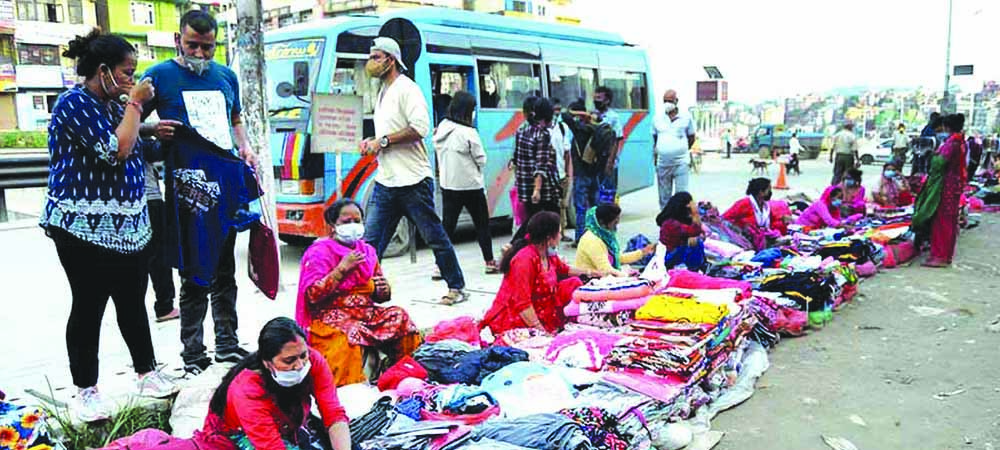
Opponents of this notion often challenge the KMC's decision to cleanse the capital's streets of merchants and hawkers on the basis of humanism. They claim that such an organised market is not the result of an individual's choice, but rather of governmental policy and persistent poverty. Such marketplaces are typically run by underprivileged families and cater to low- and middle-income families. It has a tremendous economic influence on society and the entire country. Some say that the current strategy aims to eliminate poverty by eliminating the poor.
People who support the KMC efforts are demonstrating their faith in the aesthetic worth of the city as well as the rule of law. The vast majority of these establishments are unlicensed and unregulated. Furthermore, some of these activities are occupying public space without official permission and obstructing public mobility. Nonetheless, the municipal administration has not disclosed the initiative's motivations.
This marketing method has an indisputable economic and cultural influence. It is also apparent that there are significant safety risks in this market system. The "Panipuri" and "Chatpate" are said to be responsible for the latest cholera epidemic in Kathmandu. Poor hygiene, dirty water, and poor environmental quality, to name a few factors, all contribute significantly to food safety hazards. Food safety hazards are a public health problem. As a result, upgrading the city's food supply becomes critical. The action can be justified on this basis. However, it is also necessary to consider whether there were or are alternate means to achieving the same aim.

The "hawker" culture, or street food system, of Singapore has a long history. It dates back to the 1800s, when Singapore was a prosperous port city. During this time, it drew immigrants from a variety of countries, including China, India, and Indonesia. They took their culinary culture with them. They gradually realised that street hawking may be a legitimate source of money. Several unemployed persons started this hawking enterprise after the Second World War. During this time, there was also an increase in criticism against hawking. As a result, Governor F. Gimson established the Hawkers Inquiry Commission in 1950.
Access to clean water was a major concern in Singapore during this time period. As a result, improper sanitation and hygiene were unavoidable. Similarly, garbage disposal is another issue for which the hawkers are being chastised.
Following Singapore's independence in 1965, there was a push to licence hawkers and shift them to a more organised environment. Despite this endeavour, unlawful peddling persisted. The Hawker's Department Special Squad was founded in 1974, and public health inspectors were given handsets identical to those used by police.
From 1971 to 1986, the government transferred over 18,000 hawkers to markets and hawker centres with suitable amenities where they could work in a safe and sanitary environment. 54 hawker centres were developed between 1974 and 1979. Each hawker centre was developed with a distinct architectural design that not only controlled the hawkers but also enhanced the country's visual worth.
There are now 118 hawker centres in Singapore. Singapore announced plans to create 13 new hawker centres by 2027 in 2019. Several farmer development projects are being implemented by the National Environmental Agency (NEA). Hawkers are given training, apprenticeships, and incubation services by the government. They are also offering infrastructural upgrades to handle the expanding food safety problems. Furthermore, they are giving small business recovery funds to people who have been most impacted by the COVID-19 epidemic. To run the hawker centres, the NEA has devised a defined protocol and assistance programme.
Learning Opportunities
One example is the Singapore model. That doesn't mean we have to copy what Singaporeans have done when it comes to allow street vendors to continue their business. This instance, on the other hand, is both fascinating and appealing. They addressed the concerns of both customers and hawkers at the same time and in a sustainable manner. Furthermore, they incorporated and benefitted from the hawker system into their mainstream economy. As a consequence, identifying the core issue and finding a delicate remedy will result in a better and more lasting end that will serve as an example to others.
In our situation, regulation and food safety would be the key challenges. Registration, training, assistance, and relocation appear to be viable steps to achieve this goal.
We've also had priorexperience, such as in the Bhrikutimandap market. However, it was unable to keep up with the pace of updates and meet client demand. Furthermore, there was no evidence of government assistance for modernising this sector.
(GC is an agriculture expert)
-original-thumb.jpg)