- Thursday, 28 May 2026

Paddy Farmers' Woes
.jpg)

Some decades ago, Nepal used to be regarded as a country with self-sufficiency in farm products. There was no need to import food from outside the country. That is how the country's economy was based on agriculture, with the status of country as Krishi Pradhan. Nepal is still a farm dominated country but things are changing of late. Domestic food production is not able to meet the total food demand. Terai region was once called the bread-basket of Nepal. The country used to export rice. But situation has become quite different now. We are spending billions to import food items. This is happening because our able agro manpower is migrating out of the country while the fertile lands are lying barren. By expediting agricultural production within the country and substituting food import, the country could save the precious foreign exchange as well as maintain food security.
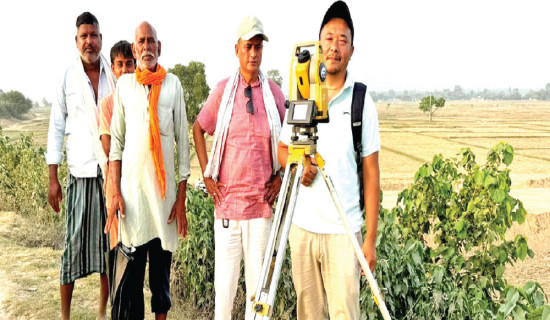
The Terai belt produces huge amount of foodstuffs including rice, lentil and vegetables. But the cereal grains are sold to Indian traders immediately after harvest. Later, when the country faces food shortage, same foodstuffs have to be imported back after value addition and processing. With the facilities of market, cold storage and processing, food produced within the country could be retained and consumed. For this, the government should not only fix the market prices of food products but also purchase the products from the farmers. During the harvesting season, rice, wheat and lentils are in higher supply. When the farmers can sell their products when they want, they are encouraged to get engaged in farming. If the surplus products are sold within the country, it can maintain crucial food security. Currently, farmers are in protesting mood saying that the government did not purchase their paddy when they wanted to sell it.
A Cabinet meeting on November 2 had fixed the minimum support price of paddy for this year. The price of coarse paddy has been fixed at Rs. 2,967 and medium paddy at Rs. 3,128 per quintal. After the decision, the farmers were elated hoping that they could sell their rice at the right price. But farmers say that they have been disappointed because the entrusted company did not make any arrangements to buy their products. The state-owned Food Management and Trading Company Limited (FMTC) has been entrusted with the responsibility of purchasing rice at minimum support price from 10 districts that produce large bulk of rice. The company is now pretending that it has not received any instructions for the purchase of paddy. The government needs to come forward and instruct the concerned agencies to purchase the surplus rice of the farmers. Government policies and guidelines about the purchase of food products should be clear and unambiguous so that farmers can sell their produce in time.
If the farmers are not able to sell their products, there is the danger of the food products being sold out of the country. That ultimately affects food security and food self-sufficiency of the country. The government needs to hold talks with rice producers and FMTC to end the agitation of the farmers. Most of the farmers of Kailali, Kanchanpur, Bardiya, Banke, Rupandehi, Janakpur, Jhapa and other districts are said to have already sold more than half of their paddy at a low price even before the support price was set by the government. If the government does not buy rice at the support price, the traders and middlemen take advantage of it. Traders generally buy paddy from farmers at lower prices and produce rice from it and sell it at a high price. This is counterproductive for both farmers and consumers.