- Thursday, 28 May 2026

Glued To Screen

Dixya Poudel
It is through socialisation that children learn the essence of social interaction. Primary socialisation is one in which children are taught to adjust to their societies by immediate family members such as parents and siblings. Secondary socialisation on the other hand is one that is moderated by school and peer groups. From the moment one is born till the moment one departs this earth, there is a continuous adaptation to change. Whether in schools among peer groups, at work with colleagues or at home with immediate family members one is always adhering by social rules.
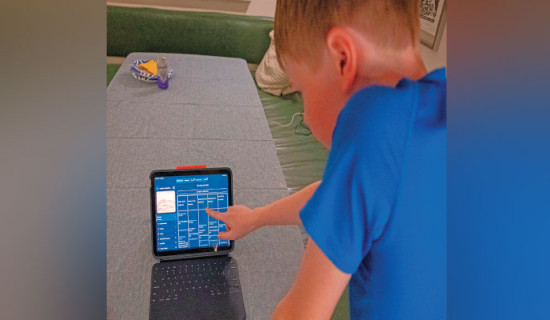
While these modes of socialisation are taught at childhood, individuals keep learning as they grow and adapt to their environment as is expected of them. And today there is a new form of agency in socialisation which is the ubiquitous screens. Video platform such as YouTube has transformed the way people view news and shows. It has also become indispensible when it comes to placating young children who are indulged with one YouTube kids show after another in hopes that they will readily eat their meals or simple enjoy their time while parents can have few quiet moments.
And it is said that children today learn from their screens as much as they do from their family members. However, it is essential to moderate what kids watch online. More importantly, teenagers should be taught to peruse a healthy approach when it comes to online media. And media is everywhere, from newspapers to TV/radio/FM and today online media such as social media has established itself as the reigning platform.
Even in Nepal, citizens regularly tune to online news media sites such as Routine of Nepal Banda, whose social media accounts have millions of followers. No doubt such followers are eager young Nepalis looking for significant news from Nepal and abroad that can routinely land in their feed. Even when there are uncertainties over the account’s news sources, youth tend to lap it up which only reflects the prevalence of social media in the younger generations.
It is quite troubling how the online media is increasingly prevailing over the youth culture that in turn is shaping the young minds today. Youth now learn about the world, their nations, traditions and politics through such media, which only adds to the prowess of algorithm driven Instagram, Facebook etc. Twitter might be a news mogul and WhatsApp a messaging platform, but such social networking sites are becoming a norm, one in which lives are governed by the screens.
They are teaching the young minds values which they ought to be learning from their family, peers and school. Sure they connect to one another, or rather ‘follow’ and ‘friend’ in the realms of social media but they are spending more time online than off. It could trigger mental health problems or maladjustment as they grow up preferring the screens over real time conversations.
Especially online platforms should be dealt with caution. Screens cannot substitute the significance of IRL communication. Parents can limit screen time for their children and read books to them at bedtime while encouraging them to socialise with their grandparents, siblings, friends and relatives. By being guided towards positive connections that are preferentially not through the screens, young minds will eventually gravitate towards meaningful conversations.