- Thursday, 28 May 2026

CIM urges to change credit rule
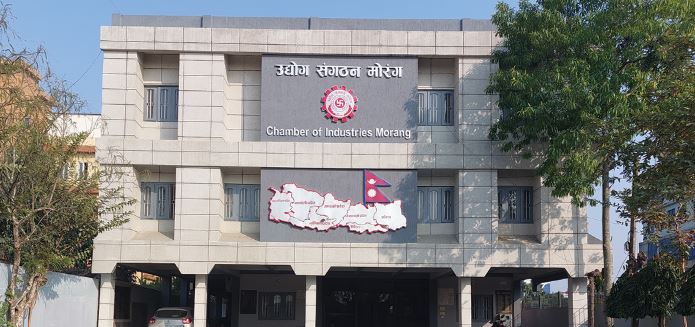

By A Staff Reporter Kathmandu, June 21: The Chamber of Industries Morang (CIM) has demanded for an arrangement that the credit to the productive sector will not be counted in credit to deposit
(CD) ratio through the monetary policy of the coming fiscal year 2022/23. The organisation suggested the Nepal Rastra Bank (NRB) to make such arrangements for the coming fiscal year to relax the liquidity problem in the banking sector.
The organisation also suggested mobilising the non-performing fund in the government coffers to address the liquidity problem in the banking sector and fulfill the immediate need.
Issuing a press statement, it said that it is necessary for banks and financial institutions to reduce the cash reserve ratio in the NRB and increase liquidity to be invested.
In order to ensure that there is no shortage of liquidity in the productive sector, the CIM suggested making provision for non-calculation of loan disbursed in the sector in CD ratio.
Similarly, the organisation has also suggested suspending additional risk management arrangements to be made by the financial institutions in the productive sector where the debt equity ratio has not been maintained for at least two years until the financial balance is normalised.
The CIM suggested the central bank to ensure that there is no shortage of foreign exchange for the import of raw materials, machinery and other materials required by the domestic and export-oriented industries.
It suggested the central bank to increase the credit limit for the productive sector and to continue refinancing.
Rising interest rates have pushed up the cost of production of domestic manufacturing industries, weakening their competitiveness, the organisation said.
The organisation also suggested to differentiate the interest rate of credit to the productive sector and credit to other sectors and maintain the rate so that the credit to the productive sector does not limit to single digit.
It also demanded to stabilise the interest rate of loans flowing into manufacturing industries for at least five years.
The CIM added that the provision that the goods should be brought within 90 days of opening the letter of credit when importing goods required by the industry is not practical in case of industrial mill machinery.
It has been suggested to make arrangements to pay only online if the amount of customs duty on imported goods is more than Rs. 2 million.





-square-thumb.jpg)