An international friendly football match between Nepal and Pakistan is being held tomorrow at Dasharath Stadium in Tripureshwar.
The Election Commission of Nepal has issued a four-point instruction regarding the ban of use of prohibited goods in the polling stations on the Election Day.
According to the 2021/2022 Open Doors Report on International Educational Exchange, data released by the Institute of International Education (IIE) and the U.S. Department of State Bureau of Educational and Cultural Affairs, Nepal is also the 12th leading place of origin for international students coming to the United States.
"Nepal Festival Perth is the showcase of Nepalese culture through language, ethnicity, Costumes, arts and architects and food.
Appealing to the people to vote for the ruling coalition, leader Prachanda termed the alliance of the ruling five parties as the Pach Pandav and the alliance led by the main opposition party in the erstwhile Parliament, CPN (UML) as the Kaurav.
Prime Minister and Nepali Congress president Sher Bahadur Deuba has said he is fully committed to abiding by the people’s mandate.
A total of 14 new cases (RT-PCR and antigen tests combined) of COVID-19 have confirmed on Tuesday while 20 people recovered from COVID-19.
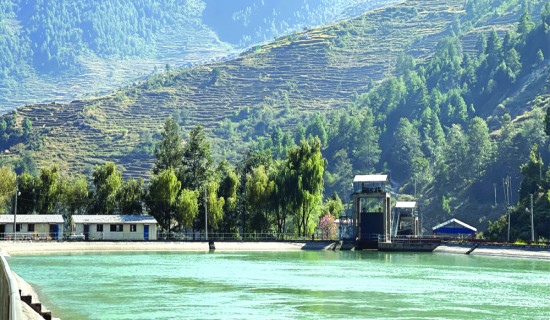
By Krishna Adhikari, Kathmandu, Nov 15: Nepal, which had been facing power cuts until some years back, is now not only in a position to fulfill the domestic demand for power, but also to export power during the monsoon.fulfilAt the same time, Nepal is movng on the path of transition to electric energy from its dependence on fossil fuels at a relatively fast pace. This will contribute to reducing the emission of so-called greenhouse gases and will also reduce economic risk. Ninety-eight percent of electricity in Nepal is produced from hydropower and other renewable energy sources. Nepal is currently producing 2200 megawatts power from these sources while power plants with the capacity of generating a total of 5,000 megawatts are under construction. This clean energy is adequate to reduce the carbon dioxide emission resulting from the energy sector in Nepal down to 8.6 million metric tonnes until 2030 and to 3500 million metric tonnes until 2045. With the significant use of the clean energy, Nepal will be reducing the amount of domestic emission of greenhouse gases in the South Asia region as well. For this, Nepal needs to manage the clean energy during the dry season. By doing so, Nepal can earn revenue of 9 billion USD annually from 45 gigawatt hydropower and nine gigawatts solar power. This trade can help reduce over 100 million tonnes carbon dioxide per year. Last year at COP26, the Government of Nepal announced its target to achieve net-zero carbon emission by 2045. However, the mainstay of Nepal’s energy sector is traditional biomass and imported fossil fuels which have adverse impacts on the environment, health, and the national economy. Therefore, Nepal can achieve its Long-Term Strategy for net-zero emission goal only if there is major shift in energy use from traditional biomass and imported fossil fuel to clean energy sources because the energy sector is the largest contributor of Nepal’s total carbon dioxide (CO2) emission accounting for 54% of total emission. Today, the Energy Day event is being organized as part of the 27th Conference of Parties (COP 27) of the UN Framework Convention on Climate Change (UNFCCC) in Sharm el-Sheikh, Egypt. The event is dealing with all aspects of energy and climate change, including renewable energy and energy transformation, with a specific focus on just transition in the energy sector and green hydrogen as a potential energy source for the future. Hence, this is an important opportunity for Nepal to inform the world that Nepal can play a key role in the clean energy transition within the country as well as in the region by increasing its clean energy consumption and exporting hydropower and other renewable energy generation to the neighbouring countries. A team comprising of high-ranking government officials including Secretary at the Ministry of Energy, Water Resources and Irrigation, Dinesh Kumar Ghimire, from Nepal is already in Sharm el-Sheikh to participate in the Energy Day event. Hydropower plays a predominant role in Nepal’s electricity system. However, variability in hydropower generation in Nepal is a major challenge. There is surplus electricity generation during the wet season, insufficient electricity generation, and/or significant electricity import from India during dry seasons. Smoothening Nepal's electricity generation curve, meeting Nepal’s rising electricity demand and exporting surplus electricity are major policy challenges facing hydropower development in Nepal. Nepal can alter these challenges into opportunities. For this, Nepal will need to diversify its energy mix to smoothen its electricity generation curve, promote demand response to match electricity production and operationalize cross-border energy trading. Nepal can develop its immense solar potential to complement hydroelectricity generation by generating electricity during the dry season when water flow decreases but the solar radiation is high. In addition, the distributed solar storage system can provide electricity in electricity-deficit areas, enhance the quality of power supply in rural areas and reduce the need for additional transmission infrastructure. Similarly, Nepal can rapidly shift from polluting energy sources to cleaner electricity to reduce its GHG emission as well as to reduce its economic vulnerability as 98% of its electricity generation already comes from hydropower and other renewable energy sources. Currently, the supply from these sources is 2,200MW while another 5,000MW are under construction. Therefore, there is an opportunity for the country to move to electric cooking, electric mobility, powering all industrial, commercial, and agricultural heating, cooling and motive power with clean electricity as well as providing clean electricity to all Nepalis. By doing so, Nepal’s energy-related CO2 emissions can be reduced by 8.6 million MTCO2 in 2030 and 35 million MTCO2 per year in 2045. Besides, domestic emission reduction, Nepal can offset GHG emissions in the South Asian region by exporting its significant clean electricity generation. By doing so, Nepal can manage its surplus during the wet seasons as well as could earn revenues of up to $9 billion per year from the 45 GW of hydropower and 9 GW of solar power. This trade could reduce emissions by up to 100 million tonnes of CO2 per year by substituting emissions otherwise produced from coal-fired and natural gas power stations. These figures show that Nepal can be a global leader in the clean energy transition. Energy day event at COP27 provides Nepal with the opportunity to show the world what can be done with Nepal joining the Clean Energy Transition Partnership and Powering Past Coal Alliance (PPCA) alliances. Alongside these commitments, Nepal will also be asking for increased investments in clean energy resources at COP27 and recognition in the climate rules to gain recognition for its clean energy trade and emissions reductions in other countries. UK government has already supported the Government of Nepal for its clean energy transition through the GRID framework in partnership with multiple development partners and the Nepal Renewable Energy Programme (NREP). NREP is implemented through an agreement between the governments of Nepal and the UK government. This programme is supporting the Government of Nepal/ Alternative Energy Promotion Centre (AEPC) to conceptualize and operationalize the Sustainable Energy Challenge Fund (SECF), the first public incentive scheme to wholly support the private sector in distributed renewable energy development in Nepal. SECF has helped the private sector, with viability gap funding support, to invest in renewable energy and clean energy transition projects that help to provide clean energy access, promote economic growth, create jobs and help reduce demand for fossil fuels and greenhouse gas emissions. With SECF support, solar rooftop projects, solar lift irrigation projects and above 6,000 electric cooking have been installed through a market-based approach. (RSS)
He said the provision of 33 per cent participation of women has been implemented due to the inclusive character of the constitution.
Voters along the Nepal-India border areas in Banke district have demanded elections candidates for the elections to the House of Representatives and Province Assembly take initiations for a reliable security system in the settlement.
Six people died of dengue in Chitwan so far in the current fiscal year.
Election officials for the Elections of the House of Representation (HoR) and Provincial Assembly (PA) members have been sent to Limi by Nepali Army helicopter.
Prime Minister and Nepali Congress president Sher Bahadur Deuba is arriving in Dailekh today.
The price of hallmark gold has increased by Rs 1,000 per tola in the domestic market today compared to the previous day. A tola is equivalent to 11.66 grams. The price of hallmark gold was Rs 97,200 on Monday.
The government has decided to grant a four-day holiday during the November 20 elections of House of Representatives (HoR) and Provincial Assembly (PA) members.