- Tuesday, 5 May 2026


SUSHMA MAHARJAN
Vehicle-free Saturdays, connecting people with heritage in Ason
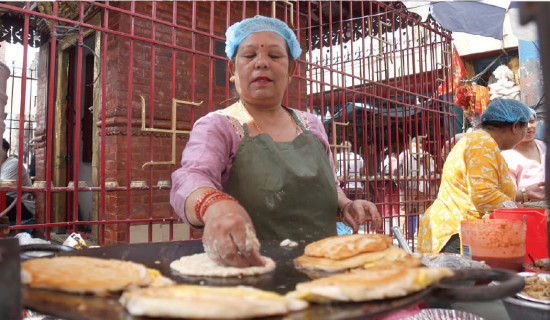
The usually crowded and chaotic lanes of Ason wore a different look on Saturday as the Kathmandu Metropolitan City (KMC) rolled out its ‘vehicle-free Saturday’ campaign, transforming one of the Valley’s busiest marketplaces into a vibrant pedestrian zone.
Night bus service begins in Kathmandu
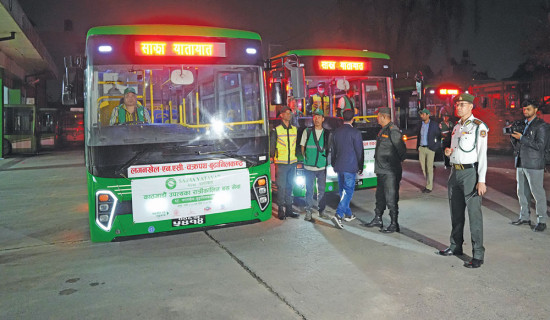
For years, the capital’s streets have grown quieter after 8 pm, but not for those still on the move. Office workers finishing late shifts, students leaving evening classes, and shop employees closing their day have long shared a common struggle: finding affordable and safe transport home. On Tuesday, Kathmandu Metropolitan City (KMC) attempted to respond to that gap with the launch of a night-time public transport service equipped with free Wi-Fi, aiming to improve mobility and enhance safety for late-evening commuters across the Valley.
KMC intensifies daily cleaning of Bishnumati, expands work to rivulets
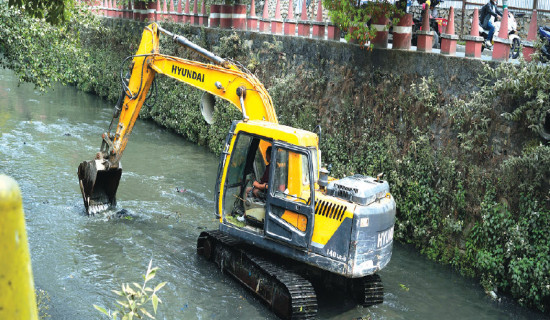
Sanitation workers continue to remove sludge, plastic waste and debris from the Bishnumati River and its rivulets, as the Kathmandu Metropolitan City (KMC) steps up daily efforts to clean one of the capital’s most polluted rivers.
True respect for martyrs lies in meaningful reforms
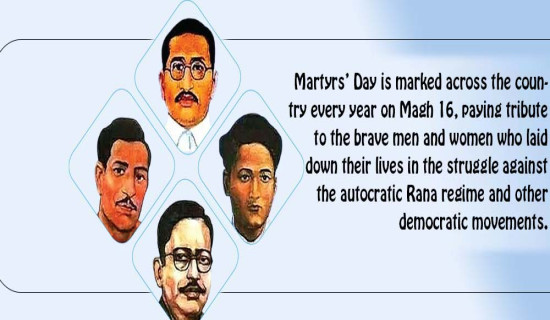
Martyrs’ Day is marked across the country every year on Magh 16, paying tribute to the brave men and women who laid down their lives in the struggle against the autocratic Rana regime and other democratic movements. Among the earliest martyrs, Lakhan Thapa of Gorkha is remembered as a pioneering freedom fighter who boldly challenged Rana rule. He emerged as a courageous leader demanding political reforms, restoration of royal authority, and basic rights for the people.
Nepal’s exhibition infrastructure insufficient and outdated
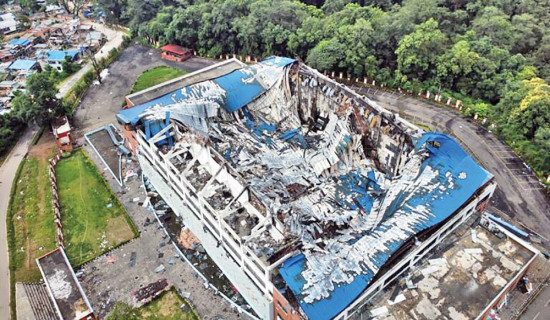
Exhibitions are globally recognised as powerful platforms for trade promotion, innovation, business networking and tourism. However, in Nepal, the absence of well-equipped exhibition and convention centres has emerged as a major structural bottleneck, limiting not only business growth but also the country’s potential in Meetings, Incentives, Conferences and Exhibitions (MICE) tourism. Despite the growing number of trade fairs, product expos and international forums organised by the private sector, the country still relies almost entirely on a single, government-owned venue, the Bhrikuti Mandap Exhibition Hall, whose deteriorating condition and limited capacity have become a major obstacle to exhibitions, conventions and MICE tourism.