- Thursday, 14 May 2026


Modnath Dhakal
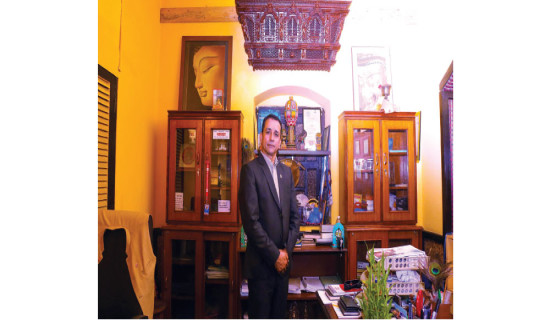
Bista's Dreams Of Flight Soaring In Business
You can find quite a few people who have fulfilled their childhood dreams, achieved excellence in multiple fields, and tried their fate in business, remaining successful in their ventures. Hotelier Shangharsa Bista is one of those few.

'A Road To A Village' Reaches Beijing
"Does Nepal produce its own movies? The one I saw today is a good one." This question from a Chinese audience during an interaction on the film 'A Road to a Village' (Gaun Aayako Bato) startled Nabin Subba, director and prod
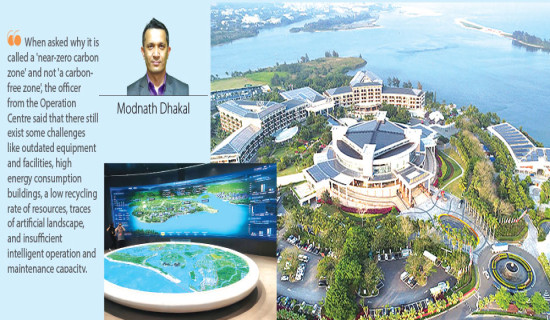
Boao's Model Carbon-Free Area
In an effort to create a model of a carbon-free urban centre, China has converted the Dongyu Island of Boao in Hainan Province into a near-zero carbon zone. This could be an initial step towards achieving carbon neut
CPC for maintaining relations with all political parties in Nepal
The Communist Party of China (CPC) is interested in developing and maintaining good relations with all political parties of Nepal, according to Xie Chuntao, Vice-President of the Party School of the CPC Central Committee also known as the National Academy of Governance.
Nepal stresses on multilateralism at Boao Forum
Nepali representatives at the annual conference of Boao Forum of Asia (BFA) 2024 said that Nepal accorded value to multilateralism in order to achieve national development goals. Speaking at a session on ‘Global Development Initiative (GDI): Promoting world peace’, former Deputy Prime Minister and vice-chair of CPN-UML, Bishnu Prasad Paudel, said that Nepal values multilateralism and remains committed to contributing actively to discussions within the GDI framework and other international forums.
Boao Forum deliberates on economic costs of climate change and conflict
Leaders of the Asian countries have called for a rule-based international order, seamless trade among the nations across the globe, and immediate and meaningful actions to tackle the impact of climate change.
China to continue strategic relations with BRI members
China has announced that it would continue to deepen people-to-people and strategic relations with the countries that are partner of the Belt and Road Initiative (BRI). While the world's second largest economy is applying measures to 'tighten up financial and economic discipline' in the possible challenges of resource management, speaking at a press conference organised in Beijing a
China has lessons for Nepal in investment, agriculture
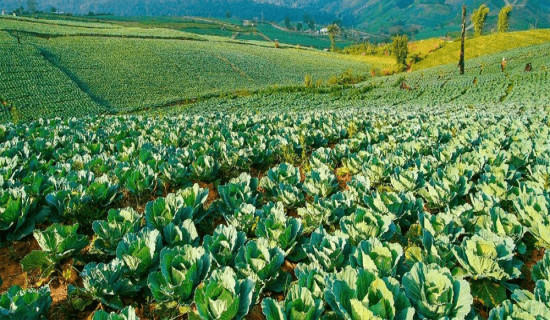
China has announced its national plan for 2024 with the economic growth target of 5 per cent and unveiled plans for boosting private investment - including the Foreign Direct Investment, and domestic consum
Construction business facing unprecedented downturn
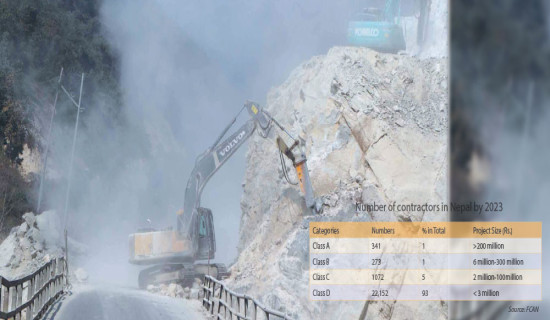
The construction industry in Nepal has been facing an unprecedented crisis which entrepreneurs call an ‘existential’ one. Overall, the construction business in the last year has been whittled down to a third of the total activities.

Provinces still struggle to function properly
The provincial assemblies in the seven provinces have completed the first six years of their life. With the creation of seven provinces on September 20, 2015, and elections for the provincial assemblies held on November 26 and December 7, 2017, the PAs were created on February 4, 2018
Revenue-expense gap continues to widen
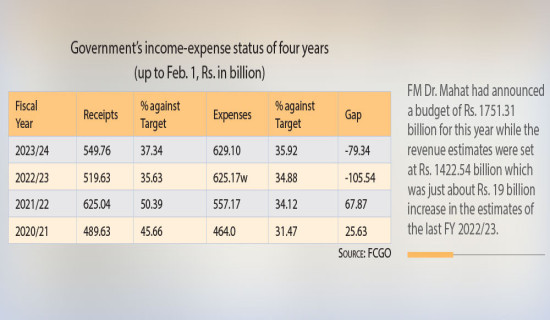
Government’s fiscal performance remained weak in the first six and a half months of the current Fiscal Year 2023/24 with a gap of about Rs. 79.34 billion in its total receipts and expenditure.
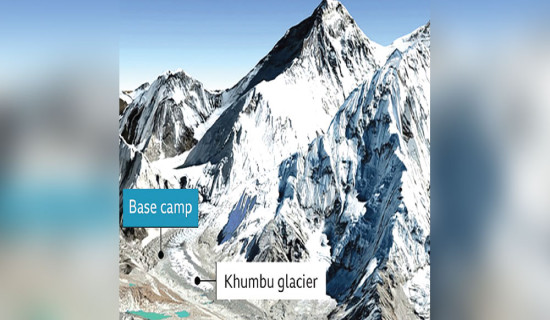
Are juveniles permitted for Everest trek?
Taking advantage of the absence of clear policy and procedures about taking children to high mountains of Nepal, a couple from Scotland took their 2-year old toddler to the Everest Base Camp (EBC) on October 25 last year.
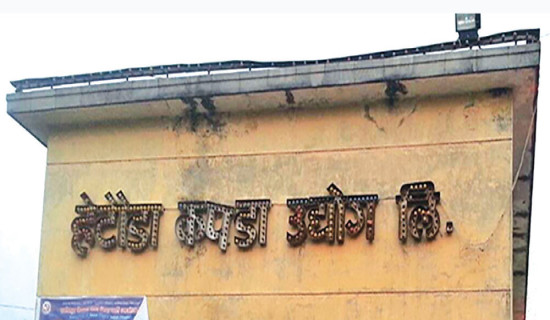
Nepal Army proposes to revive Hetauda Textile at Rs. 1.93 bn
The Nepal Army (NA) has said that the Hetauda Textile Factory (HTF) could be revived with a cost of Rs. 1.93 billion, and 2.6 million metres of textile could be produced within the next three years.
Informal economy in Nepal stands at 42.66% of GDP: Study
A recent study by the Central Department of Economics of the Tribhuvan University (TU) has estimated the size of Nepal's informal economy at 42.66 per cent of the Gross Domestic Product (GDP) in the Fiscal Year 2020/21.
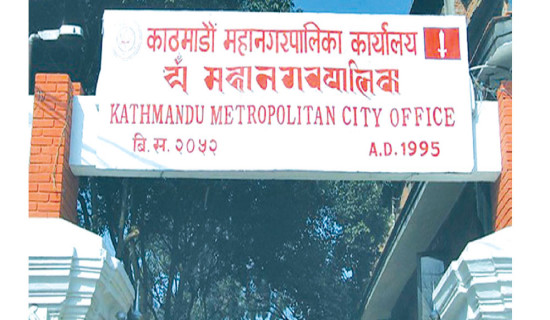
KMC’s cyber security training project receives overwhelming response
The Cyber Security Training project announced by the Kathmandu Metropolitan City (KMC) has drawn the tremendous attention of youth and witnessed the fill-out of 1032 forms in 24 hours till