- Sunday, 7 June 2026

Chongqing-Assisted Livestock and Fishery Support Project Launched in Jhapa
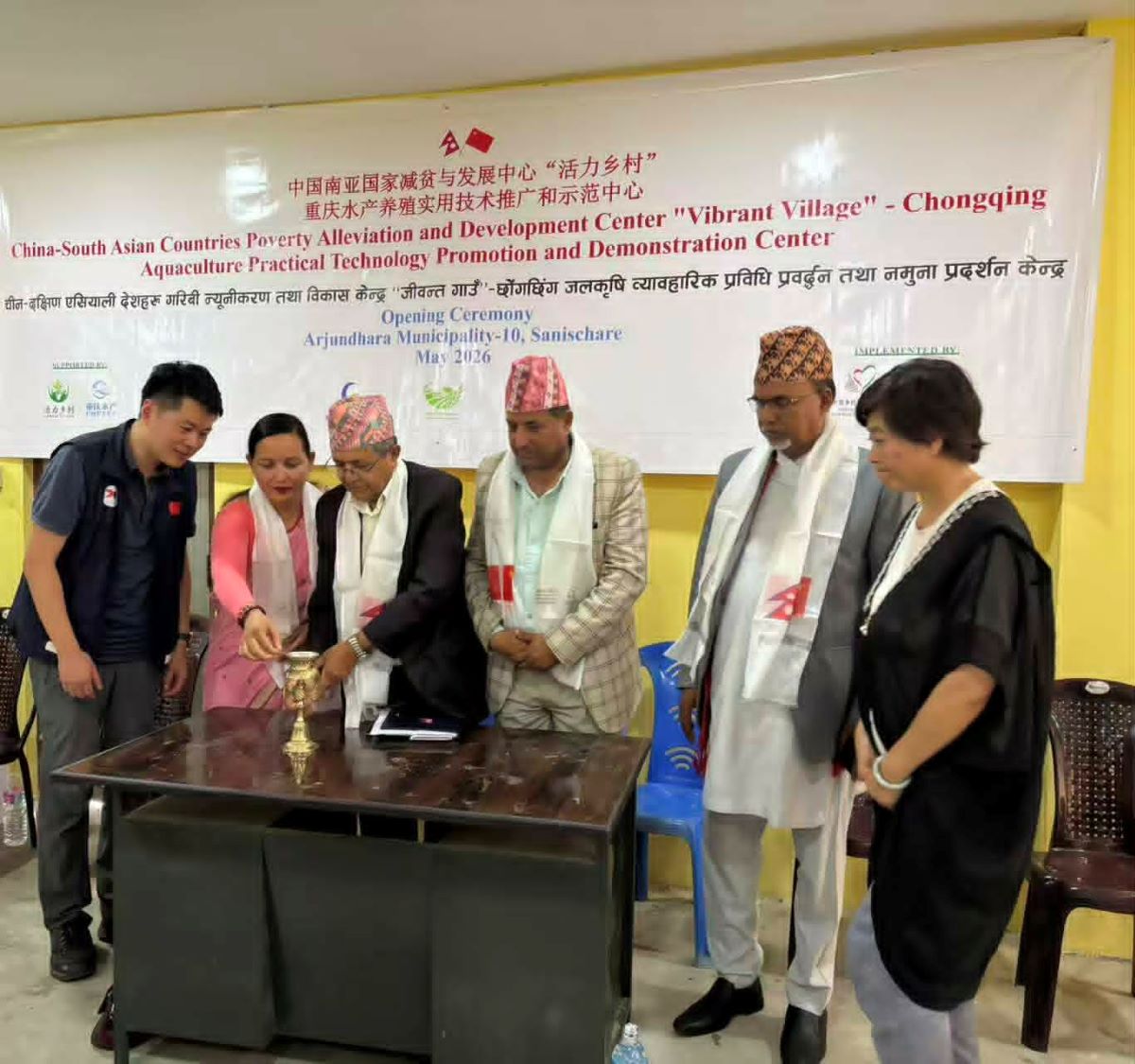
By Our Correspondent, Jhapa, May 18: The Livestock and Fishery Support Project in Jhapa district was officially launched on Sunday in Birtamode with the support from the People’s Government of Chongqing Municipality and the Chongqing Municipal Commission of Agriculture and Rural Affairs of China.
The project is part of the Vibrant Village campaign of
the China–South Asia Poverty Alleviation and Development Cooperation Center.
The launch marks another important milestone in the
development of China–Nepal agricultural cooperation.
The project is coordinated and implemented by the
Nepal Office of the China Foundation for Rural Development in collaboration
with the municipal governments of Birtamode and Arjundhara. It aims to increase
farmers’ incomes and improve rural livelihoods in Nepal by introducing modern
Chinese livestock, dairy buffalo, and fish farming technologies, while also strengthening
the capacity of local farmers.
The project will focus on introducing Chinese
mechanized livestock and fish farming systems, improving farm management
practices, and providing technical skills training for farmers. It aims to
support the transformation of Nepal’s traditional livestock and aquaculture
sectors into modern and sustainable industries, promoting long-term
agricultural development, according to the press note issued by the China Foundation for Rural Development (CFRD).
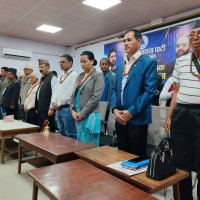
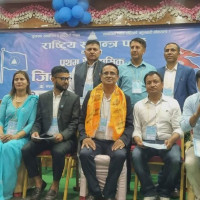
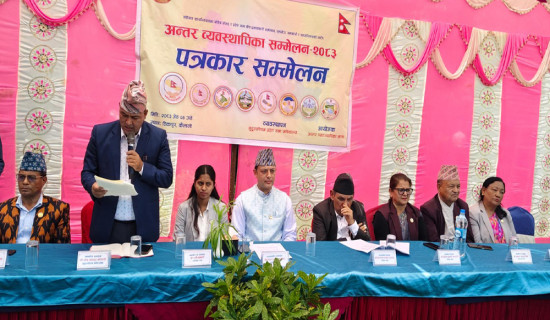
The launch ceremony was jointly witnessed by Chintan
Pathak, ISRAIL Masuri from the Ministry of Agriculture of Koshi Province,
representatives of the Embassy of the People's Republic of China in Nepal, and Zou Zhiqiang, Country Director of the Nepal Office of the China Foundation
for Rural Development.
The event attracted participation from representatives
of the Koshi Province government, local government officials, 120 local
farmers, and many community members, fully demonstrating the strong commitment
of both China and Nepal to jointly promote the transformation and development
of Nepal’s livestock and fishery sectors.
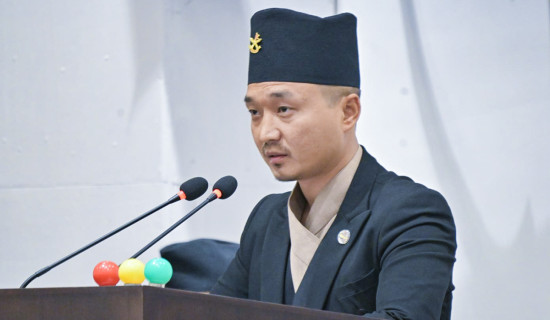
Former Speaker of the House of Representatives Dev
Raj Ghimire, Chintan Pathak, and ISRAIL Masuri from the Ministry of Agriculture
Development of Koshi Province delivered inspiring speeches during the ceremony.
They expressed sincere appreciation to the Chongqing agricultural experts
participating in the China–South Asia Poverty Alleviation and Development
Cooperation Center “Vibrant Village” Project for traveling a long distance to
Nepal to share advanced livestock and aquaculture technologies, according to the CFRD press note.
They noted that the dozens of advanced Chinese
agricultural machines introduced through the project have brought a fresh sense
of modernization to the people of Koshi Province. News of the Chinese experts
installing the new agricultural equipment has spread rapidly across the
province in recent days, becoming one of the most widely discussed topics in
the region. The speakers also thanked the Chongqing Municipal Government for
its generous support and the Chinese experts for their dedicated contributions.
Leaders attending the event highly praised the
initiative and emphasized that, under the framework of the China–South Asia
Poverty Alleviation and Development Cooperation Center – Nepal “Vibrant
Village” Project, and with the support of the Embassy of the People's Republic
of China in Nepal, the project carries significant importance for promoting
agricultural modernization and rural development in Nepal.
Zou Zhiqiang, Country Director of the Nepal Office of the China Foundation for Rural Development, stated that the project was developed based on a field assessment conducted in Jhapa District in 2023 by CFRD and Chinese agricultural experts, which identified strong development potential in the local livestock and aquaculture sectors.
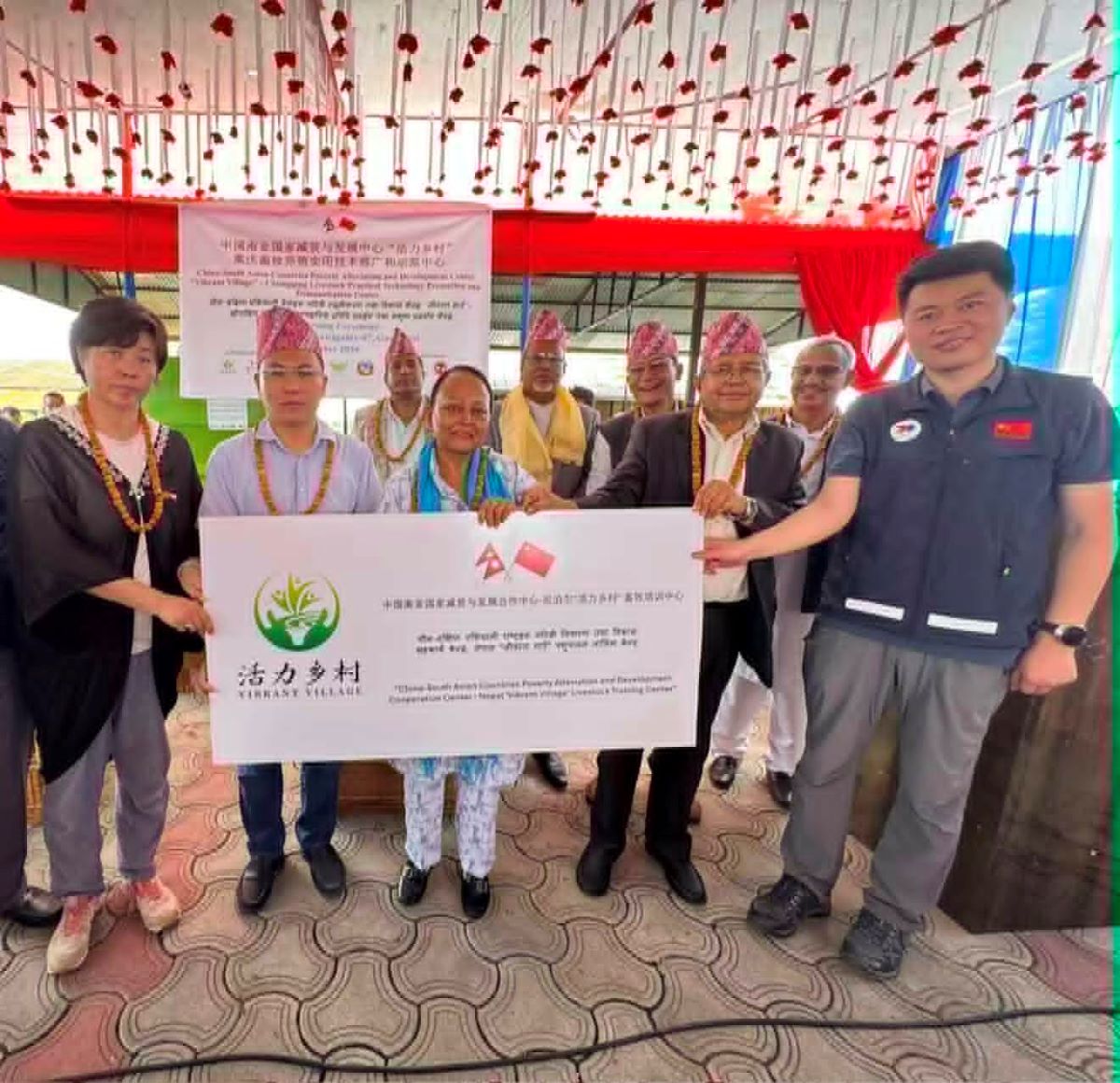
With the support of the Chongqing Municipal
Government of China, the project has completed the installation of modern
equipment aimed at improving the efficiency of livestock and fishery production
systems. Chinese technical experts also participated in the installation
process and provided operational training to ensure the effective use of the
equipment.
More than 120 farmers have already received training
in improved buffalo and dairy cattle farming techniques, as well as modern
fishery practices. Follow-up training programs will also cover maize
cultivation technology for feed production, silage preparation and storage
methods, and improved farm management practices. These efforts are intended to
ensure the sustainability and long-term impact of the project, read the CFRD press note.
She stated that the project serves as a
demonstration model with strong potential for replication and expansion.
Through continued technical training provided by Chinese experts, the
initiative will further strengthen farmers’ production capacity and livelihoods
by promoting modern Chinese livestock and fishery technologies and improving
agricultural production practices in Nepal.
She also emphasized that the gradual implementation
of the China–South Asia Poverty Alleviation and Development Cooperation Center
“Vibrant Village” projects — including vegetables, hybrid rice, livestock, and
fishery initiatives — will help demonstrate China’s achievements in poverty
alleviation and rural development to Nepali farmers. The projects are expected
to serve as a model for Nepal’s agricultural modernization while supporting the
development of sustainable and climate-resilient agricultural systems driven by
local communities.
Chinese agricultural expert Zhai demonstrated strong
practical results in international knowledge exchange. The expert team
installed agricultural machinery on-site and provided hands-on training to
local farmers. They also shared advanced techniques in livestock and fishery
farming, post-harvest handling of agricultural products, and integrated vegetable
cultivation systems, aiming to strengthen community-based agricultural economic
development capacity.
Under the framework of the “Vibrant Village
Initiative,” the China Foundation for Rural Development has expanded related
programs across multiple regions of Nepal, implementing a series of flagship
initiatives. These include livestock and fishery development projects in Jhapa
District, hybrid rice demonstration programs in Chitwan, and greenhouse
vegetable cultivation systems in Lalitpur and Dakshinkali.
These initiatives reflect an integrated development
strategy that combines technology transfer with grassroots capacity building,
agricultural modernization, and rural innovation to support sustainable rural
development, read the press note.
In support of the implementation of advanced
livestock and fishery equipment provided through Chongqing’s assistance to
Nepal in Koshi Province, the China Foundation for Rural Development distributed
sports equipment for extracurricular activities to 10 government schools in the
region.
The ceremony concluded successfully with a field
visit and interactive exchanges between farmers and technical experts, marking
a productive and engaging close to the event, according to the CFRD press note.