- Monday, 18 May 2026

From exodus to enterprise: Singha Devi’s tea revival

By Hari Prasad Koirala,Morang, May 18: About three decades ago, residents of Singha Devi in Morang began moving in large numbers to the Tarai, citing the lack of development in the village. At the time, Singha Devi lacked roads, healthcare, communication services, drinking water, and electricity.
In a village battered by conflict, there was no certainty as to who might die and when. It was not only physical hardship, people also faced personal insecurity. Why continue living in such a bleak and isolated place? Around 1998, this was the shared perception among locals.
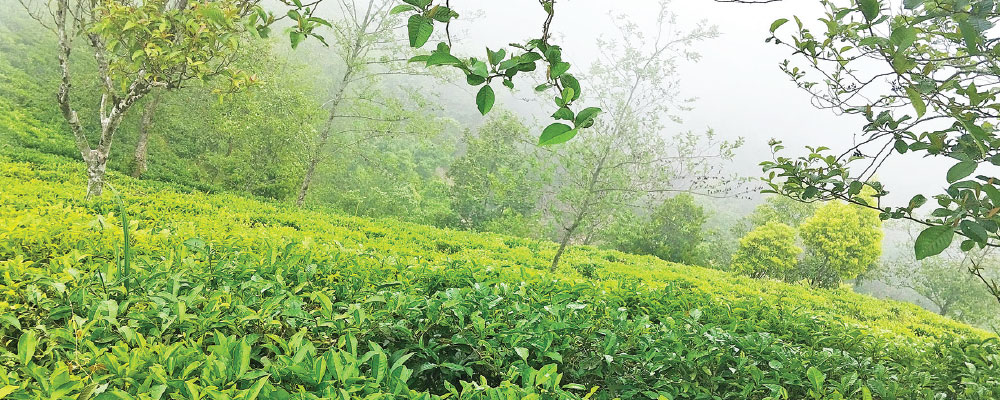
Twenty-seven years ago, in 1998, Narayan Rai of the then Singha Devi–5 devised a plan to cultivate tea commercially. He bought land from neighbours, relatives, and friends who wished to migrate to the Tarai.
Having spent 11 years working in Oman, he invested all the wealth he had earned abroad in acquiring plots and planting tea. Since he purchased land from everyone eager to leave for the plains, neighbours and local residents were pleased with him at the time.
Yet many still saw the barren hills as unpromising. With no irrigation facilities, those leaving for the Tarai would speak behind his back, “Narayan Rai will fail. Poor man, he is trapped.” However, after purchasing the land, Narayan steadily expanded tea cultivation.
By 2016, he had established a nursery of 600,000 saplings. The Tea Development Board also provided a grant of Rs. 200,000 to support the expansion of commercial tea farming. Saplings grown in a nursery spread across four ropanis of land enabled tea cultivation to expand over nearly 550 ropanis.
Initially, Rai brought saplings from Ramechhap, Sindhuli, and Nuwakot, but later began operating his own nursery. Moreover, many villagers started following the example of Narayan and his wife, Bina Khajum Rai. Bina said, “Those who used to mock us for planting tea in the early days are now also expanding tea farming.”
In October 2021, Narayan died while battling Covid-19. Since then, Bina has taken charge of the Matribhumi Tea Estate. In Nepal, most people immediately think of Jhapa and Ilam districts when tea cultivation is mentioned.
However, in Singha Devi, Kerabari–2 of Morang, Bina has transformed the tea plantation into a fully commercial enterprise. So far, Rs. 200 million has been invested in the Estate. Producing 5,000 kgs of tea annually, the company processes its own green tea using in-house machinery and supplies it to the market.
“We provide 2,500 kgs to a company under contract. We produce 2,000 kgs of black tea, while 500 kgs of green tea is sold in local markets and exhibition venues,” said Bina. As migration made it difficult to find workers, Bina brought in three families from Taplejung and Panchthar districts, and is providing them with residential facilities. She also operates a homestay.
According to her, about 14 workers are employed in the tea garden assist with the homestay whenever there is no work in the plantation. Although the tea estate generates an annual turnover of Rs. 5 million, it has yet to yield full profits. According to her, once full-scale production begins, the estate could generate an annual income of Rs. 10 million.
Bina is currently also operating the Matribhumi Agricultural Farm. The farm includes cows, goats, chickens, and ducks. She also produces vermicompost and liquid fertiliser while engaging in commercial kiwi farming. “I started the agricultural farm after realising that relying on only one business would not be enough to withstand difficult times,” she said.