- Friday, 15 May 2026

Ministries Cut Down

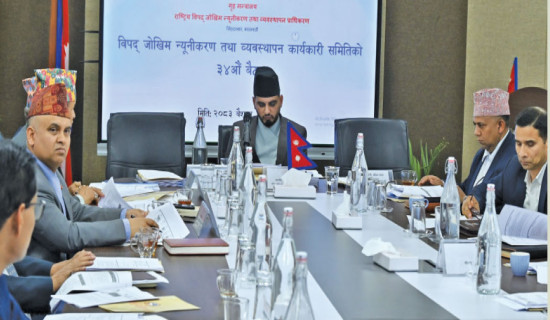
The meeting of the Council of Ministers on May 13 decided to lower the number of ministries from the existing 22 to 18 by approving the 'Nepal Government (Allocation of Business) Regulations-2083'. The goal is to maintain administrative reforms and austerity, reduce unnecessary recurrent expenses, and boost performance. It is part of the initiative under the government's '100-Point Agenda for Government Reform.' The overhaul comes on the heels of similar measures taken by the Bagmati Province government a little over a week ago, which decided to reduce the number of ministries from 14 to eight. The idea was to curtail spending and make administration hassle-free. As part of the plan, even the 50 offices would be excised from the current 198 offices. This effort is expected to save the provincial government Rs. 5 billion annually. The aim is to best utilize citizens' taxes in capital formation and development works.
Back to the May 13 decision, prioritising technology and innovation, the government has separated science and technology from the erstwhile Ministry of Education and established a new 'Ministry of Science, Technology, and Innovation' to handle newly added innovation-related tasks, among other changes. In the reorganisation of other ministries, extensive adjustments have been made, merging ministries with similar functions. The step has been taken to solve the problem of high operational costs and to make the state machinery more efficient.
Governance experts unanimously agree that Nepal does not need many ministries. Factors such as overlapping responsibilities, political bargaining, and weak coordination among ministries have made it unnecessary to have more ministries than are necessary. In the past, the country had repeatedly expanded ministries to satisfy coalition politics. Unstable governments meant that ministerial positions were tools to prevent alliances from collapsing. Jumbo cabinets were then split into smaller units, sometimes without clear functions. The result was that the overlapping sectors often had to work separately rather than as an integrated system. For example, sectors such as infrastructure, water supply, and urban development all have one or another part/s in common with each other, but, instead of working in tandem, the ministries overseeing these responsibilities would function as different entities. Not only may this lead to duplication of duties across departments, but it may also cause excessive spending and the misuse of taxpayers' money. Splurging money this way is unaffordable for a country reeling from a dire capital shortage to fulfil its colossal developmental needs.
Too many ministries slow down the government work, budgets get split, inter-ministerial disputes increase, and accountability becomes blurry, adding to administrative costs and hurting the service delivery to the people. At the end of the day, it's not a question of how many ministries we need; rather, it's a question of how to make the state capable. The state can function effectively with few ministries if the mandates are clear, there is strong coordination among ministries, and the policy survives changes in the government. At the same time, downsizing ministries alone will not automatically improve governance. We need specialised institutions that truly can address the nation's unique needs and vulnerabilities.
Federalism also changes the equation. At a time when powers have been devolved to provincial governments and local bodies, a cluster of ministries at the centre does not add up. Now that the sun has set on the politically created ministries, the government needs to embark on the task of strengthening provincial and local governments, as well as empowering civil servants and agencies to implement policy consistently.