- Thursday, 14 May 2026

Tiji festival begins in Mustang
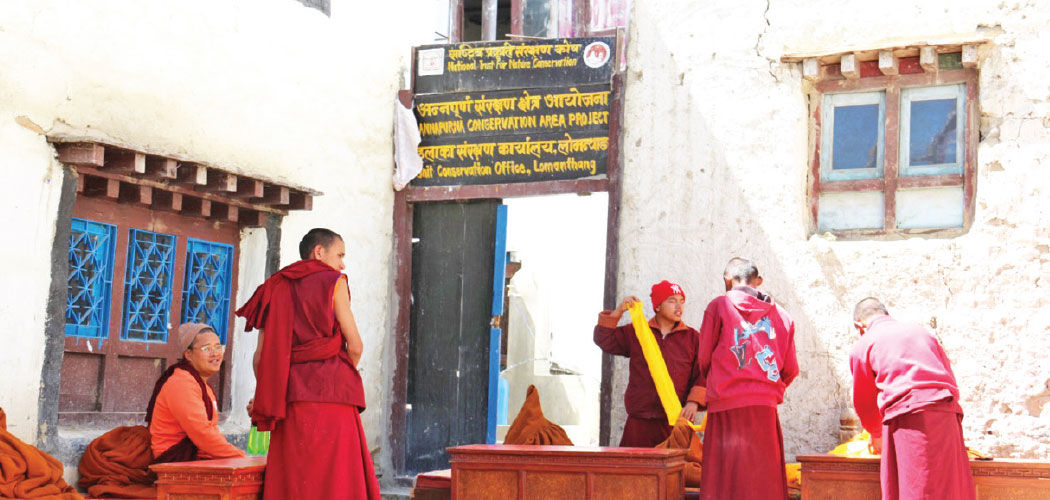

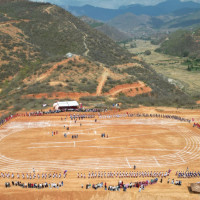
By Harikrishna Sharma, Mustang, May 14: The 15th-century historic and cultural Tiji festival began to be celebrated from Wednesday in Lo Manthang of Mustang.
The festival began with the display of a large thangka bearing the image of Buddhist religious Guru Padmasambhava Rinpoche in front of the Lo Manthang Palace, along with worship and rituals performed according to religious traditions by the Bista, Lowa and Gurung communities residing in Lo Manthang and Lo-Ghekar Damodar Kunda Rural Municipality.
The festival, which begins with prayers for hope and peace, involves worship of the deities of the land on the first day.
On the second day, rituals are performed depicting the destruction of demons that bring suffering to society, while lamas and monks conduct religious ceremonies and perform dances wearing crowns representing deities. On the third day, religious activities include dramatic performances depicting the driving away of demons.
The Tiji festival is also associated with the reincarnation of the Buddhist lama Dorje Sonu.
During Tiji, a large thangka featuring the image of religious guru Padmasambhava Rinpoche is displayed.
According to Lo Manthang Rural Municipality Vice-Chair Chhumi Bista Gurung, the thangka, which is approximately the height of a two-and-a-half-storey house, is exhibited for the public to worship and observe during the occasion of Tiji.
During the three-day festival, lamas offer prayers to prevent natural disasters, diseases, famine, epidemics and other misfortunes.
Lama dances and crown dances are the major attractions of the festival.
On the occasion, people exchange their joys and sorrows from throughout the year, share affection, resolve personal problems, and even residents of Upper Mustang living outside the district return during Tiji seeking relief from adverse planetary influences.
According to Lo Manthang Rural Municipality Chair Tashi Norbu Gurung, Tiji is celebrated in the belief that Dorje Sonu was reincarnated and removed fear, violence and demonic forces from the earth, establishing peace and order.
Religious records also regard the victory over those who oppressed villagers as another important aspect of Tiji. There is a belief that if the festival is not continued, continuous problems, natural calamities and unfulfilled wishes may occur.
For this reason, people of Upper Mustang leave aside their regular work each year to gather in front of the palace during the festival. The lama dance performed to the beating of drums is one of the festival’s main attractions.
Tiji was suspended from 1992 to 1994 due to various difficulties.
More recently, during the COVID-19 pandemic, the festival was observed for two years with only regular worship rituals and without allowing public gatherings.
Elderly locals say that, in earlier times, the people of Mustang would also invite Tibetans to attend the Tiji festival.
According to Madan Poudel of the Annapurna Conservation Area Project Area Office in Lo Manthang, more than 250 foreign tourists, along with domestic visitors, are present to observe the festival.
The seven-century-old palace, monasteries and ancient civilisation enclosed within mud walls are among the main features of Lo Manthang.