- Sunday, 7 June 2026

Efforts underway to protect Kamdi Biological Corridor in Banke
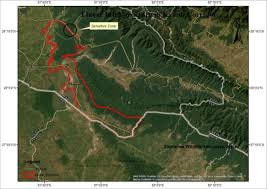

Ranjha (Banke), May 2: Conservation efforts have commenced targeting the Kamdi Biological Corridor in Banke.
Increasing human encroachment on the corridor has posed a serious threat to the area, prompting the need for its conservation.
Senior Forest Officer Sushil Subedi of the Division Forest Office, Banke, said the corridor, which serves as a transit route for wildlife movement along the Nepal-India border, was fragmented in several places due to the expansion of human settlements, deforestation, and encroachment.
Tree transplantation has been prioritized as part of efforts to protect the corridor.
As part of the conservation initiatives, around 100 hectares of land in Raptisonari-6 and along the Gulari Community Forest area has been cleared of encroachment and secured with fencing and tree transplantation.
The previously fragmented corridor is now being reconnected. The corridor consists of 18 community forests and two block forests. A wildlife habitat improvement programme has also begun.
The Division Forest Office, Banke, in coordination with the Integrated Landscape Management (ILaM) Project, has implemented programs aimed at grassland management, the construction of artificial water ponds, and habitat restoration. Recently, 15 artificial water ponds have been built along the corridor, which stretches across an area of around 450 square kilometers. The route is connected to the Suhelva Wildlife Sanctuary in India.
During the conservation efforts, bush species have been replaced with plantations of native plant species such as Sal (Shorea robusta), Khayar (cutch tree), and Asana (Kino tree), among others.
The initiatives have also emphasized improving the livelihoods of local people and promoting sustainable forest management. Mitigating potential human-wildlife conflict, fostering forest-based entrepreneurship, and promoting enterprises such as Duna and Tapari (leaf plate) production have also been focused, it is said.(RSS)

-square-thumb.jpg)