- Monday, 25 May 2026

Tighter borders hamper ordinary shoppers
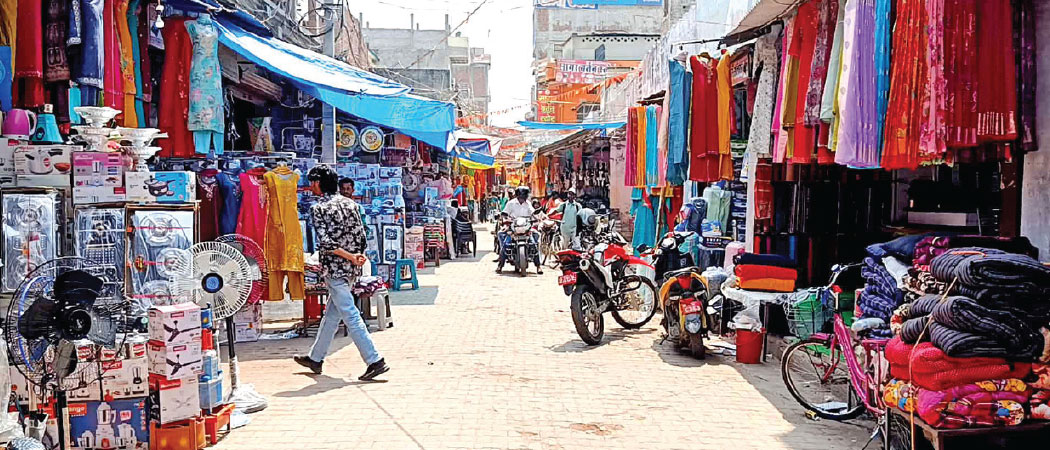
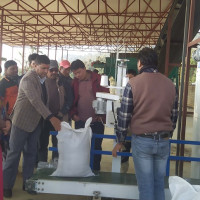
Photo: Siraj Khan/TRN Until a few days ago, there was hardly any space to stand in Rupaidiha, but now, it is turning deserted.

By Our Correspondent, Nepalgunj/Parasi, Apr. 20: Following the strict enforcement of a rule requiring customs duty on goods worth more than Rs. 100 at Nepal–India border points, there has been a noticeable impact on daily life and trade in border areas.
With fewer Nepali consumers bringing goods from India via the Jamunaha border point in Banke, the market in Rupaidiha across the border has begun to appear deserted, while consumers on the Nepali side facing increased difficulties.
According to the traders, the number of Nepali customers in Rupaidiha has dropped sharply of late, after authorities prohibited bringing in goods valued above Rs. 100 without paying customs duty.
Raza Imam, a clothing trader, said that business has fallen by more than half, with significantly fewer customers. Another trader, Suresh Mittal, noted that a market once busy throughout the day now appears almost empty.
However, President of the Nepalgunj Chamber of Commerce and Industry Tanka Dhami has taken a positive view of the stricter customs enforcement, expressing confidence that it will promote local trade.
He stated that a long-standing demand has finally been implemented and should be made even more effective.
On the other hand, members of the public and residents of border areas have criticised the rule as impractical. A local, Mubarak Siddiqui, accused authorities of targeting small consumers while failing to effectively control smuggling.
Similarly, Ramesh Thapa, another local, complained that the measure only burdens ordinary people while illegal imports continue unchecked.
Meanwhile, Janardan Paudel, Chief of the Nepalgunj Customs Office, clarified that this is not a new policy but rather the effective implementation of existing legal provisions.
He said that tighter monitoring, in coordination with the police and the Armed Police Force, has led to visible results. The impact of the rule is also being observed in other border regions, including Nawalparasi (West).
The Department of Customs has said that the measure is aimed at controlling revenue leakage and promoting formal trade. According to Prem Subedi, an official of the Department, the enforcement is in line with existing laws.
The issue has also entered the political arena. Lawmaker Bikram Khanal has called for a review of the Rs. 100 threshold, taking into account the realities of border communities.
He stressed the need for a context-sensitive approach, particularly given the close ‘roti-beti' (bread and marriage) ties between Nepal and India.
Similarly, another lawmaker, Narendra Kumar Gupta, argued that commercial imports and household consumption should not be regulated under the same framework.