- Tuesday, 26 May 2026

Eastern hills intensify red panda conservation drive
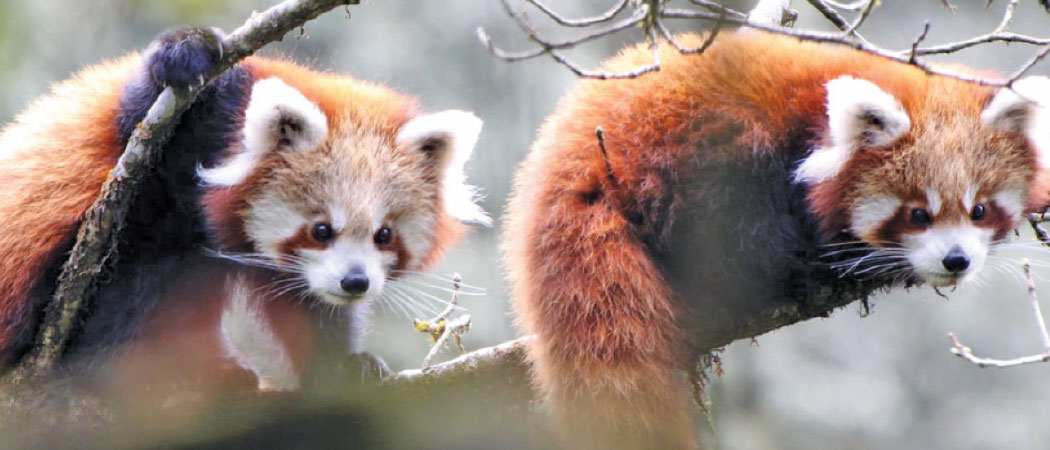
Photo: TRN The globally rare red panda.

By Prem Adhikari,Pashupatinagar, Ilam, Apr. 17: Conservation efforts for the globally rare red panda, popularly known as ‘habre’ in Nepal, have begun in the hill districts, including Ilam.To protect the endangered species, Red Panda Network Nepal (RPNN) has launched various programmes in the high hills and Himalayan areas of Ilam, Panchthar and Taplejung.
According to Ram Rimal, Programme Coordinator of RPNN in Ilam, the initiatives include introducing school curricula on red panda conservation, planting over 200,000 trees, protecting the animals from threats such as dogs and other wildlife, and constructing ponds.
The network has an annual budget of Rs. 62.4 million for red panda conservation. In coordination with Dijjyoti Youth Club and local governments, discussions are ongoing with community-level project committees.
To raise awareness, conservation-related curricula have already been developed and implemented in five schools. The programme has also vaccinated 398 dogs against rabies and planted more than 200,000 saplings of species that form the red panda’s diet in community forests across the three districts.
Rimal said conservation would be difficult without community awareness, adding that the programme focuses heavily on educating local people.
Red pandas are increasingly at risk due to wildlife attacks, human trapping and deforestation. Conservation activities are currently being carried out in several local levels of Ilam, including Suryodaya Municipality, Ilam Municipality, Deumai Municipality, Sandakpur Rural Municipality and Maijogmai Rural Municipality.
The initiative has also created jobs for 811 locals by providing training in conservation-related work. Previously, a 42-kilometre “Red Panda Marathon” from Ilam Bazaar to Sandakpur was organised with financial support from the network to promote awareness.
According to local conservationist Rabin Budhathoki, various conservation works are ongoing in Chitre Community Forest in Suryodaya-1.
Since the programme began, local communities have started earning income through the red panda as the main attraction for tourists. In 2025, 25 foreign tourists visited the area to see the animal, while domestic visitors frequently crowd community forests such as Chitre and Choyatar.
Tourists are charged Rs. 1,500 per person to behold the red panda. Alongside conservation, local employment and income opportunities have also increased. Durga Kumar Baral, Acting Mayor of Suryodaya Municipality, said the species had been declining due to forest degradation and added that the municipality would allocate a budget for red panda conservation from the coming fiscal year.
The shy animal is estimated to number around 1,000 across 13 districts of Nepal. Key habitats include areas such as Thumke, Sandakpur, Jowari, Meghma and Patenagi in Ilam, as well as Singalila National Park in India.
No official count of red pandas has been conducted since 2016, but conservationists say a new census is expected in 2027.