- Monday, 25 May 2026

Government Priorities
Nepal witnessed an unprecedented Gen Z revolt in early September 2025, fuelled by deep-seated dissatisfaction among the general people, the youth in particular. The country has undergone a series of political upheavals from 1950 to 2025, the People’s Movement in 1990 being notable among them, which restored multiparty democracy and was expected to change people’s lives for the better. However, there was no meaningful change in people’s lives and livelihoods. Corruption remained rife and the state failed to deliver services as anticipated by the citizens. Poverty persisted, employment was few and far between, forcing millions of people to go abroad in search of work. The successive governments paid little attention to people’s aspirations.
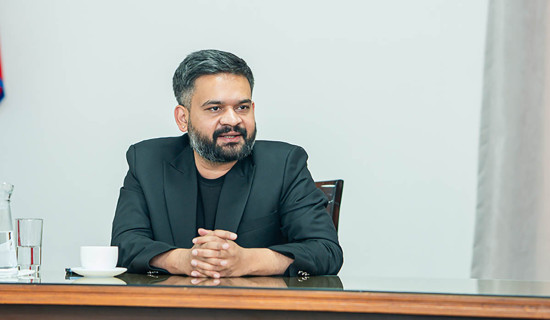
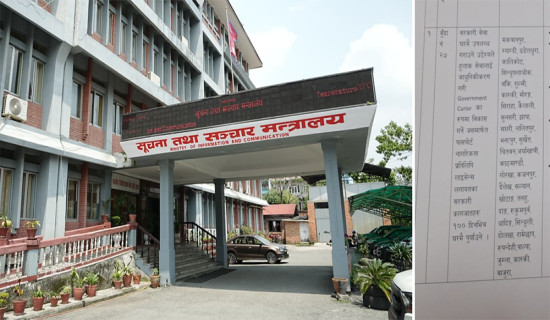
No wonder, the youth hit the streets on September 8, but the use of excessive force by the state claimed the lives of 19 innocent youth. Things grew more violent and deadly the next day, unseating the KP Sharma Oli-led coalition government. An interim government, led by Sushila Karki, was tasked with holding parliamentary elections on March 5. Amid doubts that the elections would take place, they were successfully held on the scheduled date, catapulting the Rastriya Swatantra Party, a relatively new political party, to nearly two-thirds majority. The parliament has convened and a new government has come up, led by charismatic Balendra Shah, which has unveiled a 100-point reform list to improve service delivery and change people’s lives in the true sense. The election of the House Speaker and Deputy Speaker has concluded.
Amid all this, President Ramchandra Paudel addressed the joint session of the Federal Parliament on Friday, where he stated that the new government would act so as to realise the ideals enshrined in the law of the land. In his 17-point address, he noted that the new government shall work as per the spirit of the Gen Z movement, meaning the end of corruption and the guarantee of good governance. He has underscored the need for restructuring the education system so that the students graduate with skills as per the demand of the market and society. And the college and university graduates must be supported in their efforts to innovate and complement the country’s development initiatives.
Simultaneously, the government faces a challenge to generate employment opportunities so that the youth can be retained within the country and mobilized in national development works. One of the reasons behind youth migration is that blue-collar work is not given due respect in the country. And there is a widespread belief that, despite working hard, it is difficult to get the desired results in Nepal. It is almost impossible to make the country prosperous with a demoralised citizenry. Hence, President Paudel underscored the need to overcome this pessimistic attitude and change people’s perception of work.
The current parliament has a strong representation of the youth and so is the Cabinet. It has generated hopes among the citizens that things will be different this time around. The government has already shown some promising signs; it has initiated investigations into some high-profile cases of corruption and taken steps to displace middlemen from government offices to ensure hassle-free services to the general public. Besides, it has pledged to enact laws to improve service delivery, including the removal of party-affiliated trade unions in the civil service. There may be attempts to derail the government’s reform initiatives but unity among all stakeholders, forgetting past animosity, will ensure freedom, social justice, good governance and prosperity for the countrymen.
-original-thumb.jpg)