- Thursday, 21 May 2026

Roadmap For Change

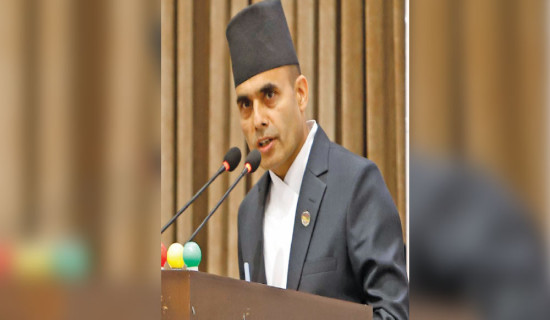
The new government, led by Prime Minister Balendra Shah, has been making one bold decision after another since its formation on Friday. In its first Cabinet meeting, it unveiled a 100-point governance agenda on Saturday, in an endeavour to enhance transparency, accountability, and efficiency in public administration. The disclosure of the agenda shows the government's primary focus is to rebuild eroded trust in public institutions through strong plans and policies, which also closely align with the electoral commitment paper of the Rastriya Swatantra Party (RSP). Prime Minister Shah is the senior leader of the party. The list of the government agenda items includes the formation of an Asset Investigation Committee within 15 days to curb widespread corruption and impunity and bring illegally earned property into the state's coffers.
The committee, operating under the Office of the Prime Minister and Council of Ministers, will include experts in law, finance and taxation. In the first phase, the government will collect, verify and investigate the property details of high-level political office holders and senior officials who have held public office from the fiscal year 2006/2007, and in the second phase, those who were in the helm of power after the People's Movement of 1990. We all know that corruption has been the main hindrance to the country's overall progress. Widespread corruption from the higher to lower rungs of administration has bred poverty and inequality. As the state's scarce resources are siphoned off, development projects are not completed in time and service delivery remains below expectations.
Therefore, the step to investigate the assets of the former high-level office holders and senior officials is expected to be crucial to curb corruption and boost economic reform. The government has also focused on enabling faceless governance and digitising public services, which is expected to enable a smooth service delivery. Citizens, who have been waiting for years to get their driving licenses, are hopeful of the impact of this reform. The government also aims to make delivery-based governance that is result-oriented, measurable, and responsible. Likewise, the government, on behalf of the state, has apologised to the Dalit community for the exclusion, injustice and exploitation they have been meted out for centuries. This move has received public applause. Similar plans were announced in the past; however, the lack of effective implementation, political will, and cooperation from bureaucracy has led to the faltering of such initiatives. However, this time, the plans are likely to come into operation as we have a single-party, powerful government to execute these.
The ruling RSP has secured 182 seats, almost a two-thirds majority in the 275-member House of Representatives, and it can avoid any legal obstacles by amending laws to implement these. The newly formed council of ministers also has new and young faces, all educated, competent and fresh. The country, marred by corruption, politicisation of all state institutions, lack of job opportunities and poverty, is expected to take the right course. The new government is at the crossroads of challenges and opportunities. On one hand, it faces deep-rooted structural problems and on the other hand, it has a strong mandate for change. For RSP to translate electoral strength into effective governance, it should transform the bureaucracy, depoliticise schools, colleges, and public institutions, create more and more jobs and control corruption.

-square-thumb.jpg)