- Monday, 25 May 2026

Over Two-Century Diplomatic Course Of Nepal
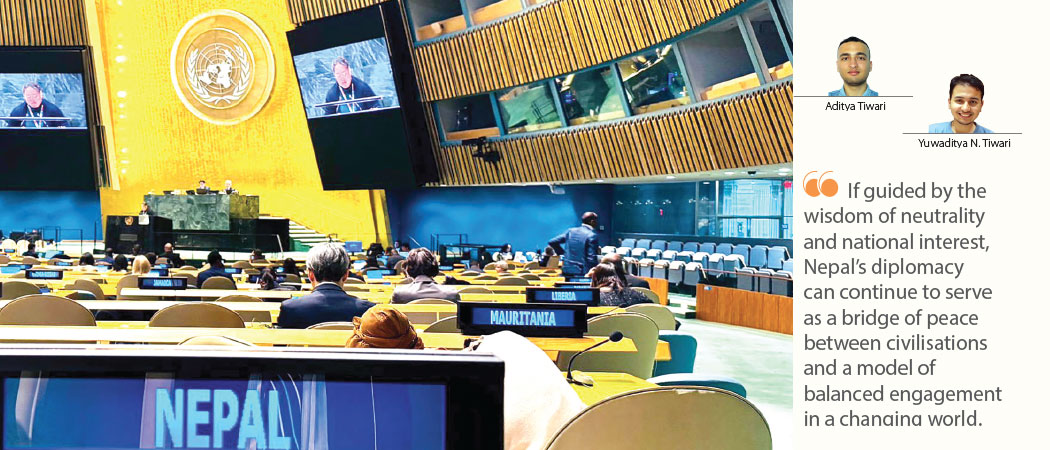

Every nation has defining moments that shape its destiny and influence its engagement with the world. History often recalls nations of the diplomatic paths they carve in the international arena. With a diplomatic legacy spanning 210 years and 182 nations, Nepal’s steadfast commitment to a Non-Aligned Foreign Policy has transformed centuries of quiet diplomacy into a masterclass of peaceful yet potent strategy. The month of March, and in the same March, the 4th day of 1816 stands as a landmark historic moment that laid the foundation for Nepal’s diplomatic identity – an independent Himalayan state balancing its sovereignty between powerful neighbours and the wider international community. The signing of the Treaty of Sugauli, which not only concluded the Anglo-Nepal War but also reshaped Nepal’s geopolitical landscape and laid the foundation of its modern diplomatic identity. Although the treaty compelled Nepal to give its significant territories to the British East India Company, it also preserved something far more significant for Nepal’s sovereignty.
Yam between two boulders
An ancient metaphor, which is today evolving into a “vibrant bridge” concept, driven by a modern generation of political leadership and a world where neutrality is increasingly difficult to maintain. At times when many states in Asia were struggling for independence, Nepal maintained its sovereignty, which would become the central pillar of its foreign policy in the times that followed.
Over time, Nepal’s foreign policy has transitioned from strategic isolation to active multilateral engagement. From the establishment of its first international relations to its contemporary engagement with global partners, Nepal’s diplomacy has been shaped by shifting geopolitical realities, while a fundamental commitment to independence, peace, development, and non-interference has been maintained. Nepal’s participation in global institutions such as the United Nations and regional frameworks like SAARC, BIMSTEC and various other intergovernmental organisations reflects the aspiration to contribute constructively to international cooperation. Nepal’s geography has long shaped its political and diplomatic status. Historically, Nepal has maintained a delicate balance in its foreign relations, avoiding direct alignment with any major power while continuing cooperation with many.
Nepal’s diplomatic history reflects a careful balance between safeguarding sovereignty and engaging with the world. During the Rana era, Nepal maintained limited external engagement, though ties with the United Kingdom strengthened through the recruitment of Nepali soldiers into the Gorkha Regiments of the British Army and support during the Indian Rebellion of 1857.
After the 1951 political transformation with the end of autocratic Rana rule, the various movements for democracy further reshaped Nepal’s diplomatic outlook. At the heart of this two-century legacy lies the unique paradigm of its diplomacy, a homegrown ethos that transcends mere statecraft to become a national survival instinct. This identity is anchored in the foundational "Yam between two boulders" reality, which has evolved from a defensive posture into a proactive pursuit of Panchasheel (the Five Principles of Peaceful Coexistence). By making the Non-Aligned Foreign Policy its central pillar, Nepal has historically refused to be a pawn in the games of distant powers, instead crafting a diplomatic brand that prioritises sovereign equality and mutual respect as the only viable path for a nation of its unique geography.
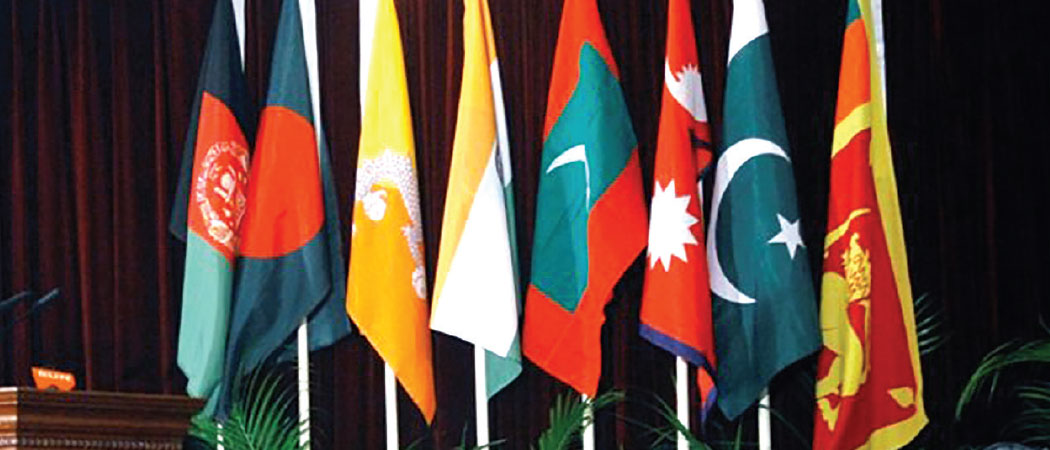
This pursuit of a distinct, peaceful path reached its visionary peak with the Zone of Peace proposal (Shanti Kshetra Prastav), followed by another visionary initiation articulated by the then King Birendra Bir Bikram Shah Dev, who proposed the concept of a regional organisation that could encourage economic collaboration, mutual trust, and shared development among South Asian countries by bringing together nations – SAARC. These were more than a policy; they were an attempt to institutionalise Nepal’s inherent neutrality as a global standard. The establishment of its permanent secretariat in Kathmandu symbolises Nepal’s vital role in encouraging regional dialogue and partnership. Alongside SAARC, Nepal also participates in broader regional initiatives aimed at strengthening economic and strategic connectivity.
One such platform is BIMSTEC, which connects countries around the Bay of Bengal and provides Nepal with a bridge to South Asia. Through BIMSTEC, Nepal engages in cooperation on trade, energy, infrastructure, environmental protection and technology. Beyond South Asia, Nepal also participates in the Asian Cooperation Dialogue (ACD), a platform that promotes continent-wide collaboration in economic development, energy security, education, connectivity and cultural exchange. Through such engagements, Nepal seeks to contribute to both regional and broader Asian cooperation.
Nepal also possesses a unique moral and environmental voice in global diplomacy. As home to the Himalayas, the country stands on the frontline of climate change. Melting glaciers, changing ecosystems, and increasing natural disasters are no longer distant concerns, they are immediate realities. This reality provides Nepal both responsibility and opportunity. By championing the concerns of mountain nations and fragile ecosystems, Nepal can play a leading role in global climate discussions. Climate diplomacy, if pursued effectively, can elevate Nepal’s global profile while addressing one of its most pressing national challenges. Nepal’s diplomatic horizon extends well beyond its immediate neighbours. Global powers and international institutions have shown growing interest in Nepal’s development and strategic location. Development partnerships, investment initiatives, infrastructure projects and initiatives have opened new opportunities for economic growth.
At the same time, these engagements have sparked domestic debates about sovereignty, transparency, and national priorities. Such debates are positive for democracy, but they also highlight the importance of clarity and consistency in Nepal’s foreign policy. Foreign policy does not exist in isolation. A nation’s diplomatic strength ultimately rests on the stability and credibility of its domestic institutions. Perhaps the most urgent task for Nepal’s foreign policy today is the integration of diplomacy with economic transformation.
Economic diplomacy
The global diplomatic arena increasingly revolves around trade, connectivity, technology, and investment. For Nepal, economic diplomacy must become the central pillar of foreign policy. Tourism promotion and foreign investment attraction should guide Nepal’s diplomatic engagement. The country possesses immense hydropower potential, along with the rising potential of its IT sector, the country is moving toward a self-reliant future where local efforts take the international stage. It has a unique cultural and national heritage that can be utilised to strengthen its economic partnerships. Strengthening professional diplomacy, therefore, is not merely an administrative reform – it is a national necessity. Today, as the world enters a new era of tough geopolitical competition, the key question, therefore, becomes: how should Nepal manage its diplomacy in the present era? In today’s era of intense global polarisation, where shifting power poles and "with us or against us" rhetoric threaten regional stability, the wisdom of "Panchasheel" can be considered more relevant than ever. Nepal’s greatest contemporary challenge is to remain a stabilising anchor, transforming itself from a passive observer of geopolitical friction into a principled, neutral bridge that can navigate the stormy waters of modern power competition.
Major strategic initiatives and competition among global powers increasingly influence the region as the world's geopolitical landscape evolves.
All the international projects, development partnerships, and security concerns have drawn Nepal into broader geopolitical discussions. Currently, Nepal finds itself at a pivotal strategic juncture. Its geographic location in the Himalayas places it within an emerging geopolitical competition involving regional and global powers. This situation presents both opportunities and challenges. On the one hand, Nepal can benefit from infrastructure investments, connectivity projects, and expanded economic cooperation. On the other hand, geopolitical rivalry risks drawing Nepal into strategic tensions that could threaten its long-standing policy of neutrality. As global geopolitics continues to evolve, Nepal’s challenge will be to maintain the delicate balance between two powerful nations while expanding partnerships across the world.
If guided by the wisdom of neutrality and national interest, Nepal’s diplomacy can continue to serve as a bridge of peace between civilisations and a model of balanced engagement in a changing world.
(Aditya Tiwari is a Kathmandu-based writer and Yuwaditya N. Tiwari is a media professional.)