- Saturday, 2 May 2026

Hetauda awaits planned infrastructure development

By Rammani Dahal,Makwanpur, Feb. 27: As the date for the House of Representatives election comes closer, political parties and candidates step up their outreach to voters, presenting their future plans and programmes.
Unlike in previous elections, voters this time are actively questioning candidates about their long-term visions. They are seeking clear commitments not only on making laws in the federal parliament but also on concrete development plans for their towns and villages.
It has been nine years since Hetauda Sub-Metropolitan City became the capital of Bagmati Province following Nepal’s transition to federalism. Yet, the city has still not seen the start of systematic and well-planned development.
The provincial government continues to face a shortage of administrative buildings. Matters worsened after arson and vandalism damaged provincial ministries and offices during the Gen Z protests on September 8 and 9, 2025.
Since then, the provincial government has been forced to operate in a reduced capacity, with several ministries running from rented buildings and subordinate offices. The Chief Minister’s Office itself is housed in the former District Development Committee building.
Land has been identified in Hetauda Sub-Metropolitan City-16 for a provincial administrative complex and a detailed project proposal has already been prepared. However, despite repeated budget allocations, the project has stalled as the federal government has yet to endorse the land decision.
Swagat Raj Pyakurel, vice-president of the Bagmati Province Industries Association, stresses the need for comprehensive infrastructure development in Hetauda, which also serves as the provincial capital.
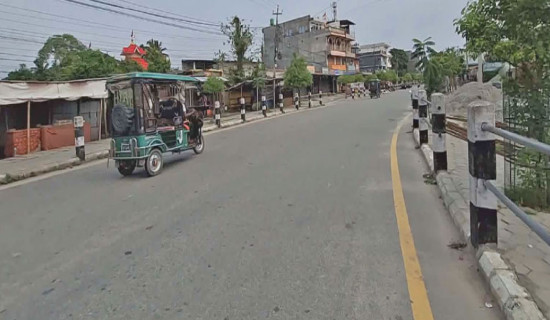
“Roads and other infrastructure are built but left incomplete. In some places there are footpaths but no drainage; in others, drains but no footpaths. Political parties and candidates must commit to organised infrastructure development,” Pyakurel said.
Hetauda’s Ward No. 19 and 15 fall under Cssonstituency No. 1 and Ward No. 4 under Constituency No. 2.
Dr. Balaram Bhatta, a professor at Agriculture and Forestry University, said that as Hetauda has transformed from a town into a city, meeting basic urban needs should now be a key election agenda.
“Although there is talk of developing Hetauda as an education hub, lack of coordination is evident,” he said, adding that candidates should prioritise social infrastructure and raise these issues strongly in the federal parliament.
Industrial issues missing from party manifestos
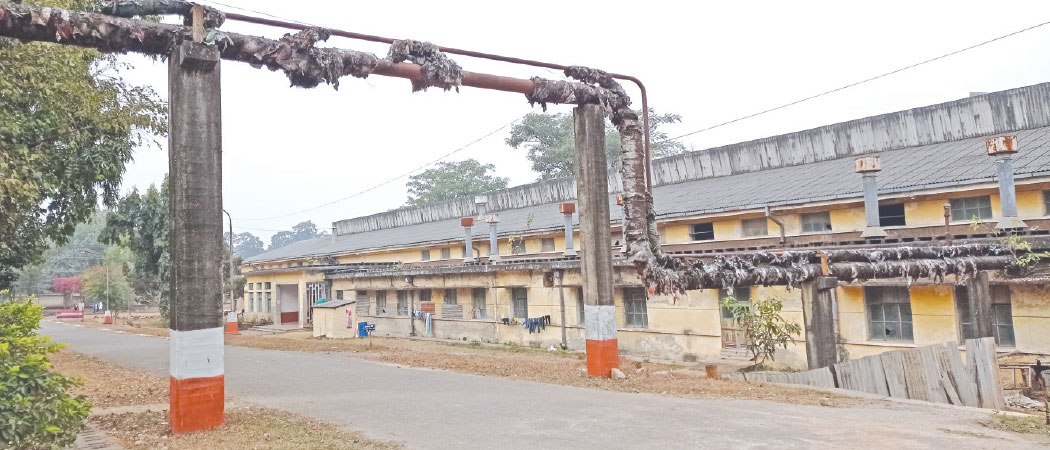
While candidates in Hetauda have raised industrial development as a local issue, it has failed to receive priority in the central election manifestos of major parties. Commitments at the national level do not adequately address the promotion of the Hetauda Industrial Area, one of the country’s largest, nor the construction of the proposed Mayurdhap Industrial Area.
The Nepali Congress manifesto highlights the economic growth seen after 1991, when industries were established and jobs created. However, in recent years, several major employment-generating and export-oriented national and multinational industries based in Hetauda have shut down or been relocated.
Exports from Makwanpur stood at Rs. 2.29 billion in fiscal year 2000/01, but fell sharply to just Rs. 404 million in the last fiscal year. “One government agency allocated land for the Mayurdhap Industrial Area, while another filed a legal case against it,” Pyakurel asked. “How can an investment-friendly environment be created under such contradictions?”
He called for policies to promote domestic production and legal reforms to address the unequal treatment of industries that import raw materials and those that import finished goods.
Nepali Congress Constituency No. 1 candidate Mahalaxmi Upadhyay Dina said she would work to establish new industries on land left vacant by closed factories in the Hetauda Industrial Area. She also pledged to facilitate solutions to the legal hurdles facing the proposed Mayurdhap Industrial Area.
Similarly, Rameshwar Rana, the CPN-UML candidate in Constituency No. 1, has made industrial promotion a key campaign issue. Candidates Bijay Gautam of the Nepal Communist Party and Deepak Bahadur Singh of Rastriya Prajatantra Party have also pledged to focus on job creation and industrialisation.
Hetauda in central election pledges
In its central manifesto, the Nepali Congress has promised additional resources for flagship infrastructure projects led by provincial and local governments. It has also pledged to upgrade a key road linking Kathmandu with Hetauda within a year to ensure year-round connectivity, introduce traffic lights and cameras in the provincial capital, and develop Hetauda as a specialised urban centre.
The party has further highlighted the role of Bagmati Province University and the Madan Bhandari Academy of Health Sciences in strengthening self-reliance in higher education and health services and has included the proposed Posta Bahadur Bogati tunnel road in its manifesto.
-square-thumb.jpg)