- Saturday, 2 May 2026

Polls In Motion

As the election date draws near, the country has thrown itself into another pivotal poll cycle. The political parties, candidates and citizens have been actively engaged in rallies, mass meetings and discourses. Candidates are on the stump and the voters are keenly watching their speeches and pledges. All the major parties have already made public their poll manifestos replete with ambitious promises. In an electoral democracy, citizens are supposed to vote for the parties according to their commitment papers. However, all voters seldom go through their documents, for they have been fed up with unfulfilled promises over the decades. So the contesting parties are judged as per their performance while in power.
Nepal has more than seven decades of electoral practices that underline the shifting voting patterns. The poll outcomes reflect the parties’ contributions to and struggles for democratic movements. The elections, held following the political upheavals and armed uprisings, give a solid mandate to the political forces that have played a catalytic role in engineering those movements. But these initial rewards for the parties do not persist in the subsequent polls due to their poor performance. This shows the people have a deeper understanding of political dynamics that are not widely recognised by the experts and elites alike. The people’s changing choices provide an opportunity for the parties and their leaders to correct themselves. Parties failing to read the message of the mandate are bound to face severe electoral setbacks.
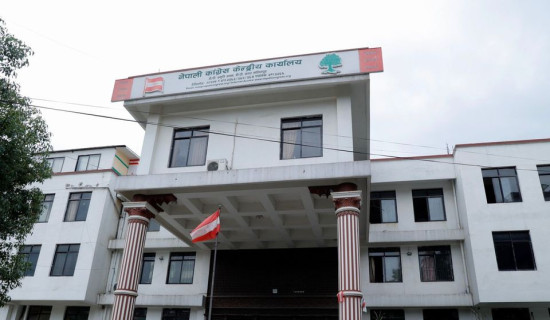
In Nepal, every poll delivers a lesson to all political parties. The first general election in 1959 held after the democratic revolution of 1951, gave the Nepali Congress a sweeping mandate for its role in overthrowing the Rana regime. The NC again rose to power in 1991, rewarded for its leadership in the 1990 People’s Movement against the party-less Panchayat polity, while CPN-UML emerged as the second largest party. Internal wrangling within the NC led to the collapse of its government, and voters punished it by making the UML the largest party in the 1994 mid-term elections. However, for lack of a majority, several coalition governments came and went. Although the NC again regained a majority in the 1999 elections, the Maoist insurgency plunged the nation into a prolonged period of instability.
The CPN-Maoist secured a resounding victory in the first Constituent Assembly (CA) election in 2008 although it did not secure a majority of seats. In the second CA poll in 2013, the former rebels became the third force, with the NC and UML claiming the first and second positions respectively. The 2017 general election, conducted following the promulgation of the new constitution, proved historic for the NCP, formed through the unification between the UML and Maoist Centre, as it secured nearly a two-thirds majority. But it suffered a big blow in the 2022 elections for failing to respect the popular mandate.
Now the nation stands at another crucial election being held in the aftermath of the Gen Z movement. Elections are a grand democratic exercise and the people’s choices expressed through the ballots foster democratic culture and values. It is the most legitimate means of picking the leaders to govern the nation. So it is the duty of all – parties, citizens, civil society, media and other stakeholders – to participate in the polls and play their role in ensuring their success.
-square-thumb.jpg)