- Saturday, 30 May 2026

Three decades on, Bhutanese refugees remain outsiders in Nepal’s elections
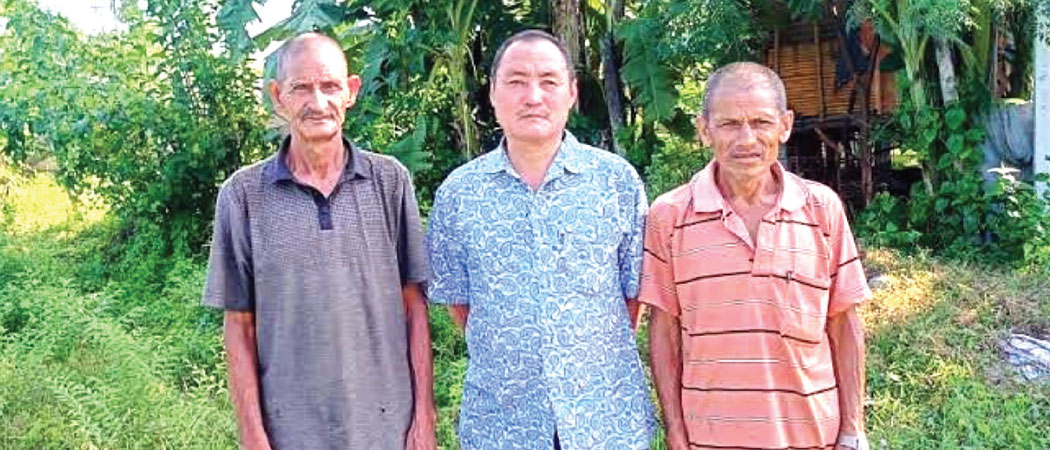
Bhutanese refugees in Morang

By Hari Prasad Koirala, Urlabari, Feb. 20: Along the East–West Highway in Pathari Shanishchare–10 of Morang district lies a small settlement of around 600 households. Although the residents share language, religion, culture and traditions with neighbouring communities, the upcoming parliamentary election scheduled for 5 March does not concern them.
Since 1991, they have witnessed numerous elections. They have seen people from nearby settlements travelling in groups, some by car, some by motorcycle and others on foot, carrying party flags and taking part in the democratic process. They too wished to join them. However, as refugees, they have never had the opportunity to understand what voting rights truly mean.
Seventy-year-old Bhakta Bahadur Thapa has never cast a vote. He entered Nepal as a refugee from Dagana, Bhutan, in 1990 when he was still physically strong. While most of his relatives have resettled in third countries, he continues to live in the camp. Thapa says that even if he went to the United States or Australia, his identity would remain that of a refugee.
“Why should I leave Nepal?” he asks, adding that he has chosen to die on Nepali soil rather than resettle abroad.
He explains that his grandfather migrated to Bhutan from Taplejung due to extreme poverty. “We are Nepali. We chose not to go to the USA. Bhutan does not allow us to return, so the government of Nepal should provide us land and a basis to live here,” he said.
Similarly, 60-year-old Chandra Bahadur Bhattarai, whose family migrated to Bhutan three generations ago from Tellok in Taplejung, also declined resettlement in the United States, hoping instead to live in Nepal. His children have moved abroad, but he and his wife chose to stay. He too has never voted.
“Elections feel like a festival,” Bhattarai said. “But our vote does not count. At other times, we do not feel like refugees. It is only when it comes to exercising rights that we are reminded we are refugees.”
After his 76-year-old father refused to move to a third country, 56-year-old Laxman Gurung also remains in the refugee camp. While other relatives have resettled abroad, his elderly parents did not wish to hear about America. “So I stayed to take care of them,” he said.
Gurung believes the government of Nepal should grant them citizenship and allow them to live permanently in the country. “Three generations have passed as refugees. Now the government should recognise us as Nepali,” he said, adding that although he wishes to vote, he has never had the opportunity.
Only a few refugees in the camp are demanding either repatriation to Bhutan or citizenship in Nepal. Many others are waiting for visas to countries such as the United States and have little interest in elections.
Duku Maya Tiwari said, “Whether there is an election or not does not matter to us. We just want to be able to go to America with our parents.”
Fifty-six-year-old Ichchhe Kumar Das said he no longer believes he will be able to go either to America or Bhutan. “Nepal should now complete the process and provide us a legal basis to live here,” he said.
Having endured hardship and deprivation while living in makeshift huts in refugee camps, Bhutanese refugees say they have never been able to live life with a smile. So far, 107,949 refugees have been resettled in third countries.