- Sunday, 3 May 2026

Growing Digital Risk For Senior Citizens

Digitalisation has changed everyday life in Nepal. People now use social media platforms like Facebook, YouTube, TikTok, and WhatsApp for everything from paying bills to staying in touch with relatives abroad. While these tools provide convenience and connection, they have also caused a silent crisis, particularly among seniors, defined as those over 45.
Nowadays, it is common to see groups of seniors discussing information they find online. Much of this focuses on health remedies, religious beliefs, or "miracle solutions. The internet, especially social media, is full of content that claims to cure different diseases without doctors and spreads false news. During the COVID-19 pandemic, false claims were circulated that Nepalis were immune to the virus due to high BCG vaccination rates.
False claims
Social media in Nepal has featured false claims that drinking turmeric water, using warm water, or consuming specific herbal mixtures can cure the pandemic or other ailments. Claims, such as a mixture of coconut oil and vitamin E capsules curing melasma, are often spread on TikTok without scientific backing.
This issue is not unique to Nepal. Around the world, there have been many cases where influencers claimed to cure serious diseases like cancer with natural remedies whose source is not clear, and there is no research on such cases. Additionally, there are fake AI-generated videos that show doctors advertising unverified supplements. Even though these claims are irrelevant and a scam, this type of content spreads quickly, even faster than accurate medical advice.
The way social media platforms operate is the cause of this. The goal of these platforms is to increase interaction. Strong emotions like urgency, fear, hope, or faith are encouraged by their algorithms. Naturally, people will watch a video that claims to have an "ancient secret" or "hidden cure." Once a user watches or shares such content, the platform starts promoting more of the same, creating an echo chamber. For many senior citizens who are not familiar with how algorithms operate, repeated exposure gives the impression that the information is widely accepted and must be true.
Cultural factors exacerbate this effect in Nepal. Faith-based healing, home remedies, and traditional medicine have all been prevalent in society for a long time. Online content appears reliable when it combines these ideals with contemporary digital presentation. Seniors, frequently with sincere concern and good intentions, may begin using such remedies, stop taking their prescribed medicines, or encourage family members to try them, often with genuine concern and good intentions.
For many families, including mine, this is a personal matter. My parents regularly share articles and videos on health from social media, presenting them as findings rather than assertions. They confidently discuss treatments and preventative measures they have seen online and are open to trying them. If we question them about the proof or verified sources, they feel that their expertise or wisdom is being questioned, which might make the conversation delicate. But the risk is real.
Many senior citizens are not only at risk of health misinformation, but their trust also makes them vulnerable to digital fraud. Fake advertisements, miracle cures, phishing messages, and false donation appeals through messaging APP can seem like caring advice or an emotional link.
Senior-aged people feel these as familiar and comforting words, and may unknowingly click those harmful links or share personal information, which may later lead to financial loss, emotional distress, or even the shock of having their accounts hacked. The consequences can be serious. Delayed medical treatment, worsening health conditions, unnecessary spending on fake products, and emotional distress are becoming more common.
Public concern
This is no longer just a family issue; it is a public concern. Digital literacy efforts in Nepal have largely focused on youth, students, and professionals. However, people over 45 need equal attention. Programmes should be conducted by trusted organisations, such as community programmes, local governments, and health institutions, to educate senior citizens on how to verify information, recognise misleading content, and feel the difference between popularity and truth.
Families should also play an essential role. Children should respectfully and patiently teach their parents about how to minimize risk and safety measures to be considered while using the internet. Doctors should openly address misinformation during health consultations and guide patients to trustworthy sources.
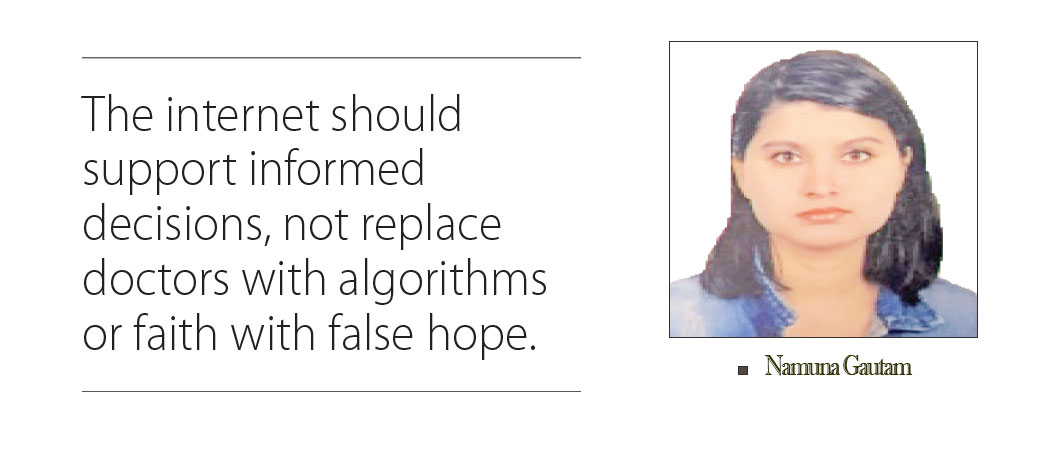
Digitalisation itself is not the enemy. Misinformation is. If Nepal is to truly benefit from the digital age, protecting senior citizens from online manipulation must be a priority. The internet should support informed decisions, not replace doctors with algorithms or faith with false hope.
(Gautam is an IT officer at the Agricultural Development Bank Limited.)

-square-thumb.jpg)
-original-thumb.jpg)