- Wednesday, 1 April 2026

Minister Chaulagain stresses on sustainable development-centred plan for Kathmandu
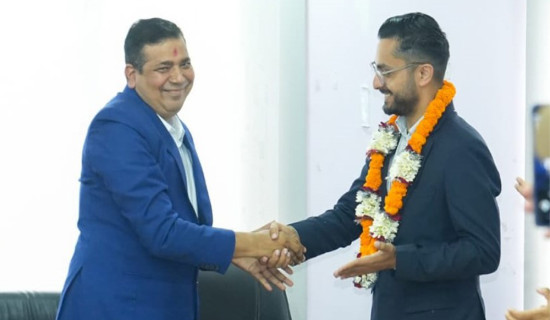
Kathmandu, Feb 4: Minister for Physical Infrastructure and Transport Madhav Prasad Chaulagain has emphasised that while planning for the city of Kathmandu, its historical, cultural and ecological characteristics should be considered in detail and the focus should be on sustainable development.
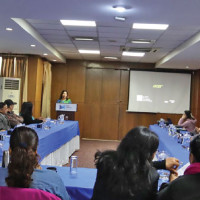
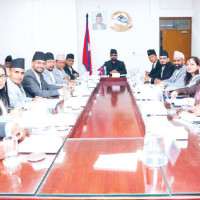
Addressing a seminar involving stakeholders on the Kathmandu Valley urban transport system master plan, he highlighted the need for sustainable, safe, and inclusive transport for the Kathmandu Valley, which has a great cultural significance.
Minister Chaulagain stated that special plan should be implemented here as Kathmandu is not like other new cities. He said that Kathmandu is a city with a unique and beautiful blend of centuries-old traditions, culture, and modernity.
"Kathmandu is a historic city. It has its own history and traditions, a convergence of ecological systems and diverse lifestyles. When planning the city, this spirit and sensitivity must be reflected in the plan," he said.
The Minister for Physical Infrastructure and Transport emphasised that even while adopting modern and technical solutions, it is important to preserve cultural heritage, historical sites, and the concept of "the people's city". He stated that the government's goal is to build a human-centred city rather than a vehicle-centred one.
Noting that the new government has been actively working for about two months, he pointed out the need to effectively utilise the assistance received from the international community for national interest.
In this context, Minister Chaulagain mentioned that Nepal–Japan cooperation is multidimensional and long-term. Recalling the celebration of the 70th anniversary of the establishment of Nepal–Japan diplomatic relations, Minister Chaulagain said that Nepal has been receiving technology, ideas, and expertise from Japan.
He expressed the confidence that initiatives related to Strategic Environmental Assessment (SEA) would serve as a guide for future plans. Urging not to unnecessarily complicate the process, he emphasised that the process should be simple, clear, and practical.
Minister Chaulagain underscored the need to incorporate local knowledge and practices into policy-making.
"Only by understanding diversity as a basis for solutions can fair and sustainable development be possible," he said.(RSS)
-original-thumb.jpg)