- Wednesday, 3 June 2026

Integrated Security Key To Elections

As the scheduled election on 5 March approaches, ensuring reliable security management has become indispensable for government institutions, political parties, and voters alike. A free and fair election can be ensured through the full participation of citizens, which in turn demands flawless security and an election process. If voters feel insecure, naturally, their presence at polling stations becomes negligible. Low turnout at booths raises a question about the legitimacy of both the election and the government.
One of the root causes of the suspicion brewing among political parties and concerned stakeholders is the looting of weapons from security personnel during the Gen Z-led demonstrations held last September, many of which have not yet been recovered. Thousands of absconded prisoners are still on the run. If individuals with criminal intent use these weapons to disrupt during the time of elections, voter turnout at polling booths is likely to take a nosedive. During elections, small arms are often smuggled in, posing a serious threat to the election process. Besides, internal confrontations among political parties can add fuel to the fire.
Security system
However, the government has assured the general public that it will provide a strong and reliable security system through the mobilisation of the security forces in an integrated manner, supported by a concrete strategic security plan. In light of the present geo-political scenario, there is no way to reverse the gear, except by participating in the electoral process and guaranteeing a credible election. And a credible election makes the democratic exercise meaningful. Being the heartbeat of multiparty democracy, the election gives the power to the Nepali citizens to select capable representatives for the Federal Parliament in order to shape the future of the country.
Election credibility depends squarely on a robust election security-chain. Such a security chain stretches from voters' mindset to transportation routes, polling stations, election officials, casting votes, protection of ballot papers and ballot boxes, counting votes, and finally the announcements of results. Security risk assessments in advance help keep emerging threat patterns under control, for which security forces' swift action and rapid reaction play a decisive make-or-break role.
From a bird's-eye-view perspective, it is the full responsibility of the security apparatus to maintain security during the election. As long as the political parties, candidates, and local interest groups do not demonstrate their active cooperation with security forces, the election security-chain becomes vulnerable to multilayer threat vectors. This underpins the intricate interplay and interdependencies between security forces, political parties, and other stakeholders in safeguarding the integrity of fair and impartial elections.
Democracy meets with citizens at the polling booths. It requires strong security management because of its most sensitive nature. Based on past experiences, voter intimidation and coercion, clashes between rival political groups, and booth capturing are among the possible threats to maintaining election security. Attempts to influence voters through funnelling of money undermine the norms and values of fair elections and erode the credibility of our democratic system.
Polling officials, who are frontline workers of democracy, are sometimes subjected to pressure from political candidates and groups to show favour. Unfortunately, some officials compromise their neutrality, working as proxies for certain candidates or political parties and exhibiting behaviour that violates the election code of conduct. However, voters and local representatives of political parties are more alert than ever, closely watching every action of election officials and security personnel to ascertain whether they are maintaining neutrality in practice. This heightened oversight prevents the booth-to-ballots process from being subjected to intimidation or undue influence.
Technology not only improves the quality of elections, but its misuse also worsens the credibility of the democratic processes. Considering this, government, political parties, and other concerned groups should remain vigilant while using AI-generated information. In recent times, cyber-related crimes have been increasing. Both misinformation and disinformation can manipulate the minds of the common population. Misinformation can be managed and corrected, but not the disinformation, as its primary motive is to disrupt social order by manipulating human psychology.
AI-generated images, synthetic voices of the authorities, and fabricated statements of political leaders or government authorities may misguide the voters and other sections of society by creating false narratives. Such practices can erode social harmony and exacerbate conflict along lines of caste, ethnicity, religion, and region. The security institutions should keep a hawk's eye on such unethical acts to ensure that no such immoral practices are able to mislead the people.
AI-generated content
In the run-up to the election, there is a high probability that AI-generated negative content can be spread by both overt and covert actors. It can create a serious threat to effective security management due to a 'false consensus effect'. It can manipulate common citizens, especially voters, which makes them unsure about the truth. And they may not be cognizant of the reality because of the illusion of authenticity. Nevertheless, they may proceed to believe and follow AI-generated scoops and content as factual.
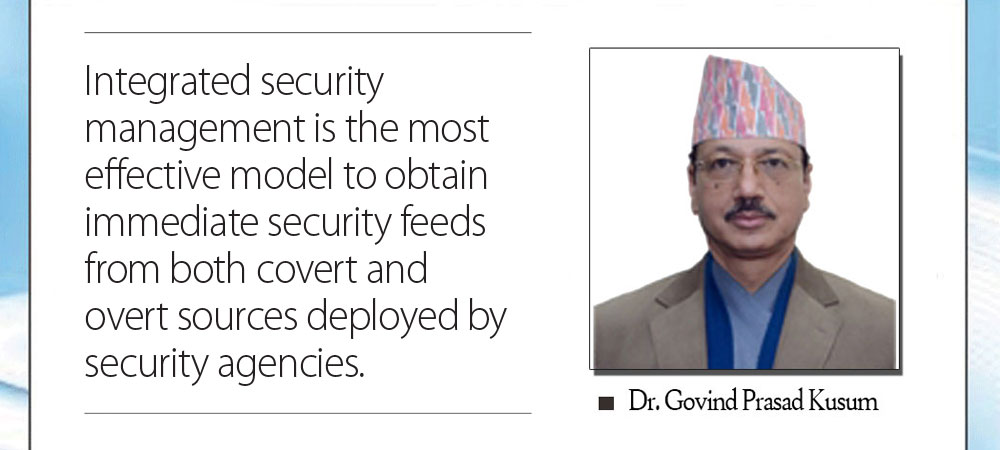
In light of these, the Ministry of Home Affairs must assess scenarios hidden behind the scenes and anticipate potential upcoming threats. This level of threat visibility can be achieved through real-time information received from an active security intelligence. Integrated security management is the most effective model to obtain immediate security feeds from both covert and overt sources deployed by security agencies.
(The author is a former government secretary.)