- Monday, 8 June 2026

Modern music overshadows Dafala
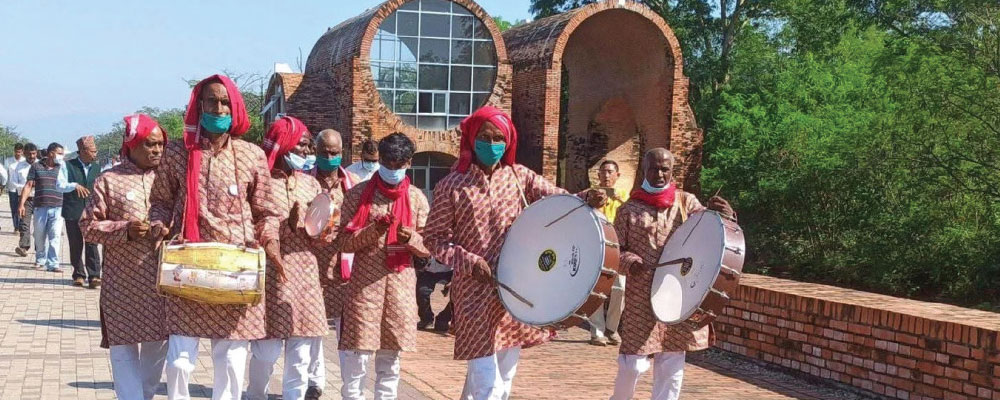

By Our Correspondent,Bhairahawa, Jan. 9: Once, the ‘Dafala’ drum, which resonated across villages of the Tarai-Madhesh, was an intimate part of society’s joys and sorrows, rituals, and traditions.
From playing auspicious melodies during celebrations to providing a solemn farewell during death rites, this indigenous percussion instrument is now struggling to survive amid growing modernity.
According to Dinesh Lodha of Lumbini Cultural Municipality-11, the loud sounds of DJs and modern band music have overshadowed the original rhythm of the Dafla. He said that this instrument, once synonymous with folk rituals, has now become endangered.
The Dafala is an ancient and indigenous musical instrument that carries the distinct identity of the Madhes region of Nepal.
Though simple in structure, its sound is deep, serious, and melodious. It is made by stretching processed goat or cowhide over a circular frame crafted from sisau or karma wood.
Held with the left hand and played rhythmically using the fingers, palm, or a thin stick with the right hand, the Dafla has traditionally been used in songs of joy, sorrow, and heroic ballads.
The rhythms of the Dafala are deeply intertwined with festivals and cultural practices of the Awadh-Madhes region, such as Holi, Diwali, Panchami, and others.
From Basant Panchami, the tradition of singing ‘Hori’ (Fagu songs) to the beat of the Dafla in village rest spots and courtyards conveyed messages of social harmony and unity.
According to Dafala player Ram Ujagir Chamar, 60, of the Lumbini Cultural Biraha Group, the origin of the Dafla is linked with spiritual beliefs.
Folk legends said the Dafla evolved form of Lord Shiva’s damaru and khaijhadi. It is believed that when Lord Shiva performed the Tandava dance, the rhythms produced were brought to Earth by creating the circular Dafla from wood and hide.
Another Dafla artist, Mochhu Chamar, said that in ancient times, while seeking ways to express happiness, humans followed echoes of nature and discovered the Dafla by playing the hide-covered wood. However, he expressed concern that modernity has displaced his very profession.
According to Jhagaru Murav, 80, of Sammarimai Rural Municipality-7, attraction of the younger generation toward modern music, the lure of foreign employment and poor financial returns have confined the Dafala’s former glory to mere memories.
Folk culture expert and Tribhuvan University Associate Professor Dr. Tribhuvan Barai said that one of the main reasons for the Dafala’s crisis is that its skill remains limited to specific communities. He added that modern music has gradually replaced the spiritual peace and cultural depth offered by Dafala.
Kalpana Harijan, Acting Mayor of Lumbini Cultural Municipality, said the local government has shown concern so that the Dafala does not remain confined only to museums.
She added that without incentive allowances, social respect, and opportunities for artists, the art faces the risk of extinction, and stressed the need for preservation through collective Dafla performance competitions and programmes.



-original-thumb.jpg)