- Tuesday, 2 June 2026

Dilemma Over LDC Graduation

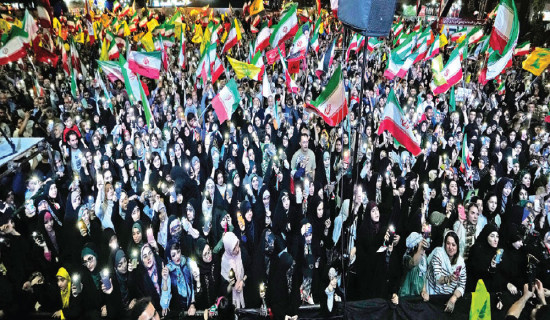
The deadline for graduating to the status of a developing country from that of a Least Developed Country (LDC) was approaching when the country experienced political upheavals in September. The Gen Z protests against a ban on social media and widespread corruption resulted in casualties, destruction of the property of businessmen and political leaders and the collapse of the KP Sharma Oli-led government. The protests not only destroyed physical infrastructure but also disrupted sectors like tourism. Losses from the protests were estimated at over 100 billion in the public sector and at over 80 billion in the private sector. For a poor country like Nepal, these losses are enormous. Reconstruction costs will be more than these figures.
With a changed scenario, a dilemma has arisen over whether to graduate in November 2026 or not. Nepal first postponed LDC graduation following the earthquake in 2015 because it needed time to pick up the pieces. The earthquake took a toll on both life and property. In 2018, Nepal met two of the criteria for graduation – the human assets index and economic and environmental vulnerability index, falling short on the gross national income. In 2021, the UN Commission for Development Policy recommended Nepal’s graduation, although it was still lagging on the income threshold with a five-year transition period owing to the impacts of COVID-19.
Economic shock
Bangladesh and Laos have deferred their LDC graduation. Bangladesh underwent a radical political change last year. The country has requested an independent assessment of the economy to ensure that it is ready to graduate. Nepal also bore an economic shock. The Gen Z protests showed that the economy, security, governance and other sectors are vulnerable. In the aftermath of the protests, the investment and tourism sectors have been affected. Even public trust in the government has eroded to some extent.
With a view to the repercussions of the protests on the economy, some experts have suggested deferring LDC graduation. The World Bank has projected a three per cent decline in the economic growth rate. There is a UN provision of reconsideration in case of major crises or external shocks. The country is, however, implementing a smooth transition strategy to reduce the impacts seen in the economy. Some experts are of the view that the country can navigate the graduation, while others opine that the country should not graduate amid economic chaos. According to them, a deferral will enable the government to make preparations for smooth graduation by beefing up the economy, making the economy robust and resilient and making improvements in economic sectors.
After graduation, Nepal will be deprived of preferential trade, concessional loans and technical support. This means the country will have to quit relying on foreign aid and grants for development. Today, foreign aid and grants, internal revenue and remittances are sustaining the economy. Although depending on internal revenue is not bad per se, relying on foreign sources and remittances is vulnerable to external shocks. So the country will have to explore new sources for development by developing agriculture, industry and tourism. The country will also lose preferential market access to countries like the EU, China and Canada. This could affect the export trade. And the trade could be more expensive than it is today.
There are many advantages galore for Nepal after graduation. Its image will be enhanced in the global stage, signifying that it has made much headway in various aspects of the economy: agriculture, industry, hydropower, education, healthcare, financial and other sectors. It will also indicate progress in poverty alleviation and institutional capacity. And the country will march towards an emerging economy from an aid-dependent economy, shedding its dependency syndrome. This will make the country an attractive hub for foreign direct investment.
New investments in industry, hydropower, tourism, information technology and other sectors will create jobs on the one hand, while on the other the country’s internal revenue system will get a boost. The export trade sector will also see a surge with an increase in the volume of trade and with export diversification. This will help reduce the trade deficit. It could also lead to trade surpluses. Even non-resident Nepalis can be encouraged to invest in the country’s development. They have already invested in the country but the volume of such investments can be increased when there is an investor-friendly environment.
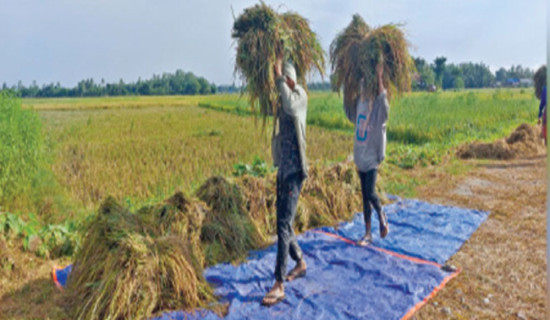
The economy of Nepal will be integrated into the global economy after graduation. This will further open the doors to the international market. The country is rich in natural resources. Such resources can be utilised for agriculture and industry. The number of Nepalis going abroad for foreign employment is alarming. They could be retained in the country itself by creating job opportunities. That most of the rural land has remained barren due to a lack of required manpower, due to migration abroad, is something to be pondered over. If the outflow of such migrant workers can be stemmed, agricultural development can be accelerated by employing them in the farm sector.
Anomalies
There are many anomalies in Nepal. Corruption is raising its ugly head. Although the Sushila Karki-led government has vowed to curb corruption and take action on the corrupt, nothing tangible has emerged yet. The problem of unemployment is dire, as evidenced by the daily exodus of migrant workers abroad. What is more, there is political instability. No government has been able to last its full term. Instances of government formation and dissolution are aplenty. All such anomalies need to be resolved so that the country can exist as a developing country with its reputation high in the international domain.
After graduation, Nepal will get a three-year grace period, meaning the country will not be stripped of LDC-related benefits at once. But this does not mean that the country can sit idle; it will have to make reforms in several sectors to live independently as a developing country.
(Maharjan has been regularly writing on contemporary issues for this daily since 2000.)