- Thursday, 4 June 2026

Cold drives sheep to lower valleys
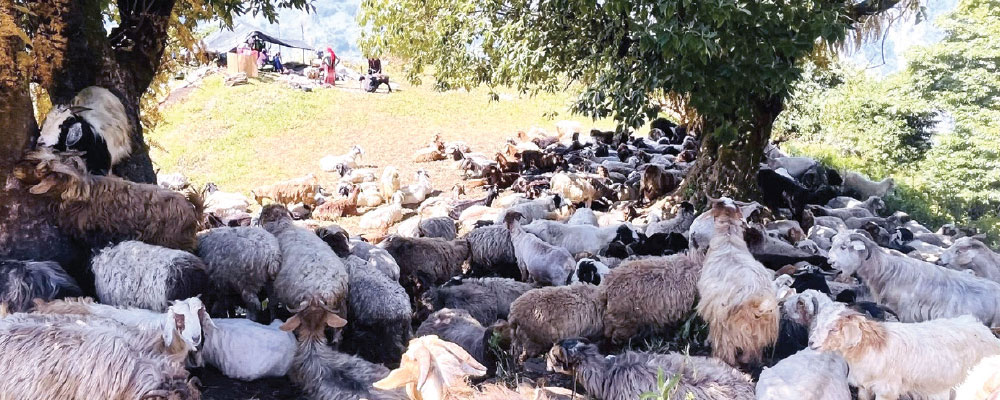

By Naveenraj Kuinkel,Lamjung, Dec. 6: As temperatures continue to fall, sheep flocks that had moved up to the Himalayan foothills of Lamjung are now descending to the lower valleys for winter. The herds are currently being kept in fields close to village settlements.
Groups that had travelled as far as Thurju Lake, located below Lamjung Himal (mountain) on the border of Lamjung, Manang and Kaski distrcits, have now reached settlements in Ghanpokhara, Ghalegaun and Siurung.
In Lamjung, herders keep their flocks in the high pastures for six months and in the lower valleys for the remaining six. During winter, sheep are brought down to help feed the village's farmlands. These herds will return to the high pastures from April to May. Sheep farming in rural Lamjung is gradually becoming more commercial.
In the past, there was a saying among the Gurung community -- “One brother to the plains, one to Tibet, and one to the sheepfold.” Whoever inherited the sheep would simply go off to tend them. But that tradition has changed.
Currently, mainly elderly men remain in the sheepfolds, while young people have left -- some not only abandoning the herding lifestyle but leaving the villages altogether.
Even so, elderly herders in villages such as Ghalegaun, Pasgaun, Bhujung, Ghanpokhara and in eastern Lamjung’s Ilampokhari, Dudhpokhari and Bansar, still keep the practice alive.
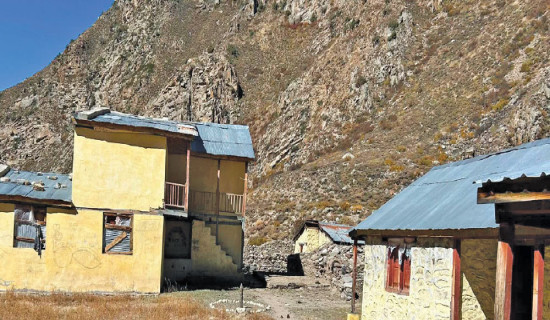
According to the custom, herds are taken up to the high pastures (khark) during the ubhauli season and brought down to the lower valleys during udhauli. Each village has its own designated pastureland, and herders from other villages are not allowed to graze their flocks there.
After wandering across different pastures, all the herds finally gather at Thurju Lake, which serves as a shared grazing ground for all the villages.
After spending some time in Thurju, the herds are gradually brought down while grazing. By early December, they reach the outskirts of the villages, and then they begin manuring the fields.
At this time of year, herders are busy working on the farmland. Life becomes easier once the flocks arrive in the villages, as other family members can help with the chores. This cycle of moving between the high pastures and the valleys continues every year.
Because the cold climate does not support good crop yields, residents here have long relied on sheep farming. However, the practice has never been fully modernised or commercialised.
Most of the meat is consumed within the village that owns the flock. Herders have not been able to sell beyond their own settlements. “Villagers reserve sheep in advance for Dashain, Tihar, Lhosar and weddings, so we never need to take them elsewhere to sell,” said Pasgaun herder Ram Bahadur Gurung.
Even villagers who have moved to Kathmandu, Pokhara or Chitwan prefer to buy their sheep from home.
Despite the abundance of grasslands across Lamjung’s hillsides, sheep farming has not progressed much due to a shortage of herders and a lack of modern technology.
Stakeholders said that with proper support for both group and individual sheep farming, the sector could greatly increase local income.
-square-thumb.jpg)