- Saturday, 6 June 2026

PEs to be classified as commercial and strategic

By A Staff Reporter
Kathmandu, Oct. 28: The government-owned public enterprises are set to be classified into two categories.
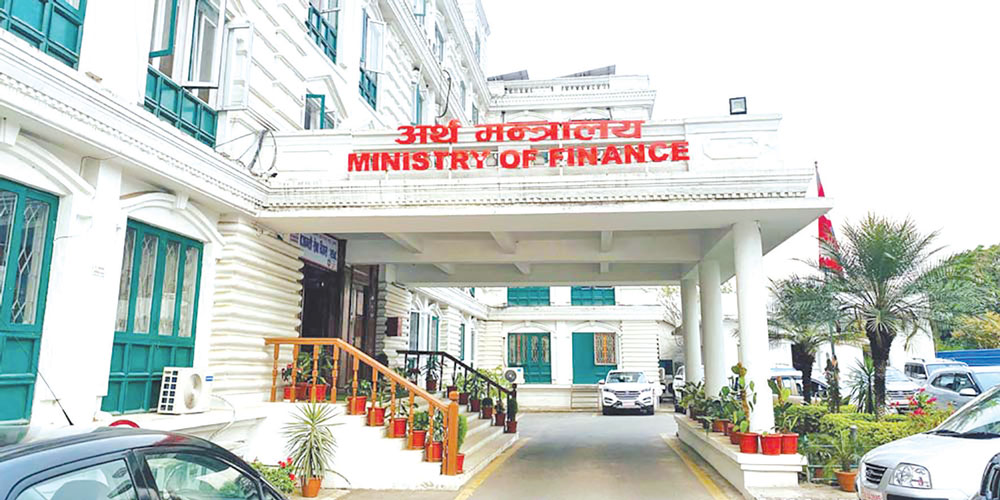
The ‘Public Enterprises Management and Good Governance Policy, 2082’, made public by the Ministry of Finance on Sunday plans to categorise public enterprises into commercial and strategic groups.
The Council of Ministers approved the policy on September 28, 2025.
According to the policy, public entities that compete with the private sector will be classified as commercial enterprises. It also states that the procurement processes of such enterprises will be simplified.
Meanwhile, enterprises that are required to implement government programmess, fulfill national or international commitments, or provide essential services without private sector involvement will be classified as strategic corporations. The government intends to gradually convert all public enterprises into a company model.
The policy aims to make the board of directors of public enterprises independent and autonomous, and to separate the regulatory and operational functions of corporations currently performing both roles.
The policy states that the government will not interfere in the daily operations of the corporation except when it issues instructions.
This indicates that every public institution of the government will be given independent decision-making power.
Additionally, the policy mandates that the board of directors and management will be fully responsible for the overall decision-making and performance of public corporations, in accordance with prevailing laws.
Expert directors will be appointed in a transparent manner, and all financial transactions will be conducted electronically to promote technology-friendly operations.
The government will also publicly inform citizens about goods and services through electronic means.
The policy also states that it will make it mandatory to publish the accounting report of corporations in the Nepal Financial Reporting Standards (NFRS) system.
The ministry has stated that it aims to increase the contribution of corporations to the country's economy by addressing long-term problems such as managerial weaknesses of corporations, lack of financial discipline, and political interference.
According to the ministry, the policy aims to increase the contribution of public enterprises to the country's economy by addressing long-standing problems such as managerial weaknesses, lack of financial discipline, and political interference.
The government has invested a total of Rs. 703.93 billion in public enterprises up to the fiscal year 2023/24.
Of this, share investment is Rs. 364.86 billion and loans Rs. 339.07 billion.
The return received by the government on its investment in public institutions is low and is also declining.
The government received only Rs. 8.83 billion in dividend from the public enterprises in the fiscal year 2023/24 while it had received Rs. 13.75 billion in dividends from public corporations in the fiscal year 2022/23.
There are currently 45 public corporations operating in Nepal, spanning various industrial, commercial, service, social, public utility, and financial sectors. Of these, 20 are fully government-owned and 25 are majority-owned by the government.
Of the operating enterprises, 28 are profitable, 15 are in loss, and two have been closed.
The net profit of the government-owned public enterprises decreased significantly by 12.88 per cent to Rs. 42.62 billion in the fiscal year 2023/24.
-square-thumb.jpg)




-original-thumb.jpg)
-original-thumb.jpg)