- Tuesday, 9 June 2026

Karnali Province forms coordination committee to protect Raute community
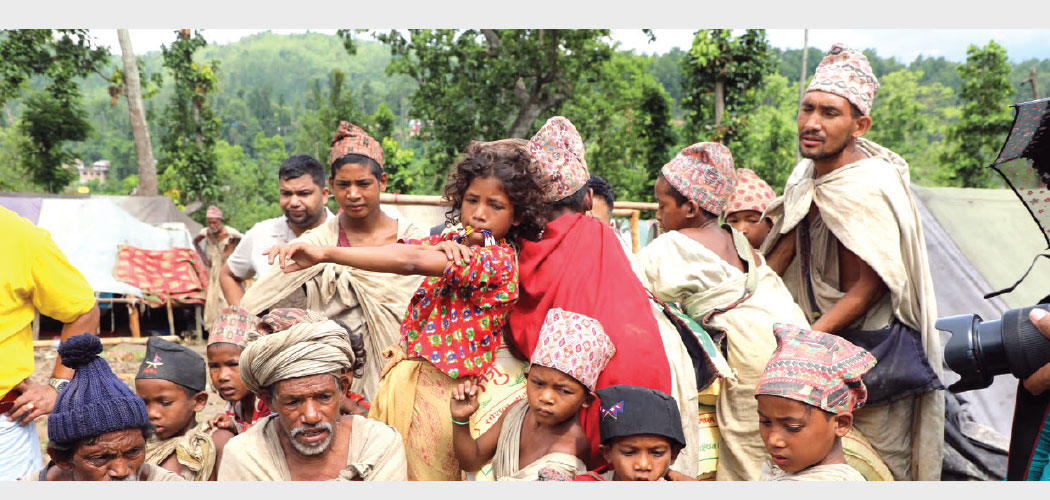

BY LALIT BASEL,Surkhet, July 20: Karnali Province Government has formed a coordination committee to protect and the nomadic Raute community, who have traditionally lived a migratory lifestyle in the forests of Karnali. This initiative, led by the Ministry of Social Development, aims to draft specific legislation for the Raute, create a detailed profile of the community, and develop a conceptual ‘Raute Corridor’ to map their migratory routes and settlements over the past decade.
The five-member coordination committee includes Bir Bahadur Rawat Bhote, President of the Indigenous Nationalities Federation of Karnali Province,
Subarna Khadka from the Ministry’s Social Division, a representative nominated by Gurans Rural Municipality in Dailekh, and Raute community researchers Hira Singh Thapa and Nagendra Upadhyay. According to Social Development Minister Ghanashyam Bhandari, this separate committee was necessary to safeguard the Raute’s unique identity and way of life through legal and policy-level interventions.
In a recent briefing to the Social Development Committee of the Karnali Provincial Assembly, Minister Bhandari informed that the committee will finalise a comprehensive profile of the Raute community within a month. Additionally, it will identify areas inhabited by the Raute over the last ten years to help establish the Raute Corridor. A draft of a dedicated bill to ensure the community’s long-term protection will also be prepared. The minister further added that the proposed corridor would support not only cultural preservation but also eco-tourism, while official policy would work to protect the Raute’s identity and heritage.
Concerns have been mounting over threats to the Raute community’s traditional lifestyle. Open access to their settlements by outsiders has contributed to the erosion of their indigenous customs and created an existential threat. The Social Development Committee has expressed concern and called for focused governmental intervention.
Committee coordinator Purna Bahadur Khatri emphasised the need for the state to uphold the Raute’s fundamental rights to education, healthcare, and security without compromising their cultural identity. Committee member Jeet Bahadur Malla emphasised the need to preserve the Raute’s art, culture, and traditions while ensuring basic services until legislation is in place. Another member, Indra Kumari Shahi, stressed the importance of addressing their livelihood needs to ensure sustainable development.
Other members, including Jumkit Lama, Milan Khadka, and Rana Singh Pariyar, suggested that the government purchase and commercialise Raute-made products to reduce growing dependency on external aid.
They also urged action to address addiction problems and improve access to healthcare. The committee recommended that the government formulate both short-term and long-term plans for Raute preservation and conduct in-depth studies on their religion, culture, language, and lifestyle to support evidence-based policymaking.