- Thursday, 7 May 2026

13 snow leopards traced in Kanchenjunga
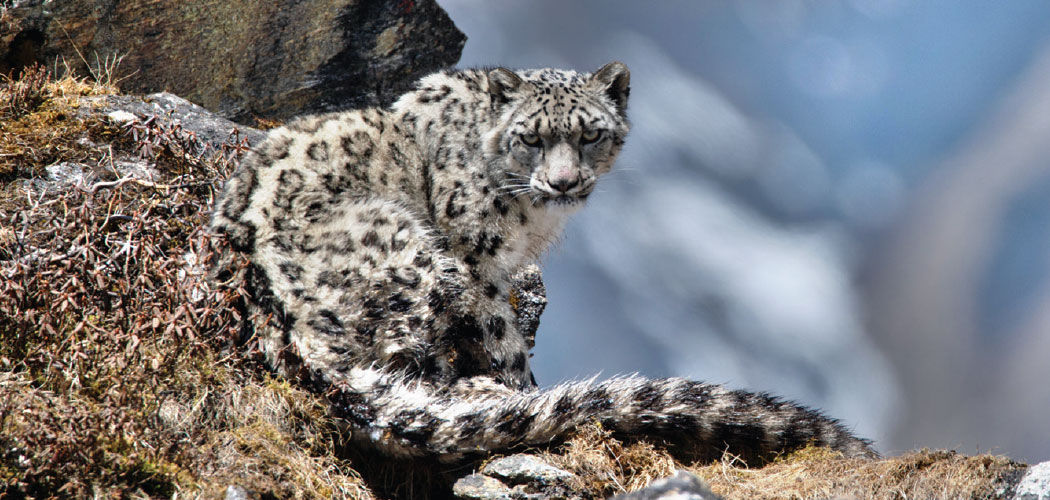

By A Staff Reporter,Kathmandu, Oct. 24: The Kanchenjunga Conservation Area holds 13 adult snow leopards and with this, the total population of this majestic cat is estimated around 350 to 500 across the country.
Releasing a survey report on snow leopards on the occasion of the 11th International Snow Leopard Day on Wednesday, Minister for Forest and Environment Ain Bahadur Shahi Thakuri said that launching a conservation campaign was important for the protection of the snow leopard population.
This year, the theme of Snow Leopard Day was “Protecting Snow Leopard Habitats for Future Generations” while the focus was on preserving the natural habitats of snow leopards and ensuring the health of the Himalayan ecosystems. The snow leopards are seen as key indicators of ecological balance.
The report was unveiled at a programme organised by the Department of National Parks and Wildlife Conservation and the Forest and Soil Conservation Department under the Ministry of Forests and Environment.
The survey was conducted from April 4 to June 2, 2024, in the Kanchenjunga Conservation Area.
Minister Thakuri said, “The ministry is ready to amend laws if necessary to control poaching and smuggling. It is crucial to raise awareness among local people and mobilise them in the campaign for snow leopard conservation.”
He further highlighted the importance of snow leopards as part of Nepal's identity and the government's commitment to prioritising their protection.
According to the report, it is estimated a minimum of nine and a maximum of 24 snow leopards are living in the Kanchenjunga Conservation Area.
The department used scientific and reliable methods, employing camera traps in various protected areas and forest zones, to conduct a national survey of snow leopards.
Since around 2,035 square kilometres of the area are considered suitable habitat for snow leopards, automated cameras were placed in 16 square kilometres of grids for 60 days, capturing photographs, which were analysed to estimate the snow leopards’ population.
Speaking on the occasion, Minister of State for Forests and Environment Rupa BK stressed the need for collaboration between the government, donor agencies and concerned parties to overcome the challenges in snow leopard conservation.
She pointed out that the snow leopard, found in difficult Himalayan terrains, symbolises the ecological health of the mountainous region, and campaigns should be launched to ensure its protection.
The Eastern Dolpa Snow Leopard Population report was also released on the occasion. This study, the first of its kind in the region, revealed an estimated population of 30 snow leopards in Eastern Dolpa, with a density of 1.5 snow leopards per 100 square kilometres. Earlier, the results of a snow leopard count in Dolpa showed 90 snow leopards in the area.
Secretary at the Ministry of Forest and Environment Dr. Deepak Kumar Kharal praised the contributions of local communities, security forces and partner organisations in addressing the challenges of snow leopard conservation, which is tied to Nepal's global recognition.
National Parks Director General Dr. Ramchandra Kandel highlighted the achievements and efforts in snow leopard conservation, stating that his department was working in coordination with concerned parties.
Shiva Wagle, Director General of the Forest and Soil Conservation Department, stated that the presence of snow leopards in Nepal's Himalayan regions was a notable success and has helped raise the country's global profile.
On the occasion, a photo frame of a wild yak captured within Dolpa National Park was also released by State Minister BK.
Snow leopards, found in only 12 countries across the globe, are considered indicators of a clean Himalayan environment. In addition to Nepal, snow leopards are found in Afghanistan, Bhutan, China, Kazakhstan, Kyrgyzstan, India, Mongolia, Russia, Pakistan, Tajikistan, and Uzbekistan. The global population of this cat is estimated to be between 4,000 and 6,500.
Meanwhile, the WWF organised a press meet to mark International Snow Leopard Day on Wednesday.
According to the World Wildlife Fund (WWF), the report was made possible through a collaborative effort between the Department of National Parks and Wildlife Conservation (DNPWC), Shey Phoksundo National Park, and the WWF with the help of citizen scientists.
Sonam Wangdi and Urgyen Gurung, citizen scientists, played a crucial role in the effort by conducting an extensive assessment of Upper Dolpa. Their work has not only contributed valuable data but also showcased the vital role that local communities and individuals can play in snow leopard conservation, said the WWF.



-original-thumb.jpg)