- Friday, 8 May 2026

Bats: Only The Flying Mammal In Nature
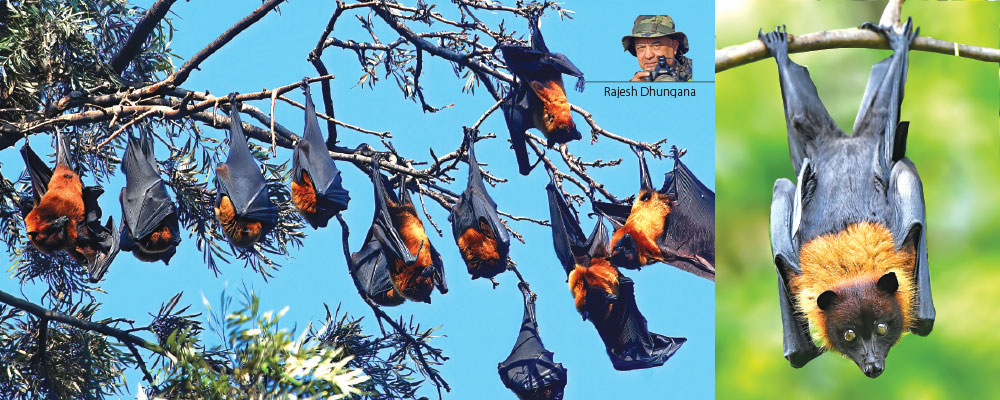

Rajapur, in Bardia district, is famous for its unique bat garden. Gopal GC, a local of Rajapur Municipality-4, has cultivated a private garden over an area of 14,580 square feet, which hosts 38 different species of trees. For the past 25 years, this garden has been home to bats.
Tourists from Germany, France, Britain, Canada, and other countries, along with domestic tourists, frequently visit this garden to document and photograph bats. They are often astonished by the large flock of bats residing here. According to GC, bat researchers also visit the garden. Some people from India's Madhya Pradesh come here to purchase bats for making traditional medicines.
As per the superstitious belief, consuming bat meat and using bat oil for massages can cure various ailments, particularly rheumatism. Consequently, some locals kill bats for meat, despite it being illegal in Nepal. According to the law, buying and selling bats is prohibited in Nepal.
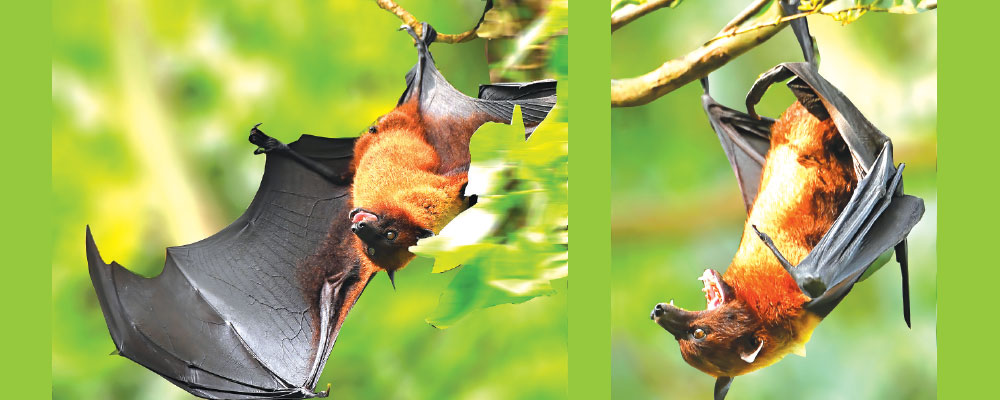
Nature will preserve the garden as long as the bats reside here and their population continues to grow every year, said GC. However, no relevant authorities have visited to observe the large bat colony and explore ways to manage it, he lamented.
Prem Bahadur Shrestha, a resident of Kapilvastu Municipality-3, said that the bats have been living in his garden in 20–30 trees for the past 15 years. These bats thrive in their natural habitat without any obstructions or barriers, living freely and abundantly.
The scientific name for bats is Chiroptera and is called 'Chamero' in Nepali. Bats are nocturnal creatures that live in groups, hanging upside down from various tree branches or residing in dark caves. They are the only mammals capable of sustained flight. At dusk, they emerge from their nests to feed.
Bats represent the second-largest order of mammals, with a recent count of 1,117 species worldwide. Traditionally, this order is divided into two suborders: Megachiroptera, which includes 186 species of Old World fruit bats in one family, and Microchiroptera, which comprises 931 species across 17 families. Bats are widely distributed and found everywhere except Antarctica and some oceanic islands (Mickleburgh et al., 2002).
The primary habitat for bats is in America, with an estimated 20 million bats inhabiting a large cave in Texas. In China and Japan, bats are considered auspicious symbols.
Features
Bats have a unique ability to perch effortlessly while hanging upside down from trees, with their legs securely gripping branches. This is possible because their leg veins are structured to lock their paws firmly onto the branch, even while they sleep. Bats produce loud noises when they fly, emitting high-frequency screams from their mouth or nose. These sounds create ultrasonic waves that bounce off obstacles and return as echoes, enabling bats to precisely determine the location and distance of objects, a process known as echolocation. Bats primarily feed on fruits, insects, grasshoppers, and flowers, with insectivorous bats capable of hunting over 600 insects in a single flight.
Bats are typically black or brown, though some species are white. During winter, they hibernate, hanging upside down and covering themselves with their wings to stay warm. Known as farmers' friends, bats are common crop-damaging insects, aiding in better agricultural production.
Habitat and breeding
The reproductive cycles of bats are influenced by weather and natural conditions. Mating usually occurs in late autumn, with females storing sperm in their uterus until fertilisation in spring. Most bats give birth before the flowering and fruiting seasons, and the young ones, like other animal babies, cry for their mothers. Bats typically live for 15 to 20 years, though some species can live up to 40 years. According to Sanjan Thapa, executive director of the Small Mammals Conservation and Research Foundation (SMCRF), 57 bat species have been documented in Nepal, with many more likely undiscovered. Bats inhabit all regions of Nepal, with the highest population found in the Tarai and the greatest diversity in the mid-hills, but lower diversity and populations in the high Himalayas. Although protected by the National Parks and Wildlife Conservation Act of 1973, bat species are not on the priority list of protected mammals. Nepal's bat species account for about 5 per cent of global bat diversity and over 40 per cent of South Asia's bat diversity.
Threats
Bats face numerous threats, including habitat destruction through cutting, fragmentation, and demolition of gardens. People from some communities hunt bats for meat. Predators such as mongooses, owls, and birds of prey also pose significant threats to bats.
Unfortunately, bat populations are declining worldwide. Misunderstandings about the crucial role bats play in maintaining healthy ecosystems lead to many being needlessly killed. Bats that hibernate in caves are particularly vulnerable as they require undisturbed winter shelter. Human activities contribute to their decline through habitat loss and disturbances during hibernation, further endangering these flying mammals.
(The author is a wildlife photographer. The photos used in this article are by the author himself.)