- Friday, 24 April 2026

Check Crusher Plants
Illegally operating crusher industries and illegal and unsustainable extraction of riverine materials are rampant throughout the country, inviting serious environmental degradation. News reports on illegally operating crusher industries and illegal extraction of riverbed materials from Ratu River in Surkhet district in west Nepal, published in this daily recently, bring to light the continuing irregularities in these area. The illegal operation of crusher industries, and the fowl means they use to influence the local leaders to gain the contract is an open secret and this trend is rampant not only in this area alone. The exploitation of the gift of nature has been happening almost everywhere in recent times.
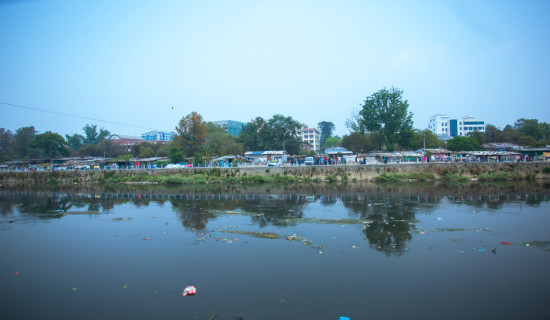
Barahatal Rural Municipality in Surkhet has informed that four crusher industries were operating illegally between Thapadera and Dokpa areas, and these industries have posed a risk to about 400 households along the banks of the Bheri River. It’s a mockery of the rule of law taking place in a broad daylight. This happens because millions are made out of these ventures. Bribery, threat and power misuse and other illegal means are applied to bend the law. Multiple inspections have been carried out by the officials of the District Administration and District Coordination Committee, but no legal action has been taken against such industries. Citizens suspect that there is underlying corruption and irregularities while calling for tender, and the whole procedure of the contract.
The illegal extraction of riverine materials from various river without properly carrying out Environmental Impact Assessment (EIA) has disturbed the ecosystem of the river, posing grave risk to the settlement on the banks. The dust and mud generated while extracting and processing such materials has polluted both water and air. Illegal and uncontrolled mining of construction materials from rivers under political protection has invited grave risks to the local settlements, aqua life, river ecology, healthy air and peaceful environment. Operation of illegal crusher plants pose a threat to sustainable development. Development needs to be modelled in such a way it does not bring destruction and environmental chaos.
Conservationists opine that the purely money-minded extraction of riverine materials is counterproductive and catastrophic for the environment in the long run. A few months back, the government lifted a ban on the extraction of riverine products and people in power are saying utilisation of available natural resources is a must to carry out development works and for a mountainous country like ours. Such a point of view is shortsighted and need rethinking. Nepal is rich in natural resources but the unsustainable method of utilising them can bring catastrophic results. We are already seeing undesirable trends in the environment amid global warming and climate change.
The change in precipitation patterns and high precipitation over a short period of time cause devastating floods and landslides in Nepal almost every year. Climate change has affected agricultural yields, food production, and natural ecosystem. We have put forward our climate concerns at COP 28 summit and strongly raised the challenges faced by mountainous countries like Nepal, but during this process we have overlooked the issue of illegal extraction of riverine materials that damages our environment. Thus, the government should appropriately deal with the issues of illegal crusher industries and help conserve the nature and ecology.


-original-thumb.jpg)