- Thursday, 28 May 2026

11,000 residents in Madhesh gain access to clean drinking water through solar energy
By TRN Online,
Kathmandu, June 19: More than 11,000 residents in the Sarlahi and Siraha
districts of Madhesh province now have access to clean drinking water, with the
successful implementation of seven Solar Drinking Water projects.
These projects, supported by the Government of
Japan, the Alternative Energy Promotion Centre (AEPC), and the United Nations
Development Programme (UNDP), involved the installation of solar pumps with a
total capacity of 186 kWp.
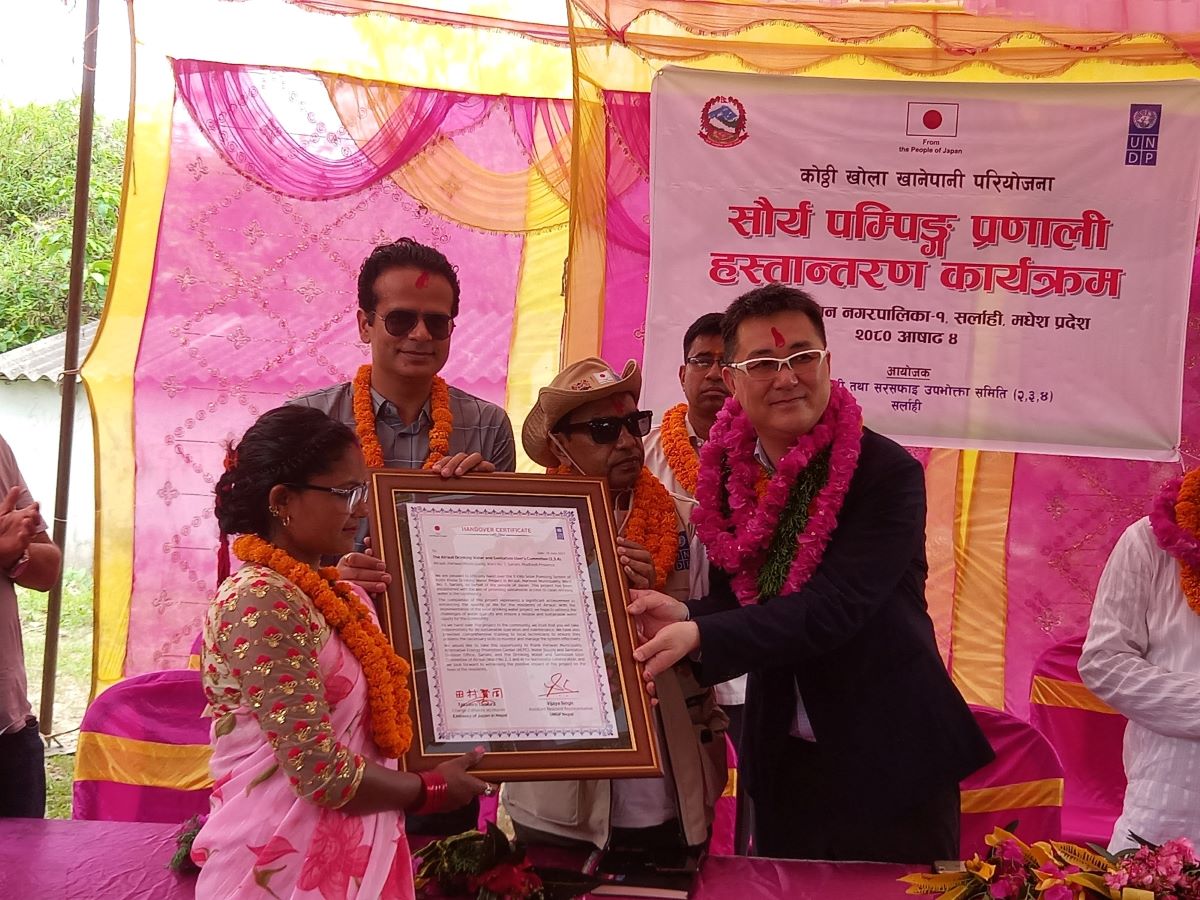
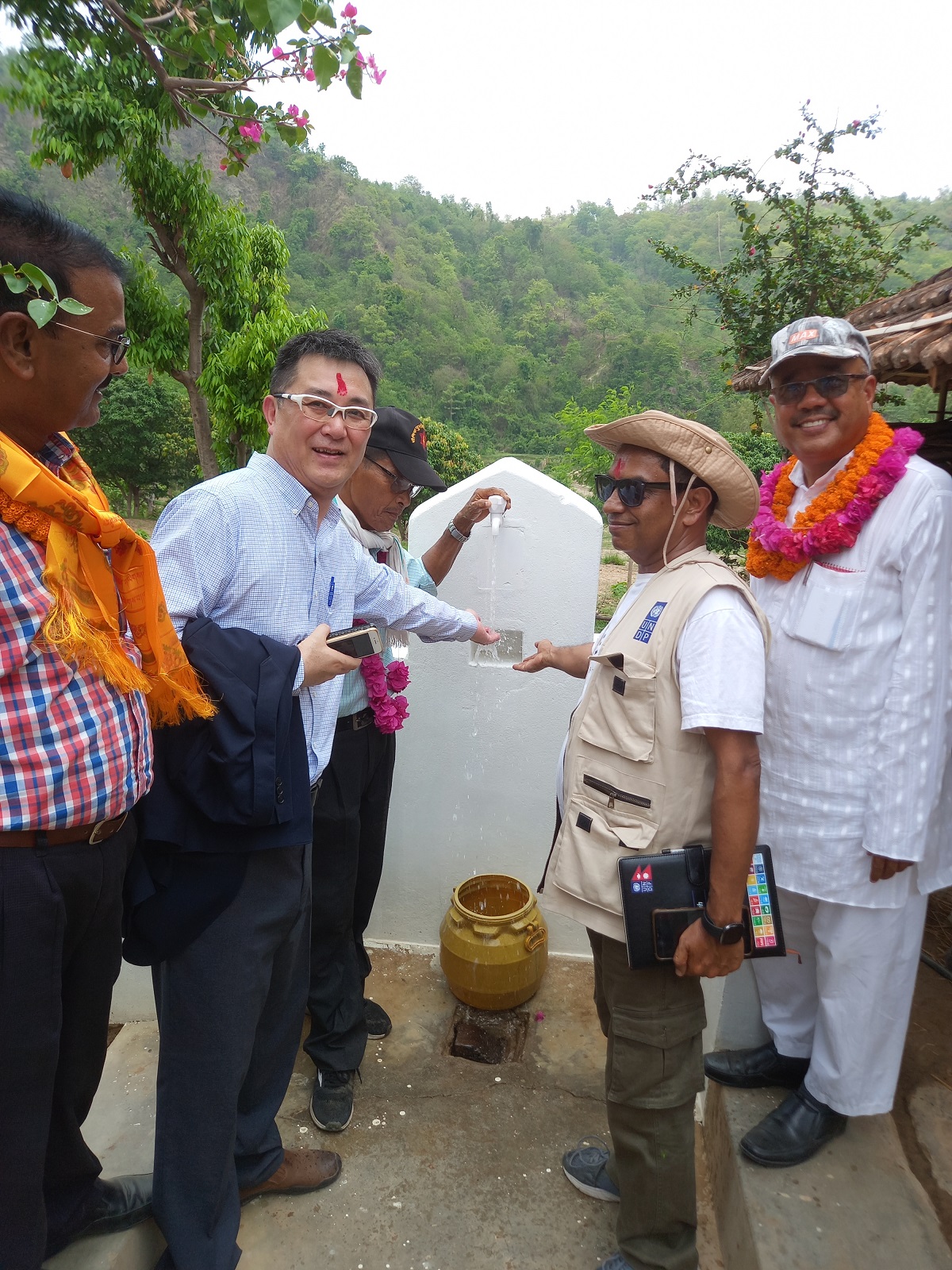
The Government of Japan and the UNDP today handed over one of the seven projects – 9 kWp Kothi Khola Solar Drinking Water Project – to Atrauli User’s Committee in Ward 1, Harion Municipality, Sarlahi district, Madhesh province. It reaches out to over 260 residents with access to potable drinking water as well as irrigation for modern agriculture such as drip irrigation for polyhouse farming, according to the press release issued by the Embassy of Japan in Nepal and UNDP today.
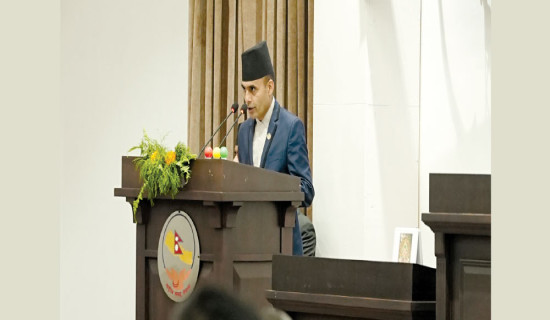
Addressing the handover event, Takahiro Tamura,
Charge d’Affaires ad interim of Japan to Nepal congratulated AEPC, UNDP,
District Water Supply and Sewage Office, Hariwan Municipality and people of
Atrauli. ‘I hope that this project will enhance the quality of life and provide
sustainable access to clean drinking water. The team has also provided the
training to the local community so I hope that it will support in the
sustainable operation of the project.’ He added that the project will further
strengthen the relationship between Japan and Nepal as well as friendship between
peoples of two countries, read the press release.
Thanking the Government of Japan, AEPC and UNDP,
Ramesh Budhathoki, Mayor of Hariwan Municipality added, ‘We really need to
replicate this model to promote sustainable use of water resources by utilizing
renewable energy-based water pumping. We ensure our local government’s
contribution in maintaining the solar-powered drinking system.’ Meanwhile, Mr.
Vijaya Singh, Assistant Resident Representative, UNDP thanked all collaborators
and emphasized the project’s contribution to reaching the goals of Nationally
Determined Contribution. “It was not possible to give access to drinking water
to the community alone, according to the press release.
Hariwan Municipality and DWSSSO initiated the
process and as there was a problem with the quality and reliability of grid,
AEPC, UNDP and Japan Government come together with solar pumping system which
has enabled locals to access drinking water.” He added.
Director of AEPC, Narayan Prasad Adhikari said,”
Earlier, the renewable energy is used only in the places where there is no
access to national grid but now with this example of Atrauli, we should learn
that it should be reach out to the places where required and we should promote
sustainable energy sources.
Kunta Maya Rapal, President of the Atrauli User’s
Committee said, ‘Now we don’t have to walk 3 hours a day to fetch water and we
can use that time in agriculture and some productive things which can help us
in our livelihood' read the press release.
In Nepal, the Chure hill regions are especially at
risk of lacking access to clean watersupply. Locals have long been forced to
rely on tiny seasonal streams and water holes due to deforestation, haphazard
development, and the extraction of sand and stone, all of which are made worse
by climate change. Every day, 3-4 hours were spent by women and children
carrying water to their homes.
Along with the solar-powered drinking water system,
solar PV backup systems were also installed with support from the Government of
Japan. This ensured an uninterrupted electrical supply in critical medical
equipment in 11 health facilities as well as computer and audio-visual
equipment in 2 schools in Sarlahi district. Moreover, 266 women and men have
been trained in different aspects of solar PV technologies and institutional
building to ensure their long-term use even after the project phases out, read the
press release.

-square-thumb.jpg)


-original-thumb.jpg)