- Wednesday, 27 May 2026

Dozens of cattle die of lumpy skin disease in Khotang
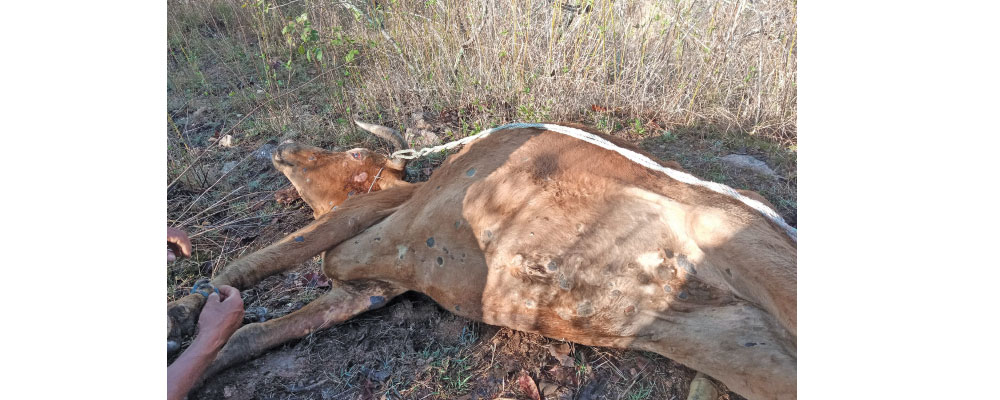

By Rajkumar Bhattarai,Khotang, May 29: The lumpy skin disease has gone out of control across Khotang district. The disease has been identified in all 10 local levels of the district and at least 60 cows and oxen have been reported dead.
According to authorities, majority of the deaths were reported from Jantedhunga Rural Municipality.
“At least 30 cows and oxen have died in Ward No. 1 of Jantedhunga. The data has not arrived from Ward No. 6 yet,” said Dr. Shusan Dhakal, coordinator at the Livestock Section of the rural municipality.
Similarly, at least 28 cattle have died from the disease in Halesi Tuwachung Municipality. “An ox of Hasta Bahadur Karki died recently. In the past days, 14 other cows and oxen have died in our ward alone,” said Anish Karki, chairman of Ward No. 11 of Halesi Tuwachung.
“One of my oxen died on Friday. Another ox had died some days ago. The disease has spread at an alarming rate putting all the cattle at risk,” said Nabin Rai, a farmer from Ward No. 5 of Halesi Tuwachung.
At least 13 cattle have been reported dead in Nabin’s ward.
After five cattle died in Ward No. 15 of Diktel Rupakot Majhuwagadhi Municipality, the municipality has deployed a team of experts led by a veterinarian for necessary steps in the prevention and treatment of the disease.
“A similar team has also been deployed by authorities in Rawa Besi Rural Municipality’s Ward No. 2. They are providing treatment to the infected cattle,” said Niraj Rawal, a vet-related expert at Rawa Besi Rural Municipality.
However, despite treatment, the death of cattle has not stopped, farmers informed.
Experts argued that a lack of effective treatment against the disease has made it difficult to cure. According to them, authorities should focus on preventing the disease from spreading.
At least 30 districts across the country have reported lumpy skin disease in their cattle.
Lumpy skin disease is an eruptive, occasionally fatal disease. It causes fever, lumps on the skin and can also lead to death, especially in animals that have not previously been exposed to the virus.
It is transmitted by blood-feeding insects, such as certain species of flies and mosquitoes, or ticks.
Vaccines of LSD are available in the international market. Yet the Government of Nepal has not given permission for its use in Nepal.
At least three years ago, the Central Veterinary Laboratory (CVL), in its technical bulletin had informed that the Veterinary Standard and Drug Regulatory Laboratory (VSDRL), Kathmandu, was conducting a trial of the vaccines to check their quality and efficacy.
“Once the qualities of vaccines are approved by VSDRL, the government would take a decision on whether they can be permitted for commercial use in Nepal,” the bulletin read. However, no vaccine against lumpy skin disease has been permitted yet.
-original-thumb.jpg)