- Wednesday, 27 May 2026

Experts stress expediting BRI projects
By
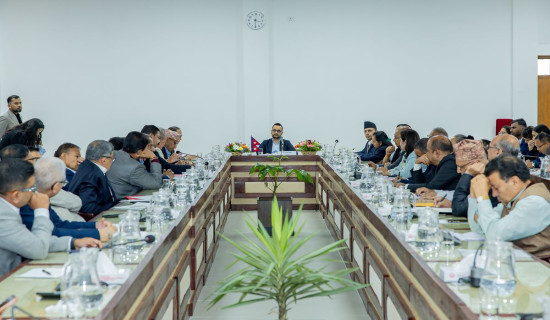
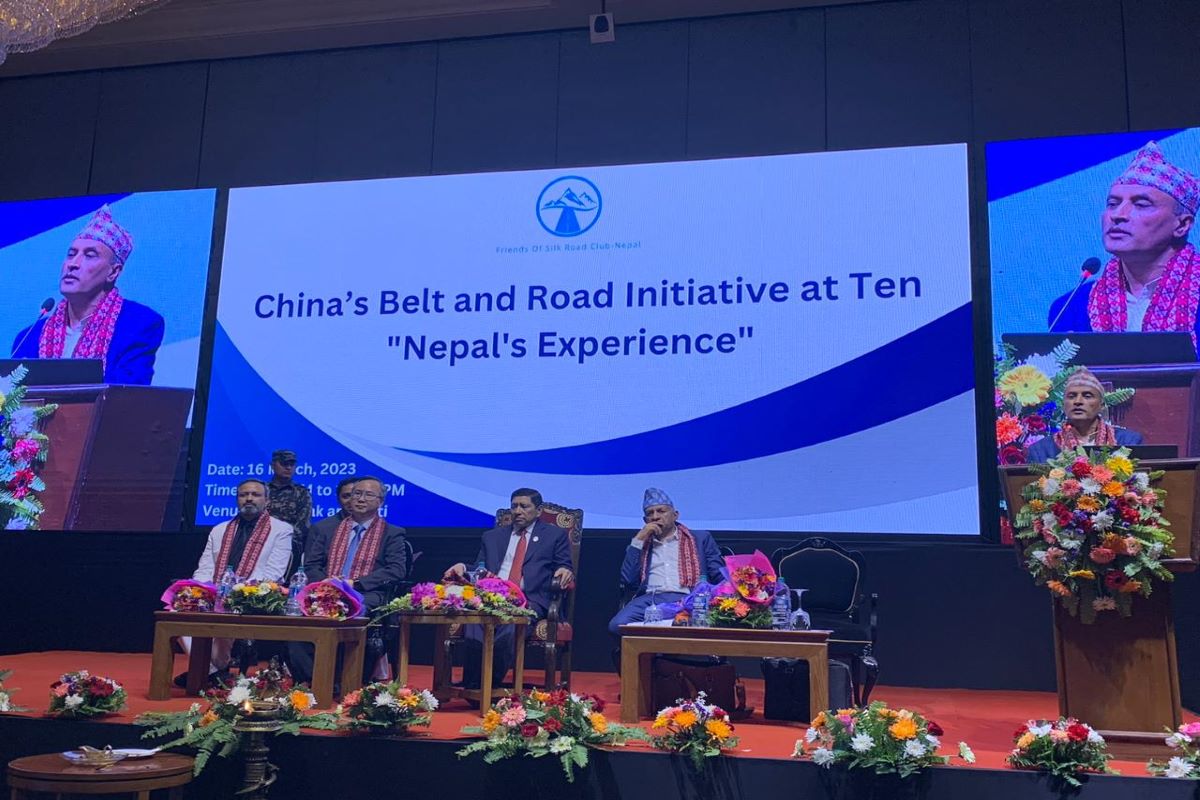
TRN Online, Kathmandu, Mar. 16: Experts and stakeholders have emphasized
the need to expedite projects under the Belt and Road Initiative (BRI) in Nepal.
"The government of Nepal is firm in successful
implementation of BRI projects as it will enhance Nepal's access to global
markets while improving Nepal's connectivity and infrastructure," Deputy
Prime Minister and Minister for Physical Infrastructure and Transport, Narayan
Kaji Shrestha, said while addressing an inaugural session of the conference on
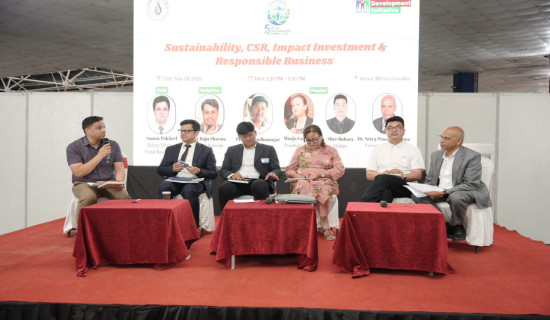
China's Belt and Road Initiative at Ten: Nepal's Experiences held today.
DPM Shrestha highlighted the Trans-Himalayan
Multidimensional Connectivity saying the Nepalis have been keenly waiting for the
cross-border railways through Kerung to Kathmandu.
"The cross-border railway will boost Nepal's
economic development by expanding Nepal's reach to global market as our
products will reach central Asian nations through China," he viewed.
DPM Shrestha who is also vice-Chairman of CPN
(Maoist Center) said, "We are clear about the China debt trap narrative
and we are not influenced by the rumour."
Referring to age-old, friendly and cooperative
relations between the two neighbours, DPM Shrestha reiterated Nepal's firm
commitment to One China Policy and vowed that he would help and facilitate implementation
of the BRI projects in his capacity as the physical infrastructure and
transport minister.
Chinese ambassador to Nepal, Chen Song, said that
China's resolve for international cooperation through BRI has remained
unchanged in the last ten years although many changes may have taken place in the
world issues.
"BRI is not a geopolitical tool," said the
ambassador, "Debt trap is a narrative trap."
He highlighted laying down of China-Nepal cross
border optic fiber and process for installing Ratmate-Rasuwagadhi-Kerung transmission
line for cross border electricity trade.
Pradip Gyawali, former foreign minister and deputy
general secretary of CPN (UML), observed that BRI seeks to make globalization inclusive
against the background that globalization has helped developed countries
accumulate global wealth at the cost of developing countries.
Saying that there has not been progress in BRI as
expected, leader Gyawali viewed that Nepal should take initiative to take
benefit from it.
He said BRI would help Nepal overcome development
obstacles created by insufficient connectivity.
The UML leader lauded the way BRI focuses on green
and econ-friendly development.
Lila Mani Paudel, former ambassador of Nepal to China
and also the chief secretary of the government of Nepal, observed that Nepal
has missed the opportunity to take benefits from both the BRI and the Asian
Infrastructure and Investment Bank (AIIB) although Nepal is a founding member
of the AIIB.
Speaking as the key note speaker, former ambassador
Paudel said some progress was seen only in 3 projects out of eight BRI projects
Nepal proposed in 2018.
He argued that China debt trap is a narrative trap
hyped by those who have been lending around the world and taking undue benefits
from it.
If we see the case of Sri Lanka, many things become
clear. China's share in that country's total external debt is only 10 per cent,
but China has been blamed for debt trap and all the crisis. The problem is by
highlighting the 10 per cent, we are restricted from focusing on the remaining
90 per cent. This is how the discourse of debt trap is woven, he observed.
Dr. Kalyan Raj Sharma, general secretary of the
Friends of Silk Road Club-Nepal, viewed that BRI has become much mature and
taken new heights in the last ten years.
There are ample issues and sectors in which Nepal
can take advantage of also by being a neighbor, said the general secretary of the organisation that organised the conference.
He termed it a wrong practice to see China's development
support and cooperation to Nepal through political lens.
"No external influence should color Nepal-China
cooperation."
On debt trap narrative, Dr. Sharma said China's
share in Nepal's external debt is just 3.2 per cent, but there is already a
rumour that Nepal is falling under the same. "We should get rid of such
vicious rumour."