- Thursday, 28 May 2026

Educating The Voters

Despite rising rate of literacy and the political consciousness in the masses, vote invalidity trend persists in Nepal. Widespread, effective and time-bound initiatives for voter education are the remedy to this problem. Invalid votes were a matter of concern during the most recent local level elections held on May 13. Though total invalidity of votes in those elections stood at less than three per cent, partially invalid votes were around three times that figure. No doubt, insufficiency of the reach of the efforts to educate the voters was one of the major factors behind such a scenario, there were also other reasons at play that contributed in vote invalidity. During the local level elections, the ballot papers were too lengthy and complex which often tended to put voters in confusion. In a recent interview with this daily, Chief Election Commissioner Dinesh Kumar Thapaliya said that structural complexity of the candidates and symbols in the ballot papers also had its role in the invalidity tendency. There were symbols in the ballot papers which did not have real candidates.
The Chief Election Commissioner also admitted that voter education then was not up to the mark which has prompted the commission to take more aggressive moves now targeting the elections to the House of Representatives and Provincial Assemblies being held on November 20. Volunteers have been deployed in door-to-door voter education drive this time with the aim of leaving no areas uncovered. In this regard, the door-to-door volunteers themselves need to be well trained and comprehensively instructed to do their jobs efficiently. Political party workers and volunteers can also play an important role in boosting voters' awareness. Recently, there are media news reports of mock voting being conducted in different parts of the country but such activities should not be limited in some urban areas alone. Remote and far-flung regions with poor level of literacy and political awareness should be the focus of voter education campaign.
The Election Commission says that it has learned some lessons from the ballot invalidity of the local level polls held in recent past and efforts are under way to better educate the voters. The result of this campaign will be expressed in voting. The aim is to put the rate of vote invalidity to the minimum. Overwhelming turn out of the voters and voting without invalidity make a huge difference during this crucial democratic exercise. Time factor also counts a lot when it comes to carrying out the voter education activities. The campaign should reach the targeted people well before the election day.
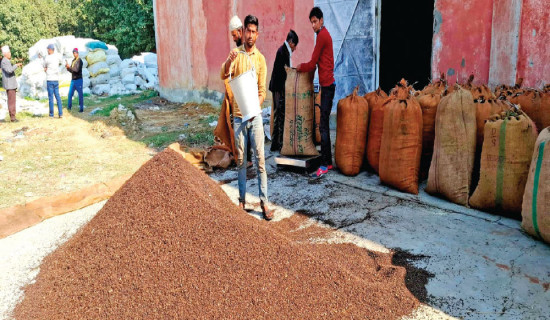
The concerned volunteers and officials need to consider the fact that many voters are now busy harvesting their rice crops. For this reason, they may not be available at their households during the working hours. For this reason, ideal hours for conducting voter education can be in the morning and evening. It is also important to make sure that being occupied in paddy harvesting works does not affect voter turnout. It is logical to avoid rainy time and harsh winter for voting. Late November stands out suitable in this regard but harvesting occupancy may put some voters away from the farming community. Voter education drive with persuasive interactions may make a positive difference. We need to inject a mood of democratic festivity in the voters so that exercising the adult franchise stands in priority.