- Thursday, 28 May 2026

Candidates go door-to-door soliciting votes in Rupandehi

BY OUR CORRESPONDENT
Bhairahawa, Nov. 1 : The candidates have been going door-to-door in Rupandehi asking for votes. There are five House of Representatives (HoR) and 10 Provincial Assembly seats in the district.
The candidates who had also given nominations in the past elections had met the party cadres and voters who had cast votes to them earlier.
They had briefed about their future plans. Similarly, new candidates are also busy explaining their future plans to attract the voters.
Publicity offices have been from expanded constituency to constituency in Rupandehi for the promotion of candidates of various parties.
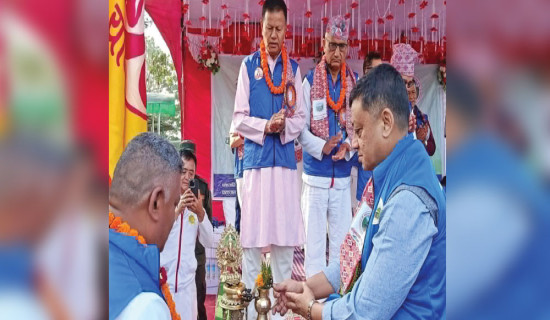
The candidates who had inaugurated the offices have been sharing their opinions among voters.
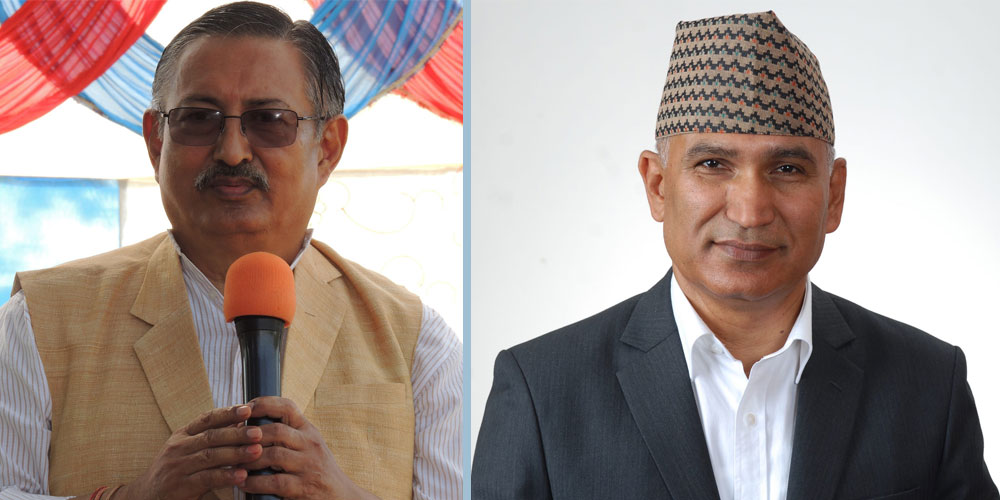
In Rupandehi Constituency-1, a common candidate from five party ruling alliance and former UML leader Ghanashyam Bhusal had been nominated for HoR election.
Bhusal, who had given his candidature as an independent, was supported as a common candidate by the five party ruling alliance.
Likewise, CPN-UML candidate and former Finance Minister Bishnu Paudel has been nominated for HoR election in Rupandehi Constituency-2.
During his election campaign, he said that the CPN-UML was the only party which had worked for free education for children, security allowance for senior citizen and providing jobs to unemployed youths.
In Rupandehi Constituency-3, Rastriya Prajatantra Party candidate Dipak Bohara is contesting against Home Minister Bal Krishna Khand. Bohara, carrying the main agenda of giving citizenship to Nepalis without citizenship, said that squatters should not be removed without giving an alternative.
Khand has focused on the topic of integrated development of his hometown and to immediately stop the high interest rate charged by the bank which had put the businessmen in a difficult situation as his main agenda.
He said that industrialists constituted the backbone of economic prosperity of the country.
Similarly, the candidates in Constituency-4 and 5 have also presented their agendas to the voters. Most of the candidates have presented developed and prosperous Rupandehi as their main agenda.
Political analyst Manikar Karki said that in case of Nepal, the tendency of parties and leaders to think of the people only during elections was wrong.
"One should always work closely with the people, one should be familiar with their problems" he said.
"In the case of Nepal, it is no longer the practice of the leader to be accountable to the people after winning the election."
Human Rights and Peace Society central chairman Govinda Khanal said that it was important to mark how many times the leaders who had won the election visited people and taken account of their problems in the five-year tenure.
He said that although it was not uncomfortable to go to the people with their issues, the tendency to go amid the people only during elections was dangerous.