- Thursday, 28 May 2026

Lessons From World Dairy Summit 2022

Founded in Brussels of Belgium during the First International Dairy Congress in 1903, International Dairy Federation (IDF) represents the global dairy sector and ensures that the best scientific expertise is used to support high quality milk and nutritious, safe, and sustainable dairy products.
IDF’s network dairy organisations help feed the world with safe and sustainable products. It is a leading source of scientific and technical expertise for all stakeholders of the dairy value chain. IDF has made significant contributions in developing standards for dairy sectors since its establishment, and closely collaborated with codex since 1963. It has also been working in collaboration with other international organisations like the Food and Agriculture Organisation (FAO), World Health Organisation (WHO), among others.
Access to expertise
Countries can represent in IDF through membership made of national committees formed by dairy organisations. Currently, there are 40 countries that are members of IDF mostly representing developed nations and those in transition. Most underdeveloped and developing countries are outside the ring of IDF. Thus, they do not have access to valuable technical and scientific resources and expertise.
IDF World Dairy Summit (WDS) 2022 was organised by Indian National Committee and the International Dairy Federation. Before World Dairy Summit, IDF, in collaboration with national committee, used to organise International Dairy Congress every four years in member countries on a rotational basis. However, from 1999, IDF started organising WDS annually. India had hosted International Dairy Congress in New Delhi in 1974 when I was a student of dairy technology in Anand. This year’s event was held in India in a gap of 47 years.
At WDS 2022, India showcased its dairy sector development and marketed it visibly to the world dairy community. The country also demonstrated strong commitment to the dairy sector development. Inaugurating the event, Indian Prime Minister Narendra Modi said his government has worked relentlessly to enhance the potential of India’s dairy sector. According to him, India’s dairy sector is characterised by mass production.
As the largest milk producing country in the world, the Indian dairy sector provides employment to more than 80 million families. Women represent about 70 per cent of the workforce in India’s dairy sector. The country was able to produce 146 million metric tons of milk in 2014. Milk production has now has now increased to 210 million metric tons. Trade volume from dairy sector alone is more than the combined total value of staple commodities like rice and wheat. The four-day WDS 2022 was organised from September 12-15. Other influential cabinet members, including Amit Shah and Piyush Goel, also attended the event.
Nations willing to take membership of IDF should form the national committee as per the guidelines and bylaws of the International Dairy Federation. National dairy organizations representing government, national institutions, academia and industry should be members of national committees. Generally, responsible dairy organizations like Dairy Development Department or National Dairy Board executive heads are the member-secretary of the IDF’s national committee. IDF membership is paid membership, thus each country seeking membership should pay the annual fee based on the annual milk production country data as published by the authentic organisations. Membership can full or co-member.
When a country acquires an IDF membership, it gets outstanding opportunities to promote local dairy industries through global and regional events, privileged internal and external communications channels. Member nations can also have an easy and quick access to IDF publications and data, scientific and technical support for events, networking with global dairy experts and key influencers. Besides, they can participate in creating global consensus on topics related to dairy and contribute to joint responses to intergovernmental organisations.
However, it is difficult for any nation to take an IDF membership due to high fee, especially for underdeveloped and developing nations. For example, India, China, Mongolia, Japan, and South Korea are members of IDF in the entire Asian Region, while the remaining ones are not, Thus, a special provision of participation by the developing nations should be proposed to IDF, to facilitate the participation in global IDF forums. IDF should also be requested to make a provision of subsidised fee for membership for the underdeveloped nations.
Initiative
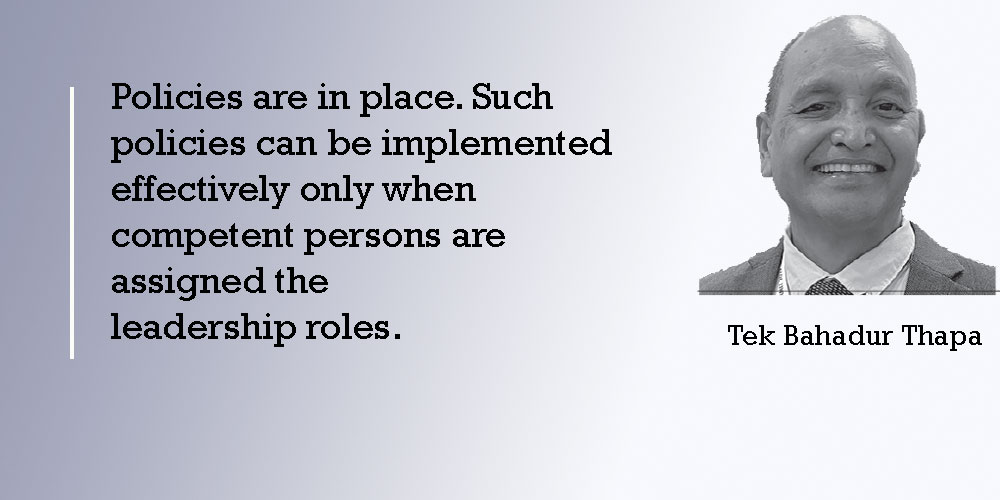
Nepal should take the initiative to acquire the membership of IDF. Once the country becomes a member of this organisation, the former can benefit from scientific, technical exchanges, technology transfer, capacity building and so on. At the national level, the government should remain committed to the development of the dairy sector. Policies are in place. Such policies can be implemented effectively only when competent persons are assigned the leadership roles. Milk quality standards are too old, and amendments are needed to upgrade to the comparable regional and international level. Quality monitoring and enforcement should be strict and unbiased. If substandard products enter the market, consumers gradually reduce the use of such products, and import will be encouraged. This is a current scenario. Let us accept the reality and act accordingly.
(A senior dairy industry specialist, and chairman of Nepal Dairy Science Association, Thapa was a delegate to the World Dairy Summit 2022. tthapa2013@gmail.com)